Commerce and Industry Minister Piyush Goyal has said India-US trade negotiations are moving “extremely well”, but warned that the final value of the deal will depend on whether Indian exports are burdened by additional tariffs under the US Section 301 process.
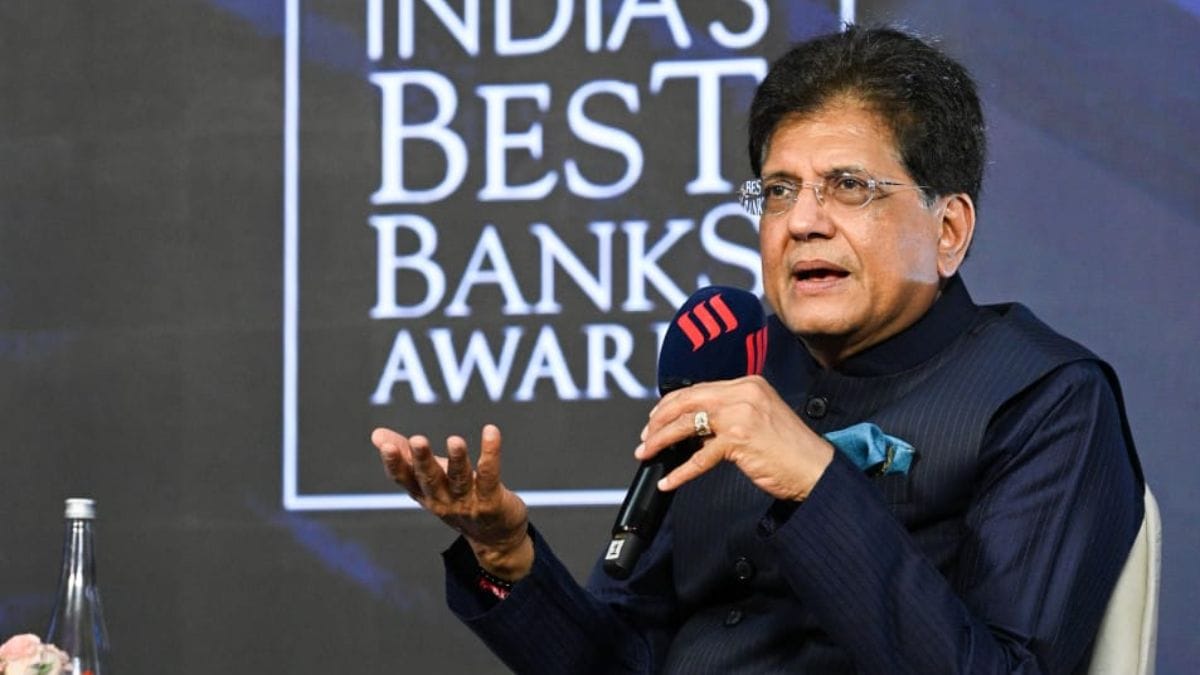
Speaking at the FE Best Banks Awards 2026, Goyal said the two sides had made strong progress and that a deal would come through. However, he indicated that India is closely watching the tariff structure Washington may impose under Section 301, as cumulative duties could reduce the advantage created by the trade agreement.
“Negotiations with the US are going extremely well. If they want to continue our deal, which we have finalised, as long as we are not burdened with Section 301 tariffs which could possibly cumulatively be much more than the deal that we have signed,” Goyal said.
The remark is important because the India-US trade deal is no longer only about lowering tariffs. It is also about whether Indian exporters get a better duty rate than their competitors in Asian markets.
Why Section 301 matters
Section 301 is a provision under the US Trade Act of 1974. It allows the US Trade Representative to investigate trade practices that Washington considers unfair or harmful to US commerce. If the USTR finds a problem, it can recommend action, including additional tariffs or import restrictions.
For Indian exporters, the worry is simple. If the main trade deal lowers tariffs but a separate Section 301 duty is added on top, the benefit of the deal could shrink sharply. Goyal said Section 301 is now the main legal route available to the US for additional tariff action against India.
“We are in engagement, we are watching what kind of tariffs they can impose. Section 301 is the last provision in law under which they can put a tariff on India. So they are going to exploit it to the maximum that they can. We are going to protect India’s interest. And I am confident that a deal will come through. It will be a good deal,” he said.
The US has proposed additional tariffs under Section 301 on several economies, including India, over concerns linked to forced-labour import controls. The proposed tariff is not final and is still going through the US consultation process.
The most recent section 301 investigation on forced labour proposed a 10 per cent additional tariff on imports from Canada, Ecuador, the EU, Indonesia, Mexico, and Pakistan, and a steeper 12.5 per cent on 54 other economies including India and China.
It becomes important to note here that the investigation is not based on allegations that Indian exports themselves use forced labour, but on whether India restricts imports from third countries where forced labour is used.
Preferential access is key, says Goyal
Goyal also broke down the logic of a trade agreement for the general public. The key, he said, is preferential access.
“The important element is preferential access. As long as your competitor pays more into a particular market, you are okay. If your competitor pays less than you, then you lose the possibility or market share,” he said.
In other words, the issue is not only whether India pays a lower tariff than before. The bigger question is whether India pays a lower tariff than Bangladesh, Vietnam, Pakistan, Sri Lanka or other competing export hubs.
This is particularly relevant for labour-intensive and price-sensitive sectors such as textiles, apparel, leather, gems and jewellery, marine products, carpets and engineering goods. In these sectors, even a small tariff difference can decide whether a US buyer places an order in India or shifts it to another competing country.
Section 301 debate
As per Goyal, this differentiation of tariff rates within the country is where section 301 can also generate a competitive advantage for India, if materialised correctly.
“We are trying to find a mechanism through which we can get a competitive advantage over our peers and competitors. The 301 investigations are really the only tool left through which they can create that competitive edge. Which is why these investigations are going on,” Goyal said.
Goyal’s closing message on 301 was unambiguous: “I don’t think anyone of you needs to worry about 301. We are going to tackle it. It is our responsibility. We will tackle it in the best interest of India — let me caveat, to the best of our ability. You need not worry about that. That is not a cause for concern.”
While Goyal in his most recent comments on the matter has talked about how Section 301 can be potentially used to create a competitive edge for India, research bodies like the Global Trade Research Institute (GTRI) have argued that this approach the current investigation exceeds the statute’s scope, which deals with market-access barriers faced by US firms in the country being investigated; not what that country imports and from where.
The think tank has recommended the government to challenge the legal merit of the ongoing section 301 investigations.
Latest update in India-US trade netgotiations
A four-day round of talks between US Chief Negotiator Brendan Lynch and India’s chief negotiator Darpan Jainm, Additional Secretary in the Department of Commerce concluded in New Delhi on June 4. The talks covered trade in goods, non-tariff measures, customs and trade facilitation, economic security alignment, and other areas of mutual interest.
Goyal had earlier described the remaining gap in negotiations as “commas and full stops”, with major substantive issues already resolved. Another senior-level US delegation is expected in India later this month.
TOPICSCommerce MinistryECONOMYIndia-USIndia-US trade dealPiyush Goyal + 0 MoreThis article was first uploaded on June seven, twenty twenty-six, at nine minutes past eleven in the night. © IE Online Media Services (P) Ltd