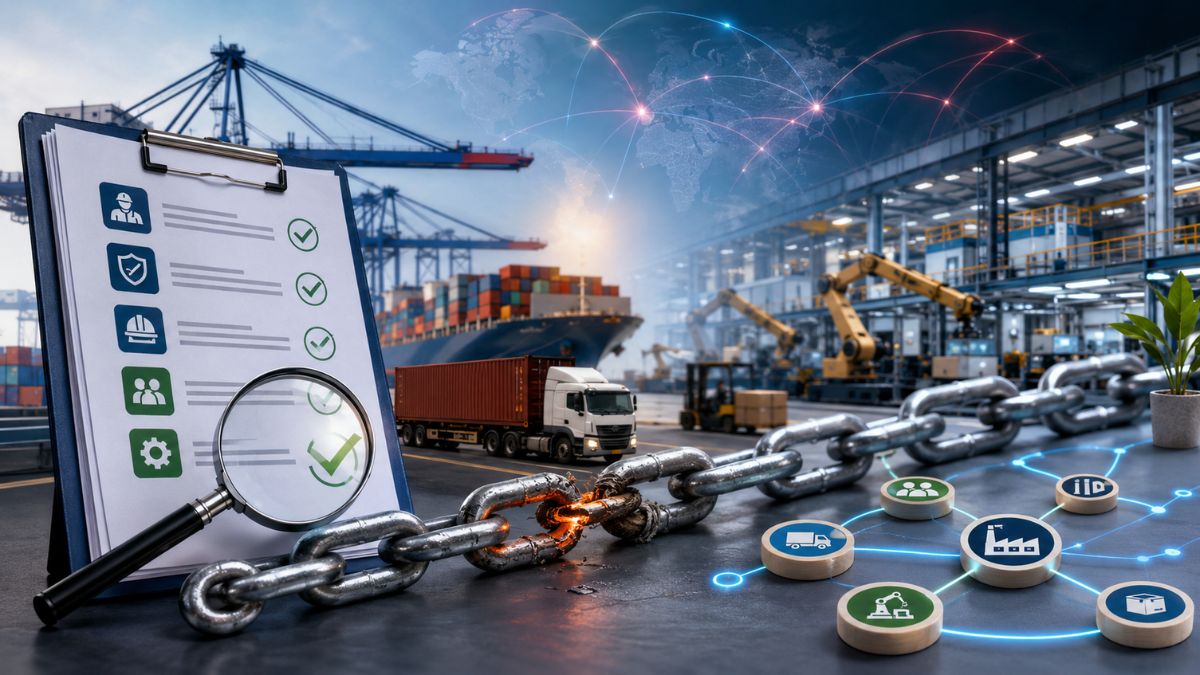
India may get relative relief from the United States’ Section 301 tariff, as the two sides agree shortly on the terms of the interim bilateral trade agreement. To reduce the tariff linked to forced-labour imports from the currently proposed 12.5%, New Delhi may need to strengthen the mechanism for supply-chain labour compliance, sources privy to the matter said.
Currently, while domestic regulations proscribing forced labour are duly supported by law, due diligence on upstream supply chains are largely voluntary in nature. This deficiency may be addressed with a new set of norms.
The US has proposed a lower Section 301 tariff rate of 10% for the European Union and Indonesia, while India and most of its regional peers are threatened with a higher levy.
A lower levy relative to key competitors like Bangladesh and Vietnam would enhance US market access for Indian exporters in assorted areas such as textiles, agricultural machinery, solar equipment, steel, and foundry products.
The United States Trade Representative (USTR) in its Section 301 investigation report on India higlighted that the country lacks a law that specifically prohibits import of goods produced wholly or partly through fored labour.
It further said that India is yet to put in place a supply-chain due diligence regime that authorises Customs to block the import of an article solely on the basis of forced-labour content.
However, the allegation in USTR’s Initiation Notice would only stand up to scrutiny in a pure mechanical sense. India ratified the ILO Abolition of Forced Labour Convention, 1957, and was signatory to the core ILO convention in 1930 that defined “forced labour.”
Further, Article 23 of the Constitution, along with the Bonded Labour System (Abolition) Act, 1976, provides a comprehensive legal framework to prohibit, penalise and remedy forced labour.
The country also has constitutional protections, labour laws as well as national guidelines on responsible business conduct that indirectly promote supply-chain labour compliance. What it lacks is a dedicated market-access regime that militates against supply chain human rights violations.
ALSO READIndia-US trade pact enters crucial week: July tariff deadline and Section 301 in focus
intent to establish risk-based due diligence and traceability mechanisms
According to official sources, the government and industry bodies have expressed their intent and willingness to establish risk-based due diligence and traceability mechanisms in their repose to the USTR charges.
The Ministry of Commerce and Industry told the USTR that its notice is premised on aggregate macroeconomic indicators, without identifying any specific Act, policy or practice of India that could be considered “unreasonable or discriminatory” or that “burdens or restricts United States commerce.”
The ministry noted that an Act (law), policy or practice of a country that hurts American trade must be clearly pointed out for self-initiation of a Section 301 probe.
On its part, Ficci has apprised the USTR of India’s export supply chains, particularly those servicing the US being integrated into global value chains that are subject to stringent contractual, regulatory, and reputational controls.
“Indian exporters typically operate within long-term commercial relationships with multinational buyers, including US companies, that impose strict requirements relating to labour standards, traceability, and ethical sourcing,” the industry body said.
The hearing on the USTR’s new tariff proposal of 12.5% will be held from July 7 onwards and New Delhi can get lower 10% tariffs if it agrees to address the “failure to impose forced labour importation prohibition.”
ALSO READDespite global headwinds, India’s merchandise exports rise 15% from April to mid-June: Goyal
Experts acknowledge that India does not have an import-control mechanism comparable to Section 307 of the US Tariff Act that allows US Customs and Border Protection to detain and exclude goods linked to forced labour anywhere in a supply chain.
“A trade-based import prohibition is not simply a statutory provision. It requires investigation powers, evidentiary standards, enforcement capacity and a mechanism through which businesses can challenge adverse findings. “Those institutional requirements are harder to build than the law itself,” said Vishwas Panjiar, Managing Partner at SVAS Business Advisors.
“The more practical response is sector-specific. Industries facing direct US scrutiny, particularly textiles, seafood and critical minerals, should be focused on sourcing documentation, supplier verification and labour-compliance records,” he said.
“The premise of the Section 301 probe is questionable. The present American approach is to use multiple tools — trade deficits, labour standards, subsidies and supply-chain risks etc. against its trade partners,” Partha Pratim Mitra, Former Principal Labour & Employment Adviser at Ministry of Labour & Employment, said.
The EU Forced Labour Regulation will take effect in 2027. Any compliance infrastructure built in response to US pressure should be designed to satisfy those standards as well. “Building it once for the US and rebuilding it eighteen months later for the EU will be neither efficient nor credible to either regulator,” Panjiar added.
Deloitte India Partner Gulzar Didwania said the government and the industry should use the July 7 hearing to submit evidence on existing labour-law safeguards and supply-chain compliance measures. This would demonstrate regulatory responsiveness and allow India to engage with the issue while broader legislative reforms are being considered, he said.
In a note on Section 301, the Confederation of Indian Indutry highlighted that Indian industry and their global buyers are increasingly working with suppliers to ensure Responsible Business Conduct Practices across supply chains. This is in anticipation of evolving due diligence requirements in major export markets including the US.
“Recent initiatives in the automotive and manufacturing sectors have focused on strengthening supplier-level implementation of labour and human-rights due diligence,” the industry body said.
On their part, companies have established documented policies and practices that expressly prohibit the use of forced labour, bonded labour, or child labour at any stage of the production process, it added, while referring to Code of Conduct & Ethics Policy, Supplier Code of Conduct and Environmental, Social & Governance frameworks.
The Section 301 proposal follows US attempt to rebuild tariff powers after emergency tariffs were struck down by the US Supreme Court in February. In effect, Washington is seeking to impose an extraterritorial compliance obligation on trading partners, Mitra said.
The BTA negotiations offer India a tactical window to either seek a specific relaxation from the “forced labour” finding or at least agree to a framework on the issues concerning the US within agreed timelines. This could help support India’s case for a lower tariff tier,” Trade Policy Leader, EY India Agneshwar Sen said.
“India’s Customs Act does give the Central Government broad power to prohibit imports or exports by notification for listed public-interest purposes. So India likely has a legal route to create such controls quickly by notification, but there is no clear standing regime today equivalent to a “forced-labour import ban,” Co founder and COO of Trezix Sunil Kharbanda
A well-calibrated import prohibition regime, supported by risk-based enforcement rather than blanket restrictions, would strengthen India’s position as a trusted manufacturing and sourcing destination, said Ayush A Mehrotra, Partner at Khaitan & Co.
As of now, India doesn’t have a direct equivalent to Section 301 which is esentially a uniletarall trade enforcement tool. India’s closest comparable mechanisms are anti-dumping, countervailing and safeguard actions under the Customs Tariff Act.
TOPICSbusiness newsECONOMYIndia-USIndia-US trade dealThis article was first uploaded on June twenty-two, twenty twenty-six, at twenty-nine minutes past seven in the evening. © The Indian Express (P) Ltd