Paolo Ardoino, the CEO of Tether—the issuer behind the world’s largest stablecoin—has voiced concerns regarding how a potential artificial intelligence (AI) bubble might influence Bitcoin by the year 2026.
During a recent episode of the Bitcoin Capital podcast, co-hosted by Bitfinex Securities and Blockstream, Ardoino shared his perspective on Bitcoin (BTC) and the wider cryptocurrency landscape.
He highlighted that Bitcoin remains “too closely tied” to traditional capital markets, making it vulnerable to fluctuations caused by an AI-driven market bubble. This hypothetical bubble stems from rapid investments in AI infrastructure, including massive data centers and GPU installations.
“The so-called AI bubble revolves around concerns that companies are pouring excessive funds into building vast AI infrastructures with enormous power consumption,” Ardoino explained.
Ardoino Foresees Fewer Severe BTC Price Drops Like Those in 2022
The Tether CEO predicted that if sentiment around AI shifts negatively in 2026, resulting turmoil within U.S. stock markets could ripple into Bitcoin’s price movements.
Apart from risks linked to this possible AI market correction, Ardoino does not anticipate significant threats to Bitcoin’s performance thanks to increasing adoption among pension funds and governmental bodies worldwide.
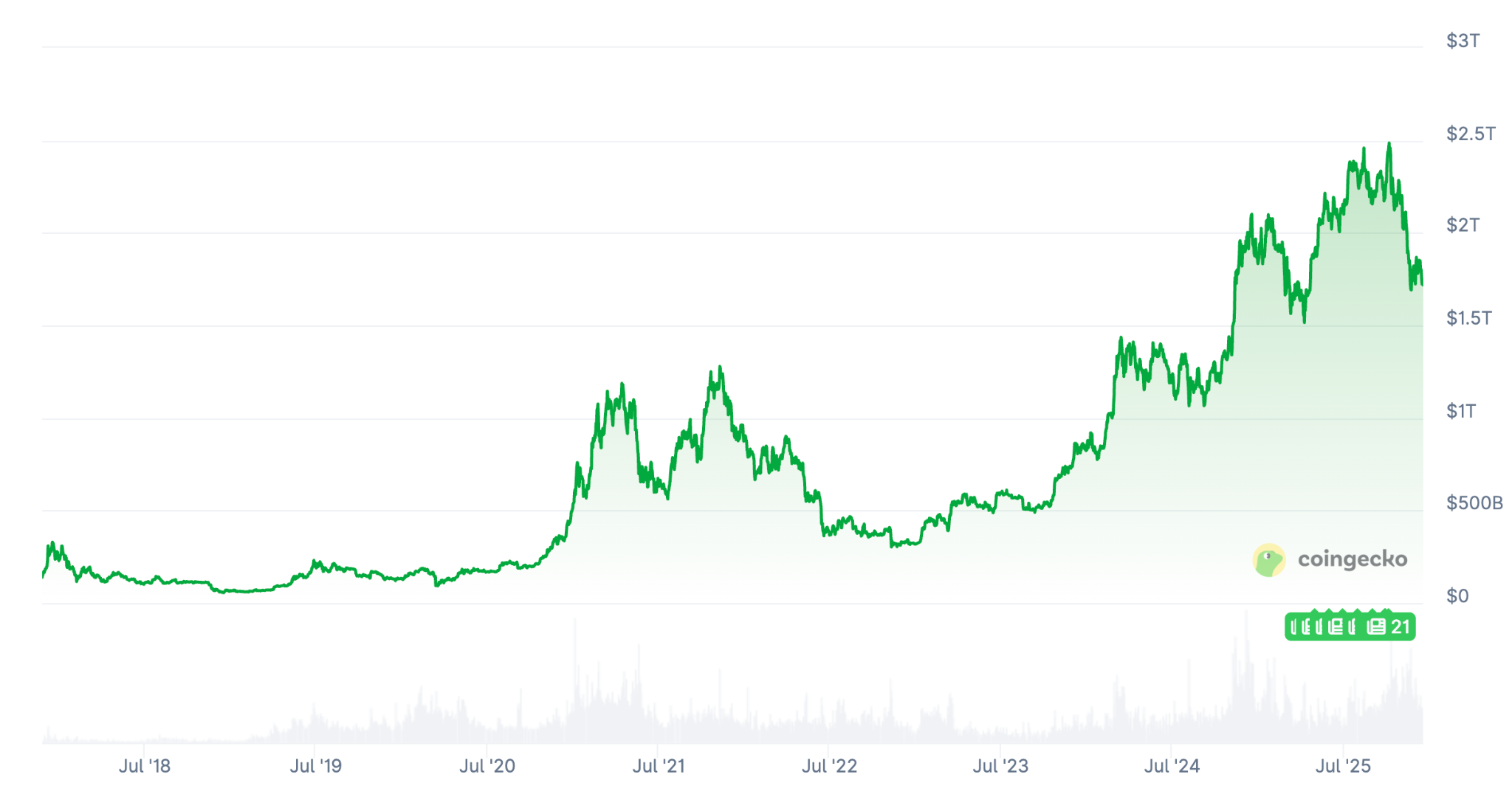
Bitcoin (BTC) price trend since 2018. Source: CoinGecko
“I believe we won’t see drastic drops of about 80%, like those experienced in early 2018 or during 2022,” he remarked confidently.
Additionally, Ardoino expressed strong optimism about tokenizing real-world assets (RWA), predicting that digital securities and commodities will experience tremendous growth moving forward.
“However, my only concern is maintaining Bitcoin's essence—it shouldn't become overwhelmingly institutionalized,” he added thoughtfully.
Cautious Outlook on Europe and Treasury-Only Crypto Firms
While bullish on both Bitcoin’s future and asset tokenization for 2026, Paolo Ardoino conveyed skepticism regarding crypto adoption progress within Europe as well as certain trends involving digital asset treasury firms next year.
“I hold a very bearish stance towards Europe because it continues lagging behind when it comes to innovation,” he stated bluntly during the interview.

(Source: Bitfinex)
“Europe tends always to be last when innovation is discussed. It attempts regulating areas it still doesn’t fully grasp yet—which is quite unfortunate.”
The discussion also touched upon implications surrounding the European Union’s Markets in Crypto-Assets Regulation (MiCA), which has fueled debates over centralized versus decentralized oversight within crypto sectors across Europe.
Tether notably stands out as one of few major firms openly refusing compliance with MiCA rules—a position causing many European crypto service providers to delist USDT stablecoins issued by Tether locally.
Tackling Digital Asset Treasuries (DATs), Ardoino admitted he isn’t particularly optimistic about treasury-only crypto companies lacking broader operational businesses supporting them:
“'a treasury company should ideally run an exceptional operational business alongside managing its treasury.’”
“'.Twenty One aims at being an outstanding Bitcoin-focused firm delivering comprehensive services while holding a substantial bitcoin treasury.’”