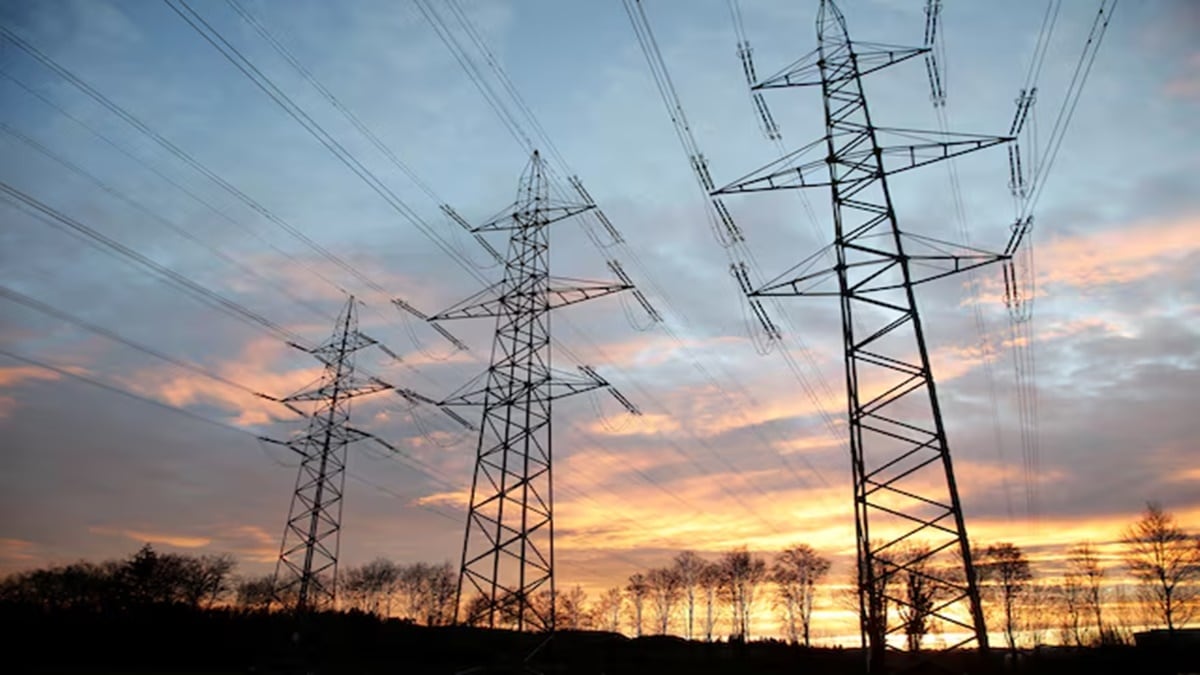
Persistent execution bottlenecks — ranging from right-of-way (RoW) issues to forest clearances — are threatening to slow India’s ambitious ₹9.16 lakh crore power transmission expansion plan, even as electricity demand surges and renewable capacity scales up, a CareEdge Ratings report said.
Widening Gap
The stress is already visible in project execution. In FY25, transmission line additions stood at 8,830 circuit-km, nearly 42% below the target of 15,253 circuit-km, underscoring the widening gap between targets and on-ground progress.
Delays are not isolated. As of January 2026, 76 transmission projects worth over ₹93,000 crore under the tariff-based competitive bidding (TBCB) route were operational, but only a limited number were completed on schedule, with most projects facing time overruns of 3–18 months.
ALSO READAfter resilient FY26, war clouds India’s FY27 growth outlook
The constraints stem largely from land acquisition hurdles, RoW challenges and delays in statutory approvals — factors that continue to weigh on the pace of grid expansion.
India’s peak power demand is projected to jump to 458 GW by FY32 from about 275 GW as of mid-FY25, driven by strong growth in electricity consumption and rapid renewable energy additions.
Massive Capex Requirements
To support this demand trajectory, the government has outlined a transmission expansion roadmap under the National Electricity Plan (NEP) 2022–32, entailing a total capital outlay of ₹9.16 lakh crore, including ₹6.60 lakh crore for inter-state transmission systems (ISTS).
The plan involves adding over 6 lakh circuit-km of transmission lines and more than 24 lakh MVA of transformation capacity by FY32, reflecting the scale of infrastructure required to integrate renewable energy into the grid.
However, progress so far indicates a mixed picture. As of January 2026, around three-fourths of the targeted ISTS transmission line network has been completed, with the remaining capacity yet to be added over the next six years.
To bridge this gap, investment requirements are set to rise sharply. The Central Transmission Utility of India Ltd (CTUIL) has identified 67,263 circuit-km of transmission lines and 6.3 lakh MVA of transformation capacity to be added by FY31, as part of its master rolling plan.
ALSO READLPG imports down 45% in March
This translates into a capex pipeline of about ₹4.86 lakh crore, of which ₹2.22 lakh crore worth of projects are already under implementation, while the rest are at various stages of planning and bidding.
The scale-up will require a significant increase in annual spending. The report estimates that the sector will need to deploy around ₹81,000 crore annually between FY26 and FY31, compared with the ₹45,000–48,000 crore average over the past three years.
While the pipeline is robust, execution remains the key risk.
“The opportunity pipeline in the transmission sector is substantial… however, execution challenges—largely stemming from right-of-way issues, forest clearances and coordination delays leading to time overrun up to 12 months—remain a constraint,” said Palak Vyas, Associate Director, CareEdge Ratings.
Of the projects currently under implementation, only 35 are progressing as per schedule, while the rest are facing delays, though a majority are within manageable timelines of up to 12 months.
Despite the near-term execution stress, the sector’s fundamentals remain intact. The report noted that “the overall outlook for the sector remains ‘Stable’, anchored by the inherent resilience of commissioned assets and sustained policy support”.
The urgency of transmission expansion is closely linked to India’s clean energy ambitions. With a target of 500 GW non-fossil capacity by 2030, timely grid expansion will be critical to evacuate renewable power and avoid bottlenecks.
Any delay in transmission infrastructure risks creating mismatches between generation and evacuation capacity, potentially impacting system efficiency and renewable integration.
TOPICSPowerpower discomsThis article was first uploaded on April one, twenty twenty-six, at thirty-three minutes past six in the evening.