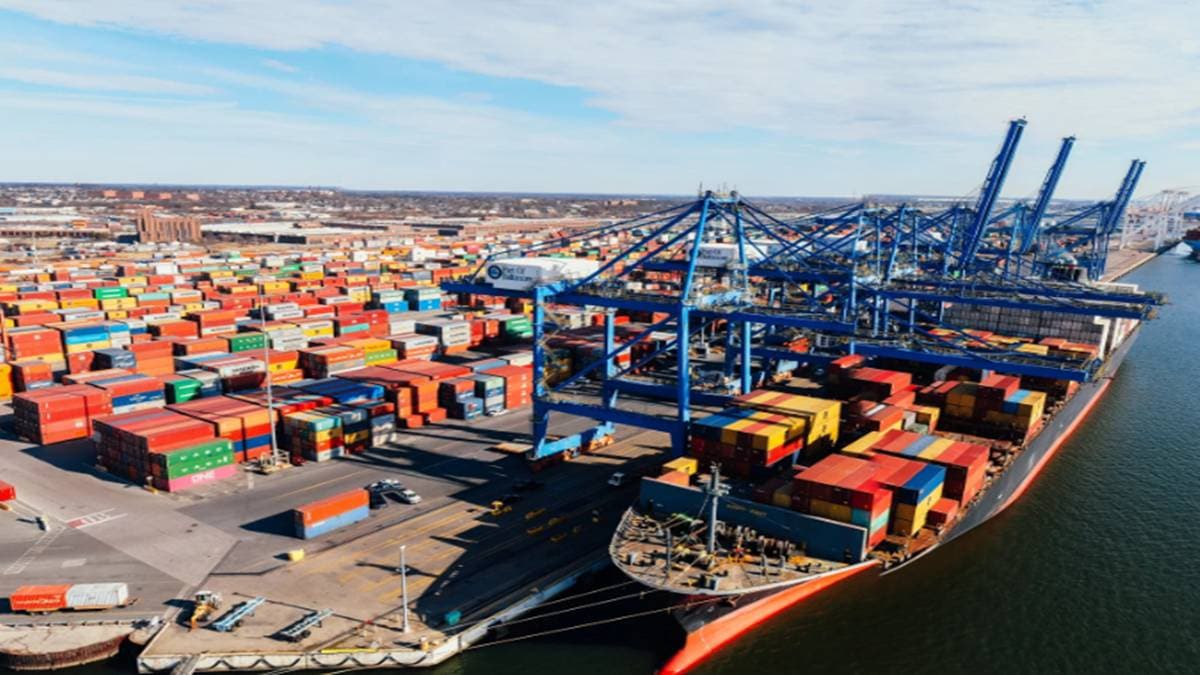
India received about eight liquefied natural gas (LNG) cargoes totalling roughly 0.56 million tonnes (mt) between March 1 and March 10 — mostly from Oman — about 15% lower than the same period last month, as tensions around the Strait of Hormuz disrupt global LNG shipments, according to data from ship-tracking firm Kpler shared exclusively with Financial Express.
During the same period in February 2026, India received around 0.7 mt of LNG, indicating a slowdown in arrivals.
However, 18–19 additional LNG cargoes totalling around 1.3 mt are expected to arrive in India later this month, based on Kpler AIS projections. These shipments are likely to originate from Qatar, the United States, West Africa and Mozambique, although continued disruption in the Gulf could affect scheduled deliveries.
ALSO READAgri cargoes for West Asia retrun to Indian ports
India imports roughly 2.2 million tonnes of LNG every month, leaving the country exposed to supply disruptions when shipping through critical routes such as the Strait of Hormuz is affected.
The supply crunch has intensified after maritime security concerns left 51 LNG carriers stranded on either side of the Strait, tightening availability and pushing freight rates higher.
According to Kpler data, 16 LNG carriers remain idle in the Middle East Gulf near Qatar’s 77 mtpa Ras Laffan LNG export complex and Abu Dhabi’s Das Island LNG terminal. On the other side of the strait, 35 carriers are waiting in the Arabian Sea to enter the Gulf, with around 26 expected to call at Ras Laffan.
The disruption poses a significant risk for India, which sources around 53% of its LNG imports from Qatar and the UAE.
“India remains materially exposed to the immediate supply risks following Qatar’s force majeure and the sharp rise in Asian LNG prices,” said Sonal Ranjan, LNG & Natural Gas Market Analyst at Kpler.
“While Indian buyers are scouting alternative cargoes from the US Gulf Coast and West Africa, higher prices are likely to drive demand adjustments in price-sensitive sectors such as gas-fired power and industrial consumption, while city gas distribution and the fertilizer sector are likely to remain relatively shielded due to policy support,” she added.
India consumes roughly 190–195 million standard cubic metres per day (mmscmd) of natural gas, nearly half of which is met through imports in the form of LNG.
ALSO READCostlier crude: Economists see downside risk of over 50 bps to FY27 GDP growth
Regulatory Response
To manage supply risks, the government issued an order under the Essential Commodities Act prioritising gas allocation to key sectors. Supplies are directed first to piped cooking gas (PNG) households, compressed natural gas (CNG) for vehicles and LPG production, which will receive 100% of their average gas consumption over the past six months.
Industrial Fallout
Other sectors face restrictions. Industries and commercial consumers connected to the national gas grid will receive 80% of their recent average supply, while fertiliser plants will receive 70% of their allocation.
With cargo movements slowing in the Gulf and buyers competing for replacement volumes, analysts say importers may increasingly rely on supplies from the US Gulf Coast, West Africa and Australia to bridge the gap.
TOPICSLNGThis article was first uploaded on March twelve, twenty twenty-six, at fifty-eight minutes past twelve in the am.