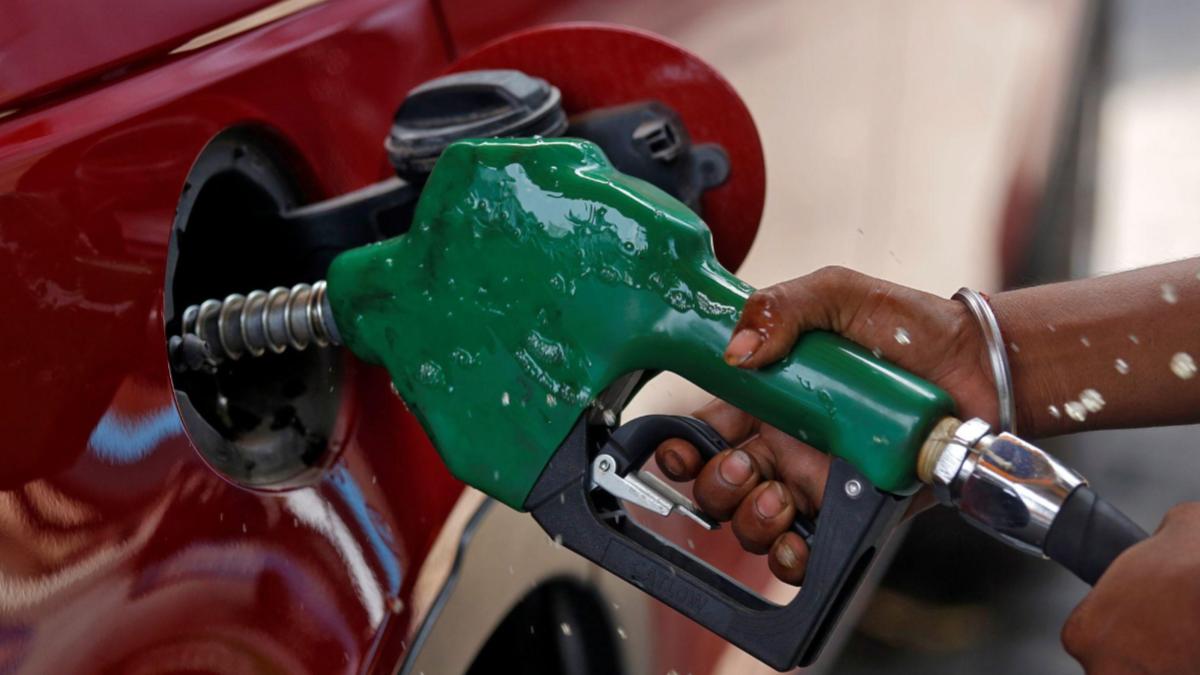
Petrol and diesel prices may need to be raised by another ₹5 per litre despite multiple hikes over the past three weeks, as state-run oil marketing companies (OMCs) continue to incur under-recoveries of around ₹610 crore every day amid elevated crude oil prices and fuel losses triggered by the West Asia crisis.
According to Prashant Vasisht, Senior Vice President and Co-Group Head, Corporate Ratings, ICRA Ltd, OMCs are currently losing around ₹5.5 per litre on petrol and ₹4.5 per litre on diesel, even after cumulative retail fuel price increases of about ₹7.5 per litre since May 15.
“Taken together, the three state-run fuel retailers could be facing an overall under-recovery of around ₹610 crore daily. A further increase of about ₹5 per litre in petrol and diesel prices could help OMCs move closer to break-even on auto fuel sales,” Vasisht said.
ALSO READ4% inflation target remains sacrosanct despite supply-side pressures: RBI Governor
Downstream Deficits
The losses extend beyond auto fuels. ICRA estimates LPG under-recoveries remain elevated at around ₹680 per cylinder, while losses on aviation turbine fuel (ATF) are running at nearly ₹93 crore per day.
According to a Crisil Ratings analysis, cumulative petrol and diesel price increases could move closer to ₹10 per litre if crude oil prices remain elevated and OMCs continue to pare losses.
Macroeconomic Contagion
“The broader effect will reverberate across the economy through higher transport costs, pushing up both food and core inflation,” Crisil said.
The ratings agency estimates that a ₹7.5-per-litre increase in petrol and diesel prices could add around 36 basis points to consumer inflation, while a cumulative ₹10-per-litre increase could raise the impact to 48 basis points.
Transport costs are expected to be the main transmission channel. Crisil noted that freight transport accounts for 54% of India’s logistics costs, while road transport carries nearly 71% of total freight movement. Fuel alone constitutes around 42% of road transport costs, making supply chains highly vulnerable to fuel price increases.
As a result, sectors dependent on transportation are expected to face higher costs. Crisil said categories such as dairy products, fruits, pulses, spices, tea, coffee, eggs, meat and fish could witness stronger price pass-through as rising freight costs feed into retail prices.
ALSO READCIL ramps up coal availability for non-power sector, relaxes linkage rules
Manufacturers are also facing a dual cost shock from elevated crude-linked inputs and higher transportation expenses, increasing pressure on margins and consumer prices.
Crude oil prices have averaged around $112 per barrel during the first two months of the current fiscal, significantly higher than Crisil’s full-year base-case estimate of $95 per barrel.
With fuel retailers still incurring substantial losses despite recent price hikes, the debate over balancing OMC finances, inflation management and consumer affordability is set to intensify in the coming weeks.
TOPICSPetroleumThis article was first uploaded on June five, twenty twenty-six, at thirty-nine minutes past ten in the night. © The Indian Express (P) Ltd