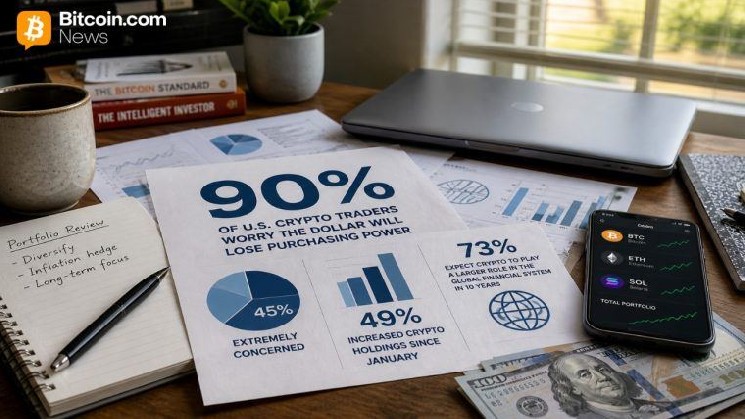
Growing concerns about inflation are prompting U.S. cryptocurrency traders to invest more in digital assets, with a staggering 90% expressing fears that the dollar will lose its purchasing power. A recent survey conducted by OKX revealed that nearly half (49%) of respondents have increased their crypto holdings since January, highlighting the mounting pressure on investment strategies.
Key Insights:
- 90% of surveyed traders fear a decline in the dollar’s purchasing power.
- 49% have boosted their crypto investments since January due to inflation worries.
- 73% anticipate a larger role for cryptocurrencies in global finance.
The Impact of Inflation on Crypto Investment Strategies
A significant shift is occurring among U.S. cryptocurrency traders regarding capital allocation, driven by rising inflation fears. According to an OKX survey released on May 1, 2026, almost half (49%) of participants reported increasing their investments in cryptocurrencies since the beginning of the year as anxiety over future dollar value escalates among active American crypto investors.
This survey involved 1,000 Americans engaged in cryptocurrency trading and underscores widespread apprehension regarding economic stability. As stated by OKX:
“Ninety percent of respondents expressed concern that the US dollar could significantly diminish in purchasing power within five years. Notably, 45% identified themselves as ‘extremely concerned,’ making this sentiment prevalent among those surveyed.”
The data reveals that Millennials exhibit the highest levels of extreme concern at 49%, followed closely by Gen Z at 44%, Gen X at 39%, and Boomers at just 32%. This growing unease has led many traders to adjust their asset allocations; nearly half indicated they had increased their crypto holdings over six months due to inflation concerns—over one-quarter made these adjustments within just the last month alone. Furthermore, around forty percent reported reallocating more than ten percent of their portfolios into cryptocurrencies while fifteen percent shifted over twenty percent.
Bitcoin’s Role as a Wealth Preservation Asset Among Traders
The findings also highlight Bitcoin’s emerging status as a wealth-preservation tool; forty-seven percent view it primarily as such compared to only sixteen percent who disagree. Among those who regard Bitcoin favorably for this purpose, one-third noted an increase in conviction since early 2026. While gold remains predominant as a trusted asset for preserving wealth—identified by thirty-two percent—Bitcoin follows closely behind with twenty-six percent support overall; notably among Gen Z investors where Bitcoin outpaces gold (28% vs.21%). This trend illustrates differing preferences between younger digital asset enthusiasts and traditional wealth preservation methods.
Looking ahead suggests continued optimism towards cryptocurrencies’ roles within financial systems globally; according to OKX:
“Seventy-three percent expect cryptocurrencies will play an expanded role within global finance ten years from now.”
A mere three-percent consider cryptocurrency merely a fleeting trend—a reflection not representative of all U.S adults but indicative nonetheless amongst active participants within this market segment indicating how inflationary pressures are reshaping investment behaviors toward digital currencies like Bitcoin and beyond.
FAQ
- What percentage of U.S. crypto traders are worried about inflation?
Ninety percent express concerns about potential declines in purchasing power for the US dollar due to rising inflation rates. - How many respondents increased their crypto holdings recently?
Forty-nine percent reported boosting their investments into cryptocurrencies since January amid growing worries surrounding economic conditions. - Younger generations seem more inclined towards which assets?
Younger generations like Gen Z show stronger preferences towards Bitcoin compared with traditional assets such as gold when considering wealth preservation options. - What do experts predict about cryptos’ future roles?
Seventy-three % believe that cryptos will gain significance across global financial systems over next decade according surveys conducted amongst active trader populations.