
On March 28, Bitcoin experienced a further decline, hovering around $66,200 as market participants reacted to increasing skepticism regarding the de-escalation between the US and Iran. Investors remain unconvinced by President Donald Trump’s temporary halt on energy strikes lasting ten days, particularly in light of reports indicating that Israel continued its military actions during this timeframe.
This sentiment is reflected across various financial markets.
Israel has targeted two of Iran’s major steel production facilities, a power station, and civilian nuclear sites among other critical infrastructure. The Israeli government asserts that these actions were taken in collaboration with the United States.
This assault undermines President Trump’s extended timeline for diplomatic efforts.
Iran will impose a SEVERE cost for these Israeli aggressions.
— Seyed Abbas Araghchi (@araghchi) March 27, 2026
The S&P 500 index has seen a consistent downward trend throughout the week, reaching its lowest point in six months.
This widespread sell-off indicates a distinct shift towards risk aversion among investors who are retreating from equities due to escalating geopolitical tensions and macroeconomic uncertainties.
The cryptocurrency market is mirroring this trend as well.
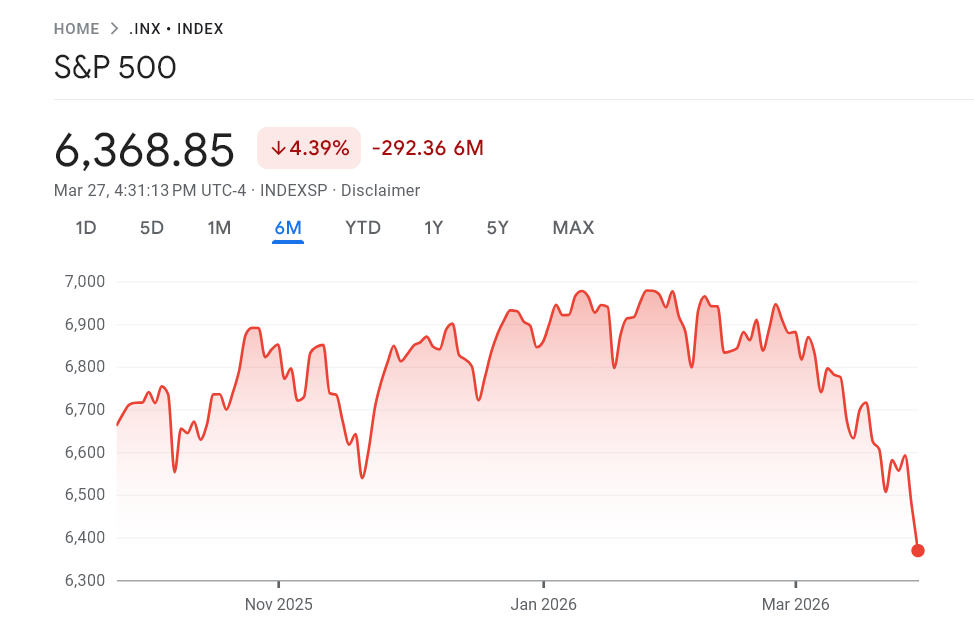
S&P 500 Concludes March at Six-Month Low. Source: Google Finance
Bitcoin’s trading behavior reveals ongoing weakness; intraday recoveries have been unable to sustain momentum. This points to more profound underlying issues within the market.
Market participants are interpreting Trump’s pause not as an advancement toward peace but rather as merely postponing further escalation. Reports of ongoing attacks have only solidified this perspective.
Simultaneously, rising Treasury yields are tightening financial conditions. Increased yields diminish liquidity and elevate capital costs—typically exerting pressure on risk assets such as stocks and cryptocurrencies alike.
This scenario results in Bitcoin behaving more like a technology stock than serving its traditional role as an inflation hedge.
Bitcoin Price Continues to Decline. Source: CoinGecko
In earlier cycles marked by geopolitical strife, Bitcoin often found support; however, that dynamic appears absent now. Instead of benefiting from such tensions, factors like inflation concerns, high oil prices alongside diminishing expectations for interest rate cuts are steering market trends currently.
The current message is unmistakable:
Until tangible progress toward de-escalation occurs and yield rates stabilize significantly, crypto markets will likely continue facing headwinds with prevailing downside risks dominating in the near term..... ,
,
- ,
- ,
,
- “, “:”, “”, “”, “&”, “””, “”, “”, “”}The article titled “Israel Violates Trump’s Iran Pause; Bitcoin and Stocks Feel The Impact,” was originally published on BeInCrypto.