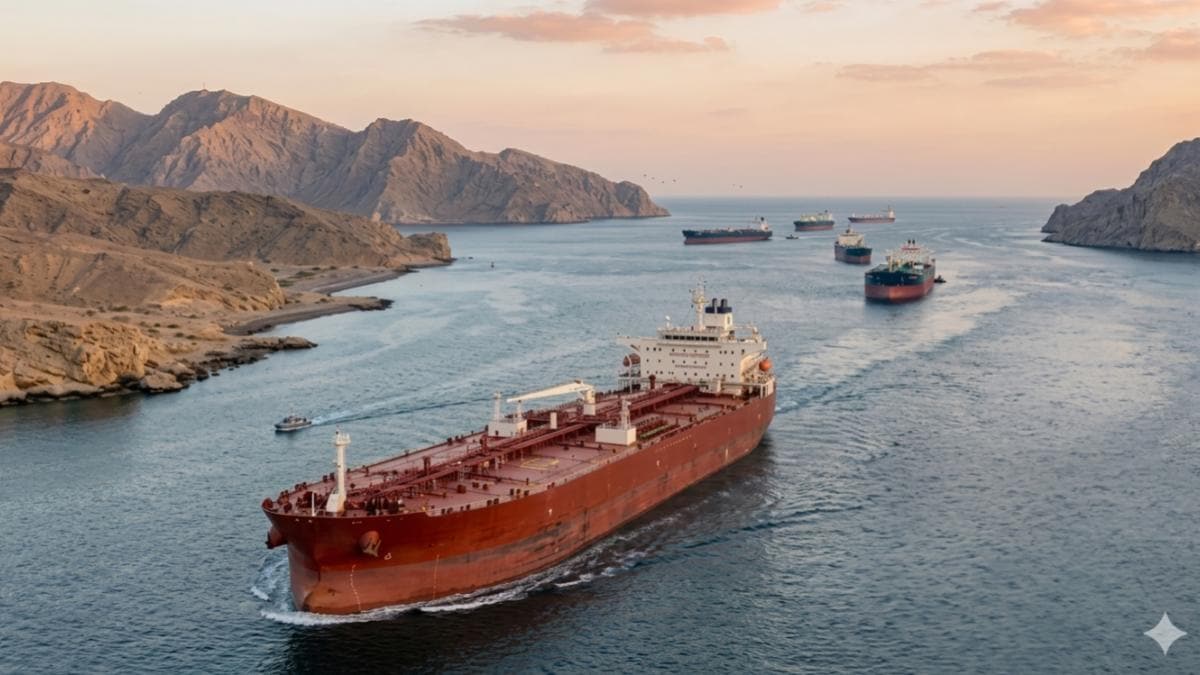
In a late shift highlighting volatile crude flows, a 600,000-barrel Iranian oil cargo bound for Vadinar on April 4 dropped India near the coast and switched its destination to China, with the tanker Ping Shun altering course southward near the Indian coastline just before arrival, according to Kpler ship tracking data, raising fresh questions over the feasibility of Tehran’s return to India’s crude basket even under a temporary sanctions window.
“An Iranian crude vessel ‘PING SHUN’ that had been en route to Vadinar, India, over the past three days has dropped India as its declared destination near arrival and is now signaling China,” said Sumit Ritolia, manager, modelling & refining at Kpler.
Ship tracking data showed the Eswatini-flagged tanker Ping Shun, which had initially indicated Gujarat’s Vadinar port, taking a sharp turn south near the Indian coast and switching its declared destination to Dongying in China’s Shandong province.
The cargo was loaded earlier this month at Iran’s Kharg Island and was expected to arrive in India between late Thursday and early Friday before the sudden diversion.
ALSO READChina seeks to leverage trade with India for impact
The development comes even as the United States issued a 30-day sanctions waiver on March 21, allowing transactions involving Iranian crude already loaded on vessels to continue till April 19, raising expectations of limited flows to India.
Payment Deadlocks
Market participants pointed to tightening commercial conditions as a key factor behind the shift. “Per market sources, the shift appears to be payment-related, with sellers tightening terms, moving away from the earlier 30–60 day credit window toward upfront or near-term settlement,” Ritolia said.
He added that such changes reflect evolving sensitivities in sanctioned oil trade. “While such mid-voyage destination changes are not unprecedented with Iranian crudes, they highlight the increasing sensitivity of trade flows to financial terms and counterparty risk.”
“If the payment issues are resolved, the cargo could still make its way to an Indian refinery. However, the episode underscores how commercial terms are becoming as critical as logistics in determining Iranian crude flows to other countries apart from China,” he said. If the vessel ultimately docks in India, it would mark the first arrival of Iranian crude in the country since 2019.
ALSO READ2025-26 goods exports grew despite multiple challenges
The incident comes at a time when India is recalibrating its crude sourcing amid geopolitical disruptions and exploring options to diversify supply.
Historical Context
India had historically been a significant buyer of Iranian oil. In 2009-10, India imported 22.1 million tonne, accounting for 14.4% of its total crude imports. Volumes declined to 11.2 million tonne in 2014-15 as sanctions tightened and payment channels became increasingly constrained.
Following the lifting of sanctions in 2016 under the Iran nuclear deal, imports rebounded sharply. India purchased 27.1 million tonne in 2016-17, making Iran its third-largest supplier after Saudi Arabia and Iraq. Attractive commercial terms, including discounted shipping and extended credit periods, supported this growth.
However, the reimposition of US sanctions led to a steep decline. Imports fell to 2 million tonne in 2019-20, before dropping to zero after May 2019, when waivers expired.
Since then, India has replaced Iranian volumes with supplies from the Middle East, the United States and other producers.
TOPICSCrude oilThis article was first uploaded on April three, twenty twenty-six, at fifty-three minutes past seven in the evening.