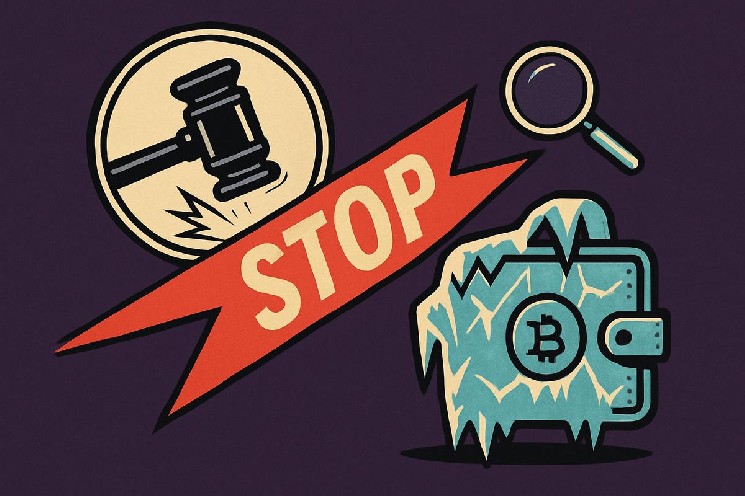
Regulators across the European Union may soon get sharper teeth when it comes to crypto oversight. On Wednesday, September 30, 2026, the European Securities and Markets Authority (ESMA) said national watchdogs and ESMA itself need broader authority to enforce the bloc’s crypto rulebook, arguing that current tools move too slowly to stop scams, money laundering and unauthorized trading before the damage is done. The recommendation, reported from Paris by Reuters, lands at a pivotal moment for EU crypto regulation, as Brussels works through a review of the Markets in Crypto Assets Regulation, better known as MiCA.
Key takeaways
ESMA wants the power to order crypto firms to freeze assets suspected of being linked to crime, money laundering or terrorist financing.National regulators could gain authority to take down websites tied to scams or unauthorized crypto companies.ESMA is pushing to ban misleading crypto marketing tactics and set rules for third-party promotion.Country-level regulators would get specific powers to combat non-EU crypto firms illegally soliciting EU investors.Crypto companies could be required to disclose full cost information to customers.The proposals are ESMA’s contribution to a wider consultation on MiCA that is currently under review.
ESMA Calls for Expanded Regulatory Powers in EU Crypto Market
ESMA’s core message is simple: enforcing EU crypto regulation is only as good as the tools regulators actually have, and right now those tools are falling short. The watchdog said European regulators should be given more powers to help them enforce crypto rules, framing the request as a direct response to gaps exposed since MiCA came into force.

Know when yourcoins move
Alerts, real-time prices, and market news — all in one app 
 4.8 based on 40K reviews in the App Store and Google Play

Authority to Freeze Crime-Linked Crypto Assets
Under the proposal, ESMA itself should be able to tell crypto companies to freeze assets whenever there are reasonable grounds to suspect a link to criminal activity. The urgency behind this comes down to timing. “Because of current lengthy procedures, when the freezing of suspicious crypto assets (linked to criminal activities) is requested, it is often too late and the assets have disappeared,” ESMA said. In other words, by the time the paperwork clears, the money is often already gone — a gap that has real consequences for victims of fraud and for investigators trying to trace illicit funds tied to money laundering or terrorist financing.
Website Removal for Scam and Unauthorized Crypto Firms
ESMA also wants national regulators, who are responsible for enforcing MiCA day to day, to be able to remove websites linked to scams or to crypto companies operating without authorization. This would give supervisors a faster, more direct way to cut off bad actors at the source rather than relying solely on slower enforcement actions after harm has already occurred.
Proposals to Strengthen Consumer Protection and Market Integrity
Beyond asset freezing and takedown powers, ESMA’s proposals also target how crypto companies talk to and charge customers — an area regulators see as ripe for abuse if left unchecked.
Banning Misleading Crypto Marketing and Third-Party Promotion
ESMA proposed banning certain misleading crypto marketing techniques and introducing rules governing third-party marketing. The push reflects concern that promotional content, including material pushed by affiliates or influencers rather than the companies themselves, can mislead retail investors without falling neatly under existing MiCA enforcement.
Mandating Full Cost Transparency for Customers
The watchdog also proposed requiring crypto companies to provide full cost information to customers upfront. This kind of transparency requirement is a familiar consumer-protection tool from traditional finance, and its extension into crypto markets signals that ESMA wants pricing practices held to the same standard as fees charged by banks and brokers.
Addressing Unauthorized Cross-Border Crypto Activities
One of the trickier enforcement gaps ESMA flagged involves crypto firms based outside the EU that actively solicit EU investors without holding the required authorization. ESMA said country-level regulators should be given specific powers to combat this kind of cross-border activity, which currently falls into a legal gray zone that’s hard to police under existing MiCA enforcement mechanisms. This matters because a single-market framework only works if firms operating outside it can’t simply bypass the rules while still reaching EU customers.
Context: MiCA Review and Regulatory Challenges
These proposals aren’t standalone demands — they’re ESMA’s formal input into a broader consultation on MiCA, which is currently under review. A group of central banks in Europe also submitted their own response to that same consultation the week before ESMA’s statement.
The timing lines up with a broader shift already underway at ESMA. Earlier in the week, at a meeting of the European Parliament’s Committee on Economic and Monetary Affairs on September 28, ESMA chair Verena Ross described the watchdog’s MiCA work as having moved “from rulemaking towards supervision and convergence.” She added: “We want innovation to flourish within a framework that provides clarity for firms, safeguards for investors and confidence in the markets.” ESMA’s 2027 work program, published around the same time, lists operational resilience, outsourcing, reverse solicitation and sufficient EU-based operations among its top supervisory priorities, alongside plans to roll out a centralized market surveillance system known as MIDAS.
Not everyone agrees on how enforcement should be structured going forward. Some regulators have raised concerns about regulatory divergence and uneven, patchy enforcement of MiCA rules across member states — a worry that cuts to the heart of why ESMA is asking for clearer, more consistent powers rather than leaving each national authority to interpret its mandate differently. Strengthening EU crypto regulation enforcement on paper means little if 27 different regulators apply it 27 different ways.
What happens next depends largely on how the European Commission weighs ESMA’s input against industry pushback over compliance costs and against the broader MiCA review expected to conclude by mid-2027. For now, the message from Paris is unambiguous: closing the enforcement gap on ESMA crypto powers, from faster crypto asset freezing to tougher marketing rules, has become the watchdog’s next priority as MiCA enters its supervisory phase.
Article produced with the assistance of artificial intelligence and reviewed by the editorial team.