The leading cryptocurrency, Bitcoin, is experiencing low volatility during the U.S. market hours on Wednesday, trading at $76,204. This period of consolidation is accompanied by slight selling pressure around the $77,500 mark as investors await the U.S. Federal Reserve’s decision on interest rates, which is set to be announced today at 2:00 p.m. ET.
The current lack of buying momentum can also be attributed to ongoing geopolitical tensions in the Middle East. Despite a prolonged ceasefire between the U.S. and Iran, issues such as blockades in the Strait of Hormuz and stalled diplomatic negotiations have contributed to a fearful market sentiment.
Additionally, seasoned trader Peter Brandt has dismissed overly optimistic predictions for Bitcoin reaching $250,000 by 2026. This skepticism further dampens retail investors’ hopes for a significant short-term recovery in prices. While current market conditions suggest continued sideways movement in price trends, institutional players have been steadily accumulating their Bitcoin portfolios throughout the first four months of this year—indicating confidence in a potential rebound.
Market Snapshot: April 29, 2026
On April 29th (Wednesday), Bitcoin’s price fell slightly to $76,000 with an intraday loss recorded at -0.36%. The overall market capitalization remains around $1.52 trillion while Bitcoin’s trading volume over the past day stands at approximately $36 billion.
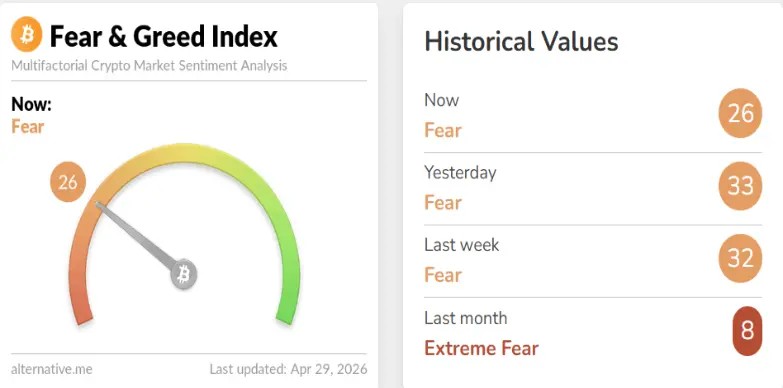
The Crypto Fear & Greed Index currently registers at 26—reflecting “Fear.” This marks a decline from yesterday’s score of 33 and indicates rising apprehension among investors.
Although investor sentiment remains cautious now compared to last month’s extreme fear level of just eight points suggests some improvement over recent weeks; this upward trend hints that while markets are still sensitive to geopolitical events and volatility persists they are transitioning from panic observed in March towards more neutral sentiments—albeit still tinged with anxiety.
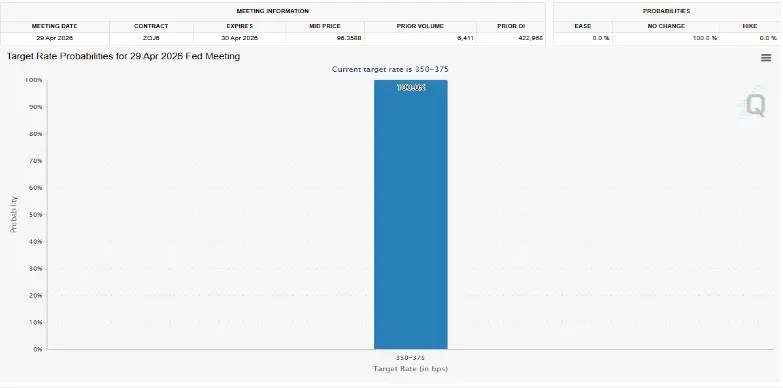
This neutral-to-bearish outlook regarding Bitcoin can largely be attributed to investor anticipation surrounding today’s Fed interest rate decision meeting where expectations lean toward maintaining rates between three-point-five percent (3.5%) and three-point-seven-five percent (3.75%). Observers will closely monitor Chair Jerome Powell’s press conference for insights into future monetary policy amid rising oil prices stemming from tensions related to Iran-U.S relations alongside inflation levels hitting three-point-three percent (3.3%).
Some analysts speculate about potential interest rate cuts later this year; however others foresee sustained high rates due primarily ongoing geopolitical strife coupled with inflationary pressures remaining persistent within economic forecasts.
The first quarter marked transformative changes for bitcoin adoption as an institutional asset despite facing corrections following peak valuations witnessed previously during late-2025 periods. Institutional interests surged significantly resulting now holding upwards exceeding two million two hundred thousand bitcoins representing greater than ten percent share total supply available. Notably net additions amounted sixty-nine thousand bitcoins acquired reflecting belief institutions viewed current environment favorable opportunity amidst volatile conditions affecting pricing dynamics.
The corporate sector played pivotal role contributing increase holdings both public private entities acquiring almost sixty-two thousand additional coins reinforcing narrative positioning bitcoin reserve asset status amid mixed retail sentiments leading outbound flows totaling same amount across respective quarters resulting institutionally driven net purchases.
This trend illustrates widening disparities existing short-term speculative buyers versus long-term holders led aggressive accumulators like MicroStrategy combined maturing spot ETF industry providing infrastructure facilitating substantial capital inflows.
Companies
Ticker
Reported BTC Holdings
Latest Activity(Q1-Q2)2018
&nbps;
Acknowledging divergence perspectives held amongst various stakeholders yields insights into evolving landscape surrounding cryptocurrencies specifically focusing upon factors influencing demand-supply equilibrium shaping future trajectories within broader financial ecosystem.
Expert Insights From Peter Brandt And Others On Current Trends In Cryptocurrency Market Dynamics!
In recent tweets veteran futures trader Peter Brandt cautioned participants regarding unrealistic expectations associated with widely circulated projections suggesting possible attainment values reaching up towards two hundred fifty-thousand dollars ($250K) per coin by end-year twenty-sixteen stating attached charts reveal consistent patterns forming parallel trendlines indicative channel formations developing.
Brandt emphasized though such formations do not preclude chances significant rallies occurring theoretically they fail represent bullish bottoming patterns necessary foster sustainable growth trajectories moving forward!
Meanwhile Citigroup Standard Chartered have adjusted downward their respective forecasts predicting twenty-six values settling closer one hundred twelve-thousand ($112K) one hundred thousand dollars ($100K) respectively attributing these revisions stalled legislative efforts slower demand ETFs adversely impacting outlooks ahead!
FAQ:
Q1: What caused Bitcoin’s low volatility recently?
A1: The low volatility can be attributed mainly due awaiting decisions from US Federal Reserve concerning interest rates along with prevailing geopolitical tensions particularly involving Middle Eastern conflicts.
Q2: How does institutional investment impact Bitcoins’ price movements?
A2 : Institutional investments generally signal increased confidence leading often positively influence prices especially when buying trends persist even amidst challenging environments where retail sentiment may falter or exhibit caution .
Q3 : Why did expert opinions vary regarding future projections for Bitcoins’ value ?
A3 : Expert opinions diverge based differing analyses based underlying technical indicators macroeconomic factors influencing overall marketplace perceptions which shape demand-supply dynamics thus creating uncertainty surrounding valuation forecasts .