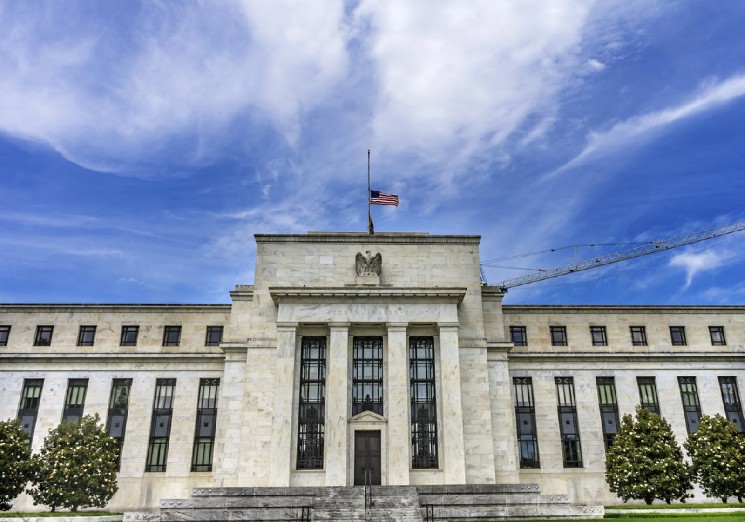
The Federal Reserve has decided to maintain its key interest rate within the range of 3.5% to 3.75%, reflecting a cautious stance as the U.S. economy grapples with persistent inflationary pressures.
In light of this announcement, Bitcoin is nearing the $72,000 mark.
As the Fed indicates fewer anticipated rate cuts than many investors had hoped for, both Bitcoin and the wider cryptocurrency market are adjusting to a scenario where capital costs are likely to remain high in the near term.
The Federal Open Market Committee (FOMC) cast an 11-1 vote in favor of keeping rates unchanged; however, not all members were in agreement. Federal Reserve Governor Stephen Miran notably dissented, advocating for an immediate reduction of rates by 25 basis points.
Despite Miran’s more dovish perspective, most committee members continue to focus on ongoing economic strength. The Fed highlighted that current developments in the Middle East carry “uncertain” macroeconomic implications, which adds a layer of geopolitical caution into their monetary policy considerations.
The “dot plot” indicates persistent inflation
A key takeaway for investors is that updated projections from the Fed suggest a hawkish outlook.
The central bank maintained its forecast for only one rate cut each in both 2026 and 2027.
Seven policymakers believe there should be no rate cuts at all in 2026, while another member anticipates potential increases in rates during 2027.
The median expectation for the federal funds rate by late 2026 remains steady at 3.4%, with long-term terminal rates adjusted upward to reach approximately 3.1%.”
Implications for Bitcoin
Historically speaking, Bitcoin tends to perform well when monetary policies are relaxed and liquidity is abundant. The Fed’s confirmation of maintaining a “higher-for-longer” approach typically poses challenges for risk assets like cryptocurrencies.
With benchmark interest rates stabilized between 3.5% and 3.75%, and rapid reductions no longer on the horizon, traditional yield-generating investments such as Treasury bonds will continue to compete strongly against non-yielding assets like Bitcoin.
Nevertheless, given that inflation has been described as “sticky,” this could potentially revive Bitcoin’s narrative as a decentralized safeguard against fiat currency devaluation.”