The selling pressure on Bitcoin is intensifying as its price trends toward a potential sixth consecutive monthly decline. However, the underlying market dynamics reveal a divergence where short-term holders are exiting while institutional investors are stepping in to absorb the available supply.
As of late Tuesday, Bitcoin’s value dipped below $65,000 after previously surpassing $74,000 earlier in March. This downturn coincided with an increase in inflows to exchanges, with approximately 22,000 $BTC being transferred to trading platforms during one session—indicative of distribution from recent buyers.
Despite this mounting pressure, the price has managed to stay above the $60,000 mark and remains well within long-term support thresholds.
A crucial question arises: where are these coins headed?
On-chain analytics indicate a consistent transfer of assets from short-term holders to larger entities. In the past month alone, around 63,000 $BTC has been accumulated through spot exchange-traded funds (ETFs) and similar instruments—offsetting some of the selling activity. This trend suggests that institutional demand is re-emerging after several months of diminished engagement.
Data regarding ETFs shows that inflows have started stabilizing following an extended period characterized by outflows.
This March saw U.S.-listed spot Bitcoin ETFs garner approximately $1.2 billion in net inflows—a notable shift in market positioning. Although this renewed interest hasn’t been sufficient to elevate prices significantly yet it has played a role in absorbing coins released into circulation during weaker market phases.
Short-term holders—defined as wallets holding Bitcoin for less than 155 days—often react swiftly to market pullbacks and volatility spikes. Their selling behavior typically peaks during consolidation periods when they add supply at local lows. This pattern appears once more as Bitcoin struggles for momentum following an unsuccessful attempt above $76,000 earlier this month.
<p Simultaneously,the liquid supply from these short-term holders is limited; as coins transition into longer storage or institutional frameworks,the available liquid supply diminishes . If demand remains stable,this scenario could establish a foundation for future price stability .
The Six-Month Streak of Losses for Bitcoin Prices
Nonetheless , macroeconomic factors continue influencing broader trends .Bitcoin seems poised for its first six-month losing streak since 2018-2019.A monthly close beneath$67 ,300 would confirm this sequence ,indicating ongoing pressure across risk assets .
Unlike previous cycles,Bitcoin’s price has not yet dipped below its200-week moving average or realized price — benchmarks that have signaled prior bear markets’ bottoms.This situation leaves markets caught between capitulation and clear recovery according data fromBitcoin Magazine Pro .
Nicolai Sondergaard,a research analyst at Nansen noted that current positioning reflects uncertainty linked with macroeconomic drivers.
“Bitcoin appears range-bound—not overtly weak but also lacking clarity towards risk-on sentiment.The presence around$67 ,685 alongside exchange outflows indicates underlying accumulation exists; however options positioning ahead week-end expiry reveals more uncertainty than conviction,”Nicolai conveyed via email correspondence withBitcoin Magazine.
Maco signals currently take precedence over crypto-specific catalysts.Oil prices exceeding$100 ,changing expectations regarding rate cuts,and geopolitical tensions have influenced capital allocation strategies.Because bitcoin’s pricing correlates closely with equities and other risk assets,it limits internal flow impacts.
An analysis by Bitfinex highlighted shifts within institutional behaviors marking significant developments.”Institutional flows demonstrate clear regime changes.After robust accumulation early March ETF flows shifted negatively culminating some largest single-day outflows IBIT.This reversal signifies active de-risking among institutions rather than passive rotation removing vital support pillars undergirding prices,”they stated sharing insights directly through communication channels established withinBitcoin Magazine.
The analysts further emphasized prevailing liquidity conditions dominating current scenarios.”Bitcoin maintains correlation broader risk-assets participating ongoing de-risking practices reflective liquidity conditions reigning supreme today,rising yields tighter financial circumstances dictate capital allocation decisions.”
Presents status quo illustrates balance existing between distribution absorption.Short term-holders persistently sell amidst weakness while institutions capitalize on dips.The outcome stemming standoff hinges less upon crypto-specific demands but rather whether macro-environment eases sufficiently foster renewed appetite risks moving forward.
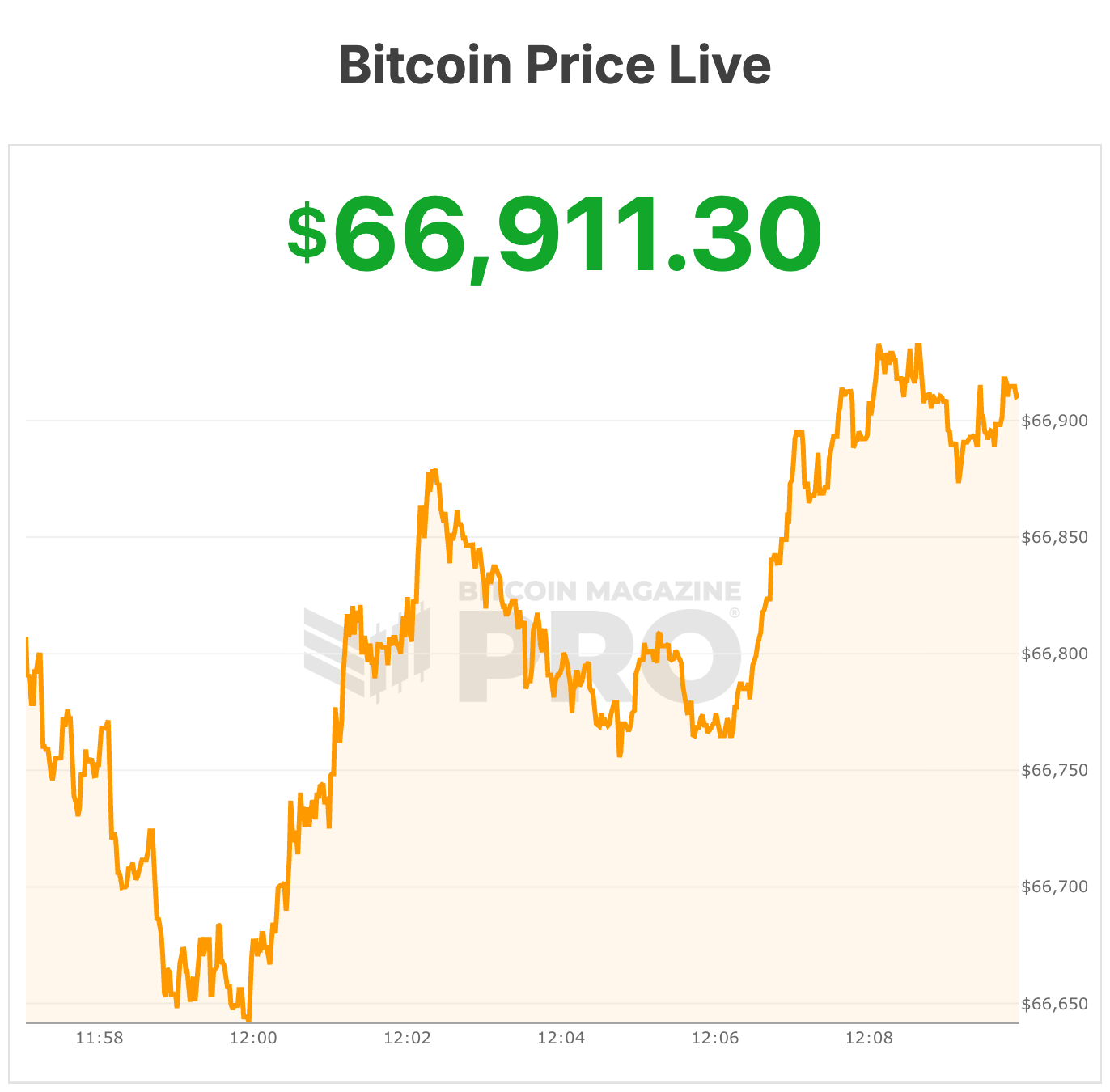
As we write now bitcoin’s value stands under$67k…
This article titled “Rising Sell Pressure Faces The Price Of Bitcoins While ETF Demand Absorbs Distribution” was initially published on bitcoin magazine authored Micah Zimmerman..