Pressure to sell has surged once again across cryptocurrency markets.
Bitcoin experienced a decline of up to 5%, slipping below the $64,000 mark following US President Donald Trump’s announcement of plans to increase global tariffs to 15%.
Market statistics reveal that Bitcoin dropped roughly 5% within the past day, reaching around $63,970. During this period, liquidations in the crypto market totaled approximately $616 million, with long positions accounting for about $524 million of that amount.
The leading digital currency entered a steep correction phase after peaking above $125,000 last October. It also started the new year on a weak note, having lost nearly 26% since January began. From its October high point, Bitcoin’s value has decreased by more than 47%.
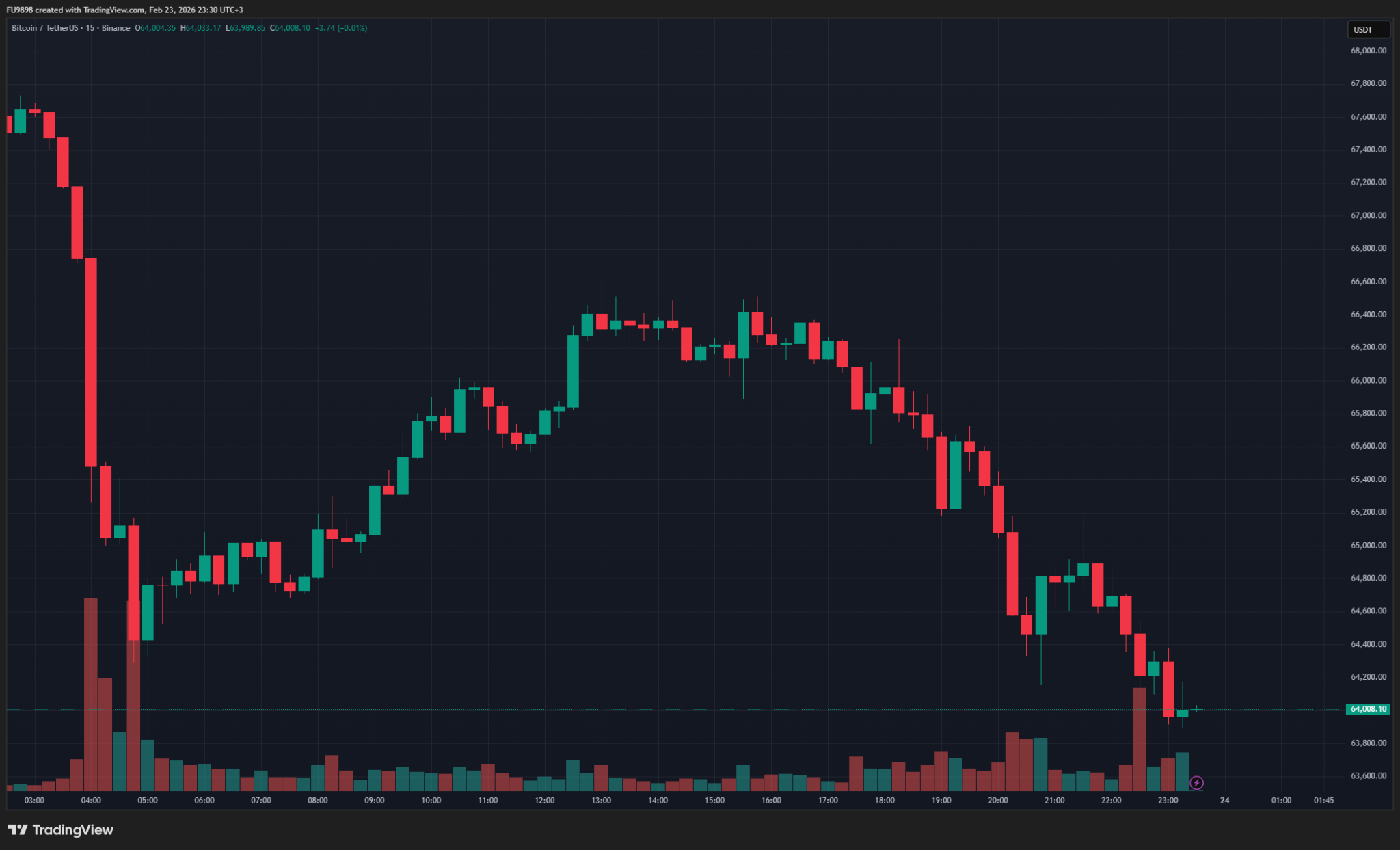
Experts suggest that this recent downturn is driven by multiple factors rather than one isolated cause. Rising geopolitical tensions and trade disputes worldwide are dampening investor enthusiasm.
Jeff Mei, Chief Operating Officer at BTSE—a global blockchain technology firm—explained that investors reacted swiftly to tariff hikes by offloading crypto assets amid fears of an impending broader market slump. He also highlighted concerns over increased US military activity near Iran which could escalate regional conflicts and disrupt international trade routes.
Markus Thielen from 10x Research pointed out that weak liquidity combined with diminished market confidence played a bigger role in recent price drops than any single news event. According to him, these conditions reflect typical characteristics of a bear market marked by low trading volumes and uncertainty among participants.
Thielen further emphasized ongoing downside risks linked to upcoming US midterm elections and broader economic unpredictability. He warned against ruling out another decline toward Bitcoin’s $50,000 level unless stronger trading volume and positive sentiment emerge signaling a stable bottom formation.
This content does not constitute financial advice.