Over the past few weeks, Bitcoin’s price has exhibited significant fluctuations, primarily driven by selling pressure. This volatility has led many analysts to draw parallels between Bitcoin’s current price movements and the bearish trend observed in 2022. However, these comparisons are mostly based on short-term chart patterns. A deeper examination of broader data reveals that such analogies are misleading, as highlighted by a leading market expert.
Contrasting Bitcoin’s 2022 Bear Market with Its 2026 Outlook
A direct comparison between Bitcoin’s downturn in 2022 and its present market dynamics uncovers substantial differences—from macroeconomic conditions to volatility characteristics. Although price trends may occasionally resemble past behaviors, the underlying market framework today is fundamentally distinct from what it was four years ago.
Garrett, a well-respected analyst in the field, emphasizes that the most critical divergence lies within the macroeconomic environment. In 2022, global economies were entrenched in a tightening monetary cycle; inflation soared due to excessive liquidity injected during COVID-19 and was further exacerbated by geopolitical tensions like the Ukraine conflict.
In response, central banks implemented aggressive interest rate hikes alongside balance sheet reductions. This contraction of liquidity caused capital markets to favor risk aversion strategies heavily. Consequently, Bitcoin—like many other risk assets—underwent prolonged periods of distribution amid these restrictive financial conditions.
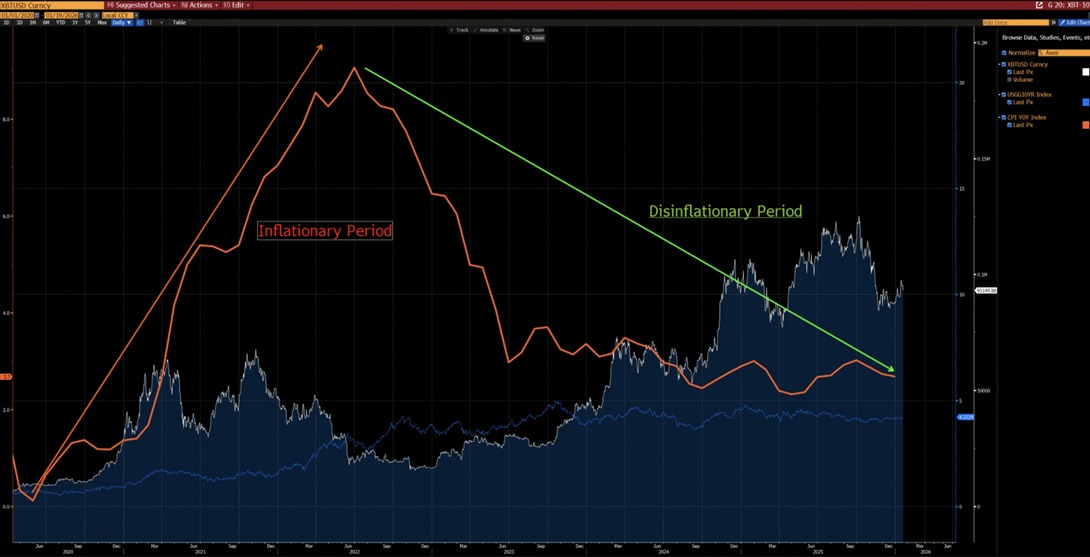
However, Garrett points out that today’s scenario largely reverses this trend: inflation pressures have eased considerably while U.S. risk-free interest rates are trending downward as central banks begin reintroducing liquidity into markets gradually. Historically since 2020, Bitcoin tends to struggle when inflation rises but performs better during periods of declining inflationary pressure—and closely tracks overall U.S. liquidity levels where looser money supply benefits its price action.
Also read: Crypto Markets Experience Declines — Both Bitcoin And Altcoins Fall Following Tariff-Induced Risk-Off Sentiment
The influx of ETFs throughout early 2024 temporarily obscured this relationship but recent data on liquidity now clearly indicates an improvement rather than tightening financial conditions overall. Key indicators have shifted upward beyond their short- and long-term downtrends signaling potential for an upward phase instead of repeating last year’s restrictive environment.
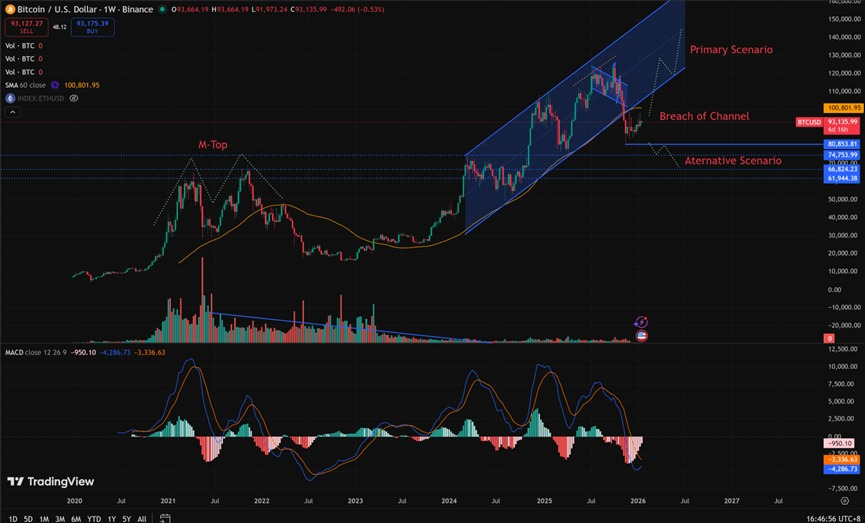
The analyst further explains that unlike during 2021–22 when Bitcoin formed a long-term peak—a pattern typically followed by extended weakness—the current decline resembles more a temporary breach below an ascending trendline often interpreted as a brief shakeout rather than onset of another deep bear market phase.
An additional factor strengthening today’s outlook is how bitcoin traded extensively within approximately $62K-$80K range recently allowing cautious sellers exit opportunities while confident buyers accumulated positions resulting in healthier market structure with greater upside potential compared with early stages seen back then.
BTC's Investor Psychology Has Evolved Significantly
The shift isn’t limited just to pricing patterns but extends deeply into investor sentiment according to Garrett who notes that back in ’22 retail traders dominated crypto markets often employing high leverage which amplified panic selling cascades amidst drying exchange liquidity worsening declines dramatically.
Today however institutional involvement has surged markedly: spot bitcoin ETFs along with corporate treasuries pension funds plus sovereign wealth investors collectively hold substantial portions driving longer term ownership horizons which effectively removes large quantities from active trading pools thereby reducing volatility spikes.
< img src = & quot ; https:// cnews24 . ru / uploads /43 c /43 c 2 e0a8 d4 d97 df7 84 dbc46 cd5 fc2aac0 c09451a . png & quot ; alt = & quot ; & quot ; size = & quot ;865 x529& quot;& gt;
Publicly listed companies alone possess over one point three million BTC while ETFs control meaningful shares circulating supply – this structural shift means less hot money ready for quick sell-offs under stress situations compared against previous cycles.
Exchange-held coins have declined significantly dropping below two point eight million from over three million recorded back in ’22 illustrating diminished availability for rapid speculative moves.
Long-term holders no longer capitulate en masse instead accumulation continues steadily among institutions and mid-sized investors reaching near-cycle highs indicating robust demand fundamentals underpinning future growth prospects.
The analyst concludes stating any repeat bear scenario akin to ’22 would require multiple adverse triggers including renewed inflation shocks sharp rate hikes combined with decisive breaches beneath critical support zones absent those factors overlooking fundamental structural evolution misrepresents present bitcoin landscape entirely.