
Follow Us
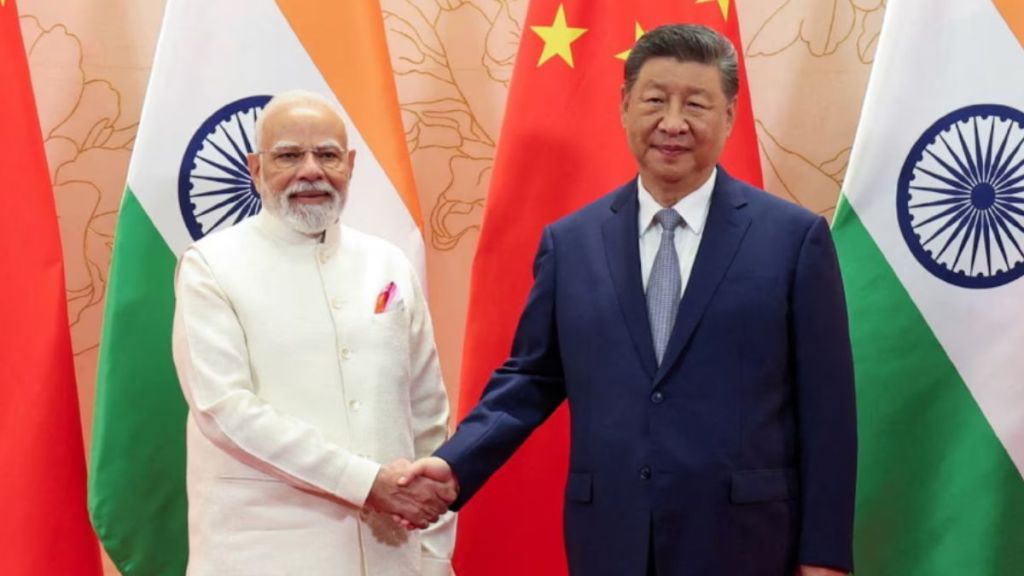
Prime Minister Narendra Modi and Chinese President Xi Jinping on Saturday underlined the need to address each other’s concerns on trade and economic relations, including New Delhi’s widening trade deficit with Beijing, market-access barriers and supply-chain vulnerabilities.
At their meeting on the sidelines of the BRICS Summit in New Delhi, both leaders specifically referred to the “structural trade imbalance and supply chain issues” and facilitation of “meaningful and predictable market access.” They agreed that differences should not become disputes and said bilateral ties should be guided by “mutual respect, mutual sensitivity and mutual interest,” a statement by the Ministry of External Affairs said.
However, the statement made no specific reference to India’s policy on foreign direct investment from China, which has seen some relaxation in recent months. Beijing’s volatile policies regarding export of critical inputs to India also did not find any explicit mention.
ALSO READBRICS pushes local-currency trade to cut transaction costs
“They (the two leaders) reaffirmed that both countries should take a strategic and long-term perspective of their ties,” the MEA statement said. Both leaders also agreed to promote business linkages and greater mobility, while seeking to expand common ground on regional and global issues, it added.
Modi stressed that peace and tranquility in the border areas remained essential for the continued development of bilateral relations.
The bilateral statement on trade and economic ties comes amid India’s ever-increasing trade deficit with China, which went up to $112.1 billion in 2025-26 from $99.1 billion in the previous financial year. In 2021-22 it was $73.3 billion. China in 2025-26 accounted for 33.5% of India’s total merchandise trade deficit. Much of the deficit is driven by India’s heavy dependence on China for industrial inputs, machinery, electronics components, chemicals, pharmaceutical intermediates and critical minerals. The emerging sectors of exports like electronics and automobiles are heavily dependent on inputs and components from China.
Other than deficit, the dependence has also created vulnerabilities which were exposed in 2025 when China tightened controls on exports of rare-earth elements and permanent magnets. Indian automobile and component manufacturers, heavily dependent on Chinese supplies, faced difficulties obtaining the magnets needed for electric vehicles, hybrid vehicles and other automotive applications.
ALSO READPM calls for major reforms at IMF, UN
China’s April 2025 controls required exporters to obtain licences for specified rare-earth products and magnets. China controls more than 90% of global rare-earth magnet processing capacity, making alternative supplies difficult to secure quickly.
Indian companies have also faced difficulties in obtaining market access in China. New Delhi has repeatedly sought greater access for pharmaceuticals, agricultural products, food items and other goods, while Indian businesses have complained of regulatory, sanitary and other non-tariff barriers.
Investment was another part of the economic relationship that has remained constrained since the Covid-19 pandemic. India amended its Foreign Direct Investment policy in April 2020 to require government approval for investments from countries sharing a land border with India. The move brought Chinese investments under the government route amid heightened concerns over opportunistic acquisitions and national security as valuations of the companies fell during COVID outbreak.
New Delhi has since begun a calibrated relaxation of these restrictions. The government in March 2026 introduced changes permitting certain non-controlling investments of up to 10% by investors from land-bordering countries through the automatic route, while also creating a time-bound approval mechanism for specified manufacturing investments, including in capital goods, electronic components and solar-cell inputs.
The easing reflects the competing economic priorities facing India: reducing excessive dependence on China while allowing access to Chinese capital, technology and manufacturing capabilities where they can strengthen domestic production.
TOPICSIndia China TradeTradeThis article was first uploaded on September thirteen, twenty twenty-six, at twenty-four minutes past twelve in the am. © The Indian Express (P) Ltd