
Follow Us
In a first-of-its-kind initiative to incentivise smallholder farmers for adoption of environmentally sustainable agriculture practices, rice farmers in Punjab and Haryana will be awarded carbon credits on Monday.
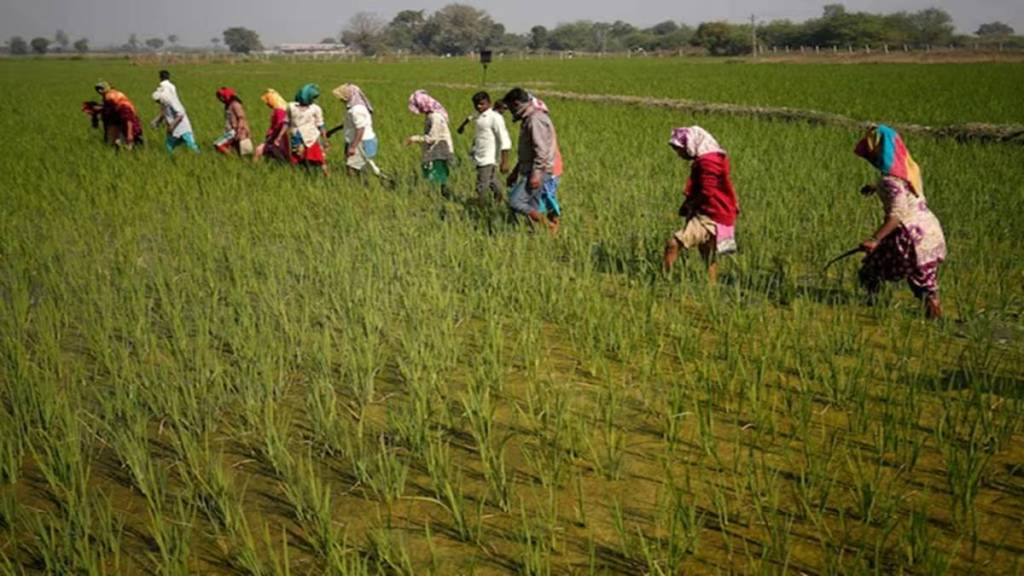
More than 2,500 smallholder farmers in Punjab and Haryana will receive financial incentives for adopting practices such as direct seeding and low tillage residue management, which reduce emissions and store carbon in the soil, during 2019–2022.
Farmers who joined the carbon credit programmes after 2022 are currently under audit, and will be paid as their credits are issued and sold by Grow Indigo, a joint venture between the domestic seed major Mahyco and US-based Indigo.
ALSO READIndia-EU FTA moves closer to signing: What could the trade deal mean for your wallet?
“Most farmers are receiving between Rs 3,000 and Rs 15,000 each. Payments are being made digitally with complete traceability, from our own funds, ahead of the complete sale of credits,” the company said. The first payments for carbon credits to farmers will be released digitally at an event at Punjab Agricultural University, Ludhiana on Monday.
Environmental Impact
Direct seeding of rice, in place of transplanting, saves 1.4 million litres of water per hectare, and reduced burning of crop residue cuts PM2.5, a major air pollutant, the company stated. The first issuance of carbon credits covers around 30,000 acres across Punjab and Haryana, generating more than 50,000 carbon credits.
“For the first time in India, a farmer is being paid for the carbon their soil holds. This will impact smallholder farmer livelihoods positively in a sustainable manner, and we will continue to bring interventions which help farmers with challenges faced due to climate change,” Usha Barwale Zehr, executive director, Grow Indigo, said.
According to Umang Agarwal, COO of Carbon, Grow Indigo, the company is currently engaged with over 100,000 farmers across one million acres in Punjab and Haryana, on sustainable farm practices, and farmers would eventually be encouraged to shift to growing maize from water-intensive rice production.
ALSO READModi, Xi vow to address trade imbalance
The audit of the programme was completed under the carbon standard (Verra) protocol, which is a global voluntary greenhouse gas (GHG) reduction programme. “We are aiming to generate one million carbon credits annually by 2027,” Zehr had earlier stated. According to scientists, the issuance of credit under Verra’s methodology is considered one of the most rigorous standards for smallholder farmers in land management.
Farmers who adopt farming techniques – direct seeded rice, which improves water use efficiency and no tillage practice which conserves soil organic biomass, prior to planting of paddy and wheat register for the programme for getting carbon credit.
Corporate Demand
Carbon credits from farmers can be purchased by those industries, especially aviation, mining, or manufacturers of fertiliser, who are not in a position to reduce their carbon footprints because of the very nature of their business.
The agriculture ministry has released a framework for a voluntary carbon market to encourage small and marginal farmers to obtain carbon credit benefits through adoption of sustainable farming practices. India produced around 154 million tonne (MT) of rice in the 2025-26 crop year (July-June), thus emerging as the biggest rice producer in the world by surpassing China, which produced 145 MT of cereal. Because of the intensive farming system adopted after the Green Revolution, soil fertility has dropped sharply. If paddy straw is not burnt and put back into the soil, the organic carbon content of the soil increases, thus improving fertility.
TOPICSPaddy pricesThis article was first uploaded on September thirteen, twenty twenty-six, at forty-two minutes past five in the evening. © The Indian Express (P) Ltd