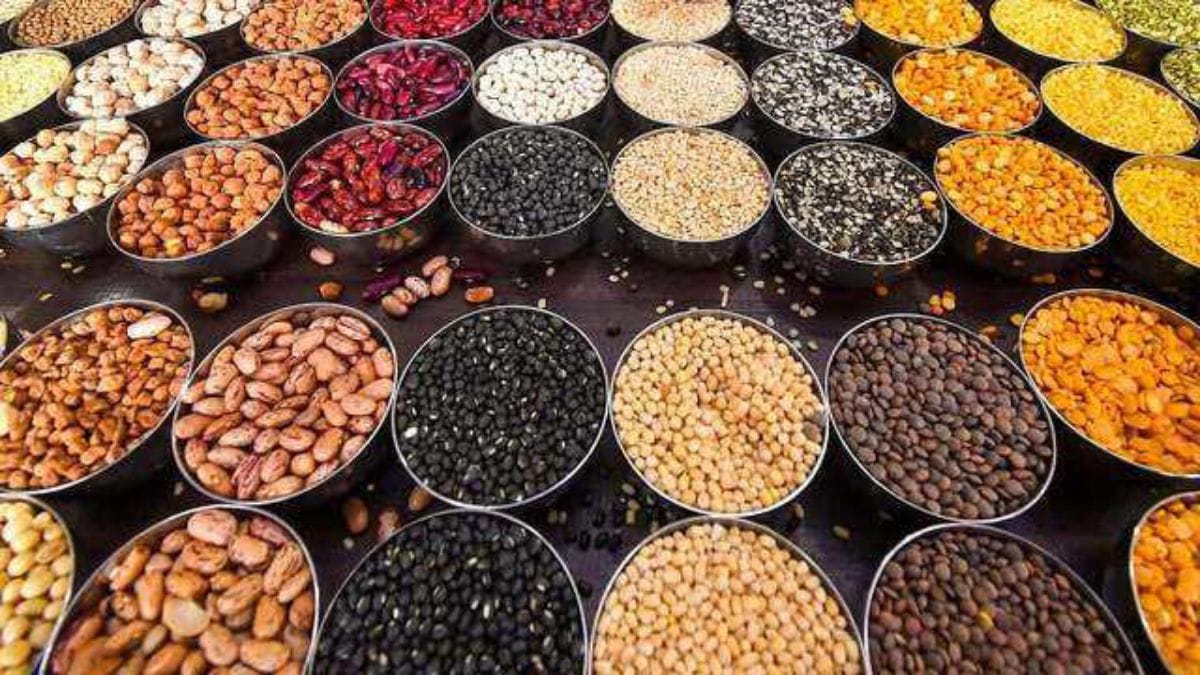
To offload surplus stock in the buffer, the centre has urged states to source varieties of pulses – tur, chana, masur and moong – from it instead of buying them in the open market, for their welfare schemes.
In a communication to states, the department of consumer affairs has stated “sourcing pulses from the central buffer obviates the need for a cumbersome tendering process for procurement under various welfare schemes,”.
Buffer Management
Currently, the government has 2.8 million tonne (MT) of pulses stock including 0.7 MT each of chana and tur, as the buffer which are built through procurement under the price support scheme and imports.
“These stocks are available for allocation to states or union territories for welfare schemes at the minimum support price (MSP) of the stock year or the dynamic reserve price, whichever is lower,” Nidhi Khare, secretary, department of consumer affairs has stated in a letter to the chief secretaries of states on Thursday. Offering pulses stocks to states would also contribute to efficient buffer stock management and ensure price stability, it stated.
ALSO READWest Asia crisis slowing India growth: Crisil
These strategic reserves of pulses are used as an instrument of the market intervention program to curb the possibility of any rise in prices. These stocks are offloaded through open market sale and supplies to states for the welfare schemes such as PM-Poshan, Integrated Child Development Services (ICDS), public distribution system (PDS) etc.
While the centre provides free grain – rice and wheat – of 5 KG each monthly over 800 million beneficiaries under Pradhan Mantri Garib Kalyan Anna Yojana, several states including Tamil Nadu, Andhra Pradesh, Chhattisgarh, Gujarat and Kerala provide items such as pulse and edible oil at subsidised rate to supplement it. Often states go for tendering to procure these commodities from the private entities.
The centre has recently stated that there is no proposal by the union government to supply pulses at subsidized rates through PDS. To augment domestic supplies, the government has approved duty-free imports of tur and urad till end of FY27.
Domestic Production Outlook
Due to domestic shortfall in production, India imports tur, urad and yellow peas from several countries including Myanmar, Mozambique, Malawi, Tanzania, Canada, Brazil, Russia and Australia.
ALSO READ12-GW stranded RE capacity may find buyers soon
India imports about 18% to 20% of its annual consumption of pulses such as yellow peas, tur, urad, bengal gram and lentils (masoor). Lentils imports currently attract 10% duty. Pulse production in the 2024-25 crop year was estimated at 25.68 MT. In terms of share in total production, chana (45%), moong (15%), tur (14%) and urad (8%) have major share.
TOPICSpulsesThis article was first uploaded on April ten, twenty twenty-six, at three minutes past eight in the night.