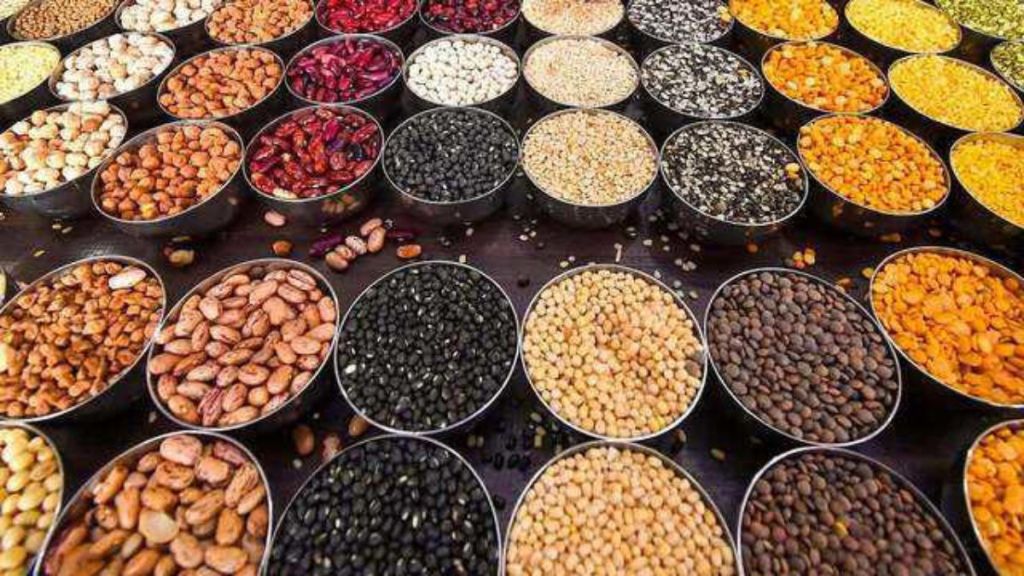
With the looming threat of El Nino on crop output, the government may release pulses from its buffer stocks in a calibrated manner if prices rise in the short term. The stocks are currently around 4.24 million tonne (MT).
Sources told FE that with El Nino likely to emerge in September potentially impacting next rabi crop yield, the government is currently assessing kharif prospects and monitoring retail prices before deciding to offload the buffer in the market.
According to an official note, market interventions through buffer stock also help nudge market players to lower their prices. “The buffer stock of pulses also acts as deterrent against manipulative hoarding and unscrupulous speculations by market players,” it stated
These buffers are built through procurement under the Price Support Scheme (PSS), Price Stabilisation Fund (PSF) and some imports and the buffer is held by cooperatives such as Nafed and NCCF.
At present, out of the total pulses buffer 2.76 MT is under PSS and 1.47 MT is under the PSF. Chana buffer is currently estimated around 2 MT, and the tur or arhar stock would be around 0.7- 0.8 MT.
ALSO READMPC and beyond: Not all gloom and doom albeit worries remain
Acreage under pulses in the ongoing Kharif season stands at 9.51 million hectares, a year-on-year decline of 6.3% till the end of July. Trade sources said inadequate monsoon in the key pulses-growing areas of parts of central and southern India may impact the yield of tur and urad, while the real impact of El Nino is likely to be felt next rabi season where chana or gram is the major crop.
As per the price monitoring cell of the Department of Consumer Affairs, average retail prices of tur and urad variants of pulses on Wednesday were Rs 123.3/kg and Rs 121.6/kg, an increase of 3.5% and 6% respectively compared to the previous year.
The preliminary crop assessment by the Department of Consumer Affairs (DoCA) indicated that emerging El Nino-induced weather-related uncertainties may influence area coverage and crop performance in some regions, but the overall implications for production are yet to become clear.
Last month, DoCA asked the Department of Agriculture and Farmers’ Welfare to consider temporarily stopping open market disposal of pulses from public stocks under PSS to ensure adequate availability in coming months.
India imports about 18%-20% of its annual consumption of pulses – tur, urad, masoor (lentils), yellow peas and Bengal gram – from Canada, Russia, Brazil, Myanmar and Africa.
To boost domestic supplies, the government extended the duty-free import policy for key pulses—pigeon pea (tur) and black matpe (urad)—until March 31, 2027. The 30% import duty on yellow peas would continue until the end of FY27, while lentils have a 10% duty.
TOPICSECONOMYThis article was first uploaded on August six, twenty twenty-six, at eight minutes past one in the night. © The Indian Express (P) Ltd