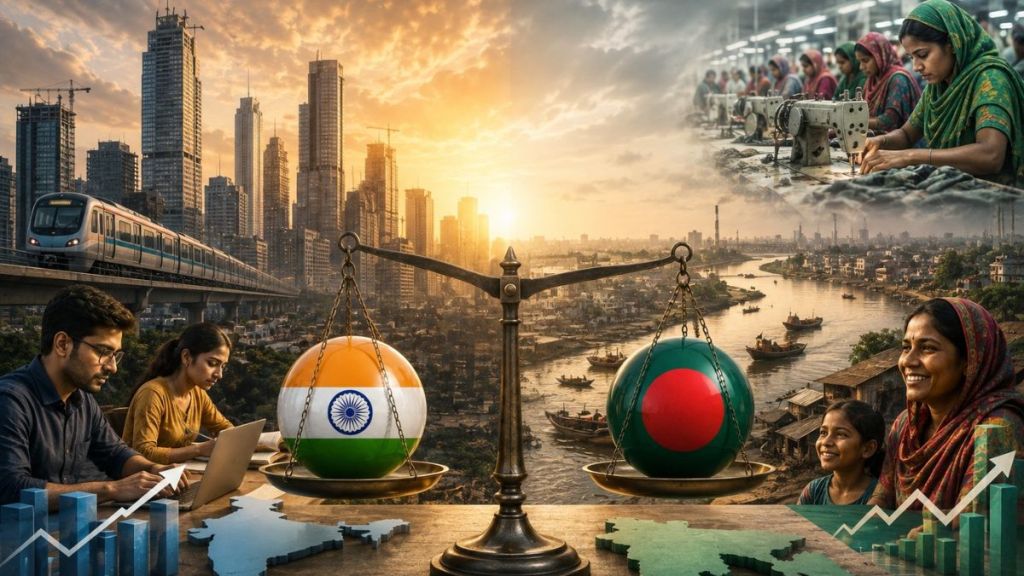
The economic comparison between India and Bangladesh returned to public debate after the International Monetary Fund released its latest World Economic Outlook in April 2026. The IMF projects Bangladesh to move marginally ahead of India this year in nominal GDP (Gross Domestic Product) per capita, expressed in dollar terms.
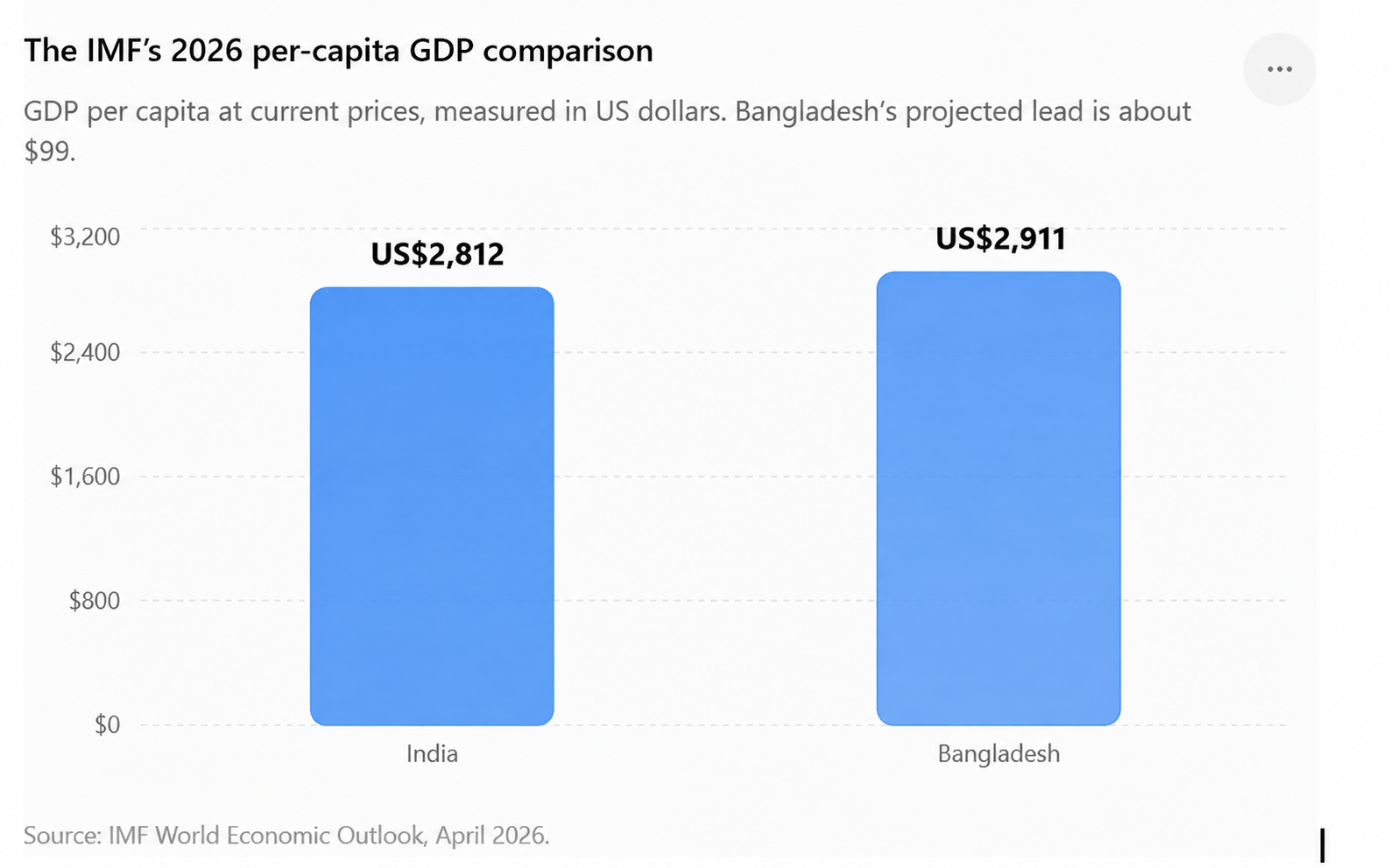
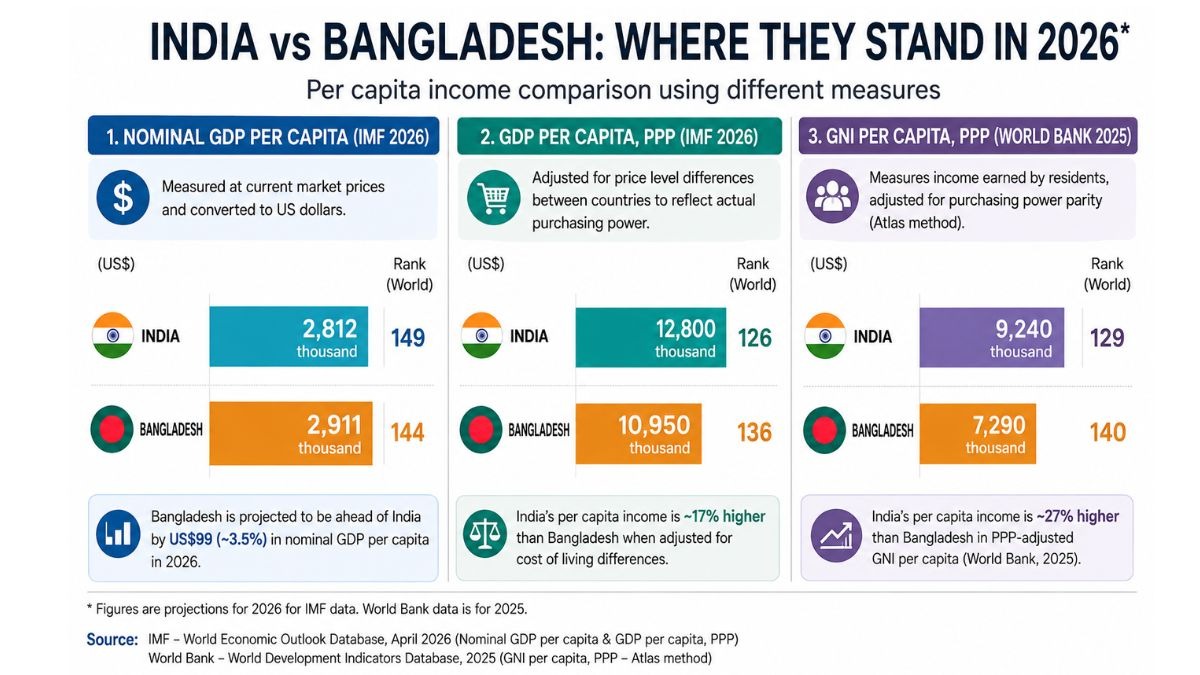
IMF’s April projections place Bangladesh’s GDP per capita at around $2,911, compared with approximately $2,812 for India. That would put Bangladesh ahead by just $99, or around 3.5%.
The comparison is striking. At around $4.15 trillion, India’s economy is projected to be more than eight times the size of Bangladesh’s economy in 2026. India is also expected to grow substantially faster. Yet when the output of each economy is divided by its population and converted into dollars, Bangladesh edges ahead.
Does that mean the average Bangladeshi is economically better off than the average Indian?
Not necessarily.
Nominal GDP per capita does not show how much households earn, what they can purchase, whether they have secure jobs or how easily they can access healthcare and education. It also conceals inequalities within each country.
Taken by itself, Nominal GDP as an indicator also fails to establish whether the typical Bangladeshi earns more, can buy more or enjoy a better standard of living than the typical Indian.
Factors like income distribution, inflation, employment, healthcare, education and protection against economic shocks can all alter the picture. Once these measures are considered, the comparison evolves from a single parameter based comparison to a broader analysis of two different development experiences.
ALSO READForget the AI layoff panic. India has a deeper employment problem
Why reducing the comparison to one number can be misleading
As per multiple economists interviewed by Financial Express, reducing the comparison between the economies of India and Bangladesh to a single parameter can be a very limiting exercise. As nominal GDP per capita when expressed in dollar terms remains sensitive to currency movements.
Nominal dollar GDP per capita as posted by the IMF in dollar terms is calculated by dividing a country’s GDP measured in current prices by its population and then converting the amount into US dollars at prevailing exchange rates.
This means that the ranking of countries on this parameter can fluctuate depending on how the nation’s currency is performing against the dollar.
ALSO READRupee: Why India’s currency is not appreciating despite RBI’s rescue package
Notable economist and a distinguished CPD fellow, professor Mustafizur Rahman told Financial Express that nominal GDP when expressed in dollar terms can often be a very hyped indicator and does not hold much weight for fruitful comparison by itself.
According to Rahman, any attempt to meaningfully compare the development experiences of India and Bangladesh and assess how their average citizens fare should examine a broader set of indicators under three categories:
Income and purchasing power: PPP-adjusted GDP and GNI (Gross National Income) per capita, inflation, and the distribution of income and wealth.
Quality of life: Human-development indicators such as life expectancy, education, literacy and access to healthcare.
Economic resilience: The diversity of the economy, the inclusiveness of growth and macroeconomic buffers such as foreign-exchange reserves.
Rahman’s assessment was echoed by development economist Deepanshu Mohan, who has taught and conducted research across institutions such as the London School of Economics and Political Science (LSE) and O.P. Jindal Global University.
Speaking to Financial Express about the importance of picking the right metrics for such macro comparisons, Mohan said GDP remained an important measure of a country’s production capacity, particularly for developing economies.
But production could no longer be treated as the sole measure of economic success. Access to education and healthcare, along with a fairer distribution of income, was also essential to assessing development, he said.
Mohan argued that the focus should not be only on how rapidly an economy grows, but also on whether the gains from that growth translate into better access to essential services and broader economic opportunities for the citizens of the country.
Building on insights shared by these economists, the first part of this comparison will therefore look at a comparison focusing on indicators like inflation, PPP adjusted per capita figures and the distribution of economic gains.
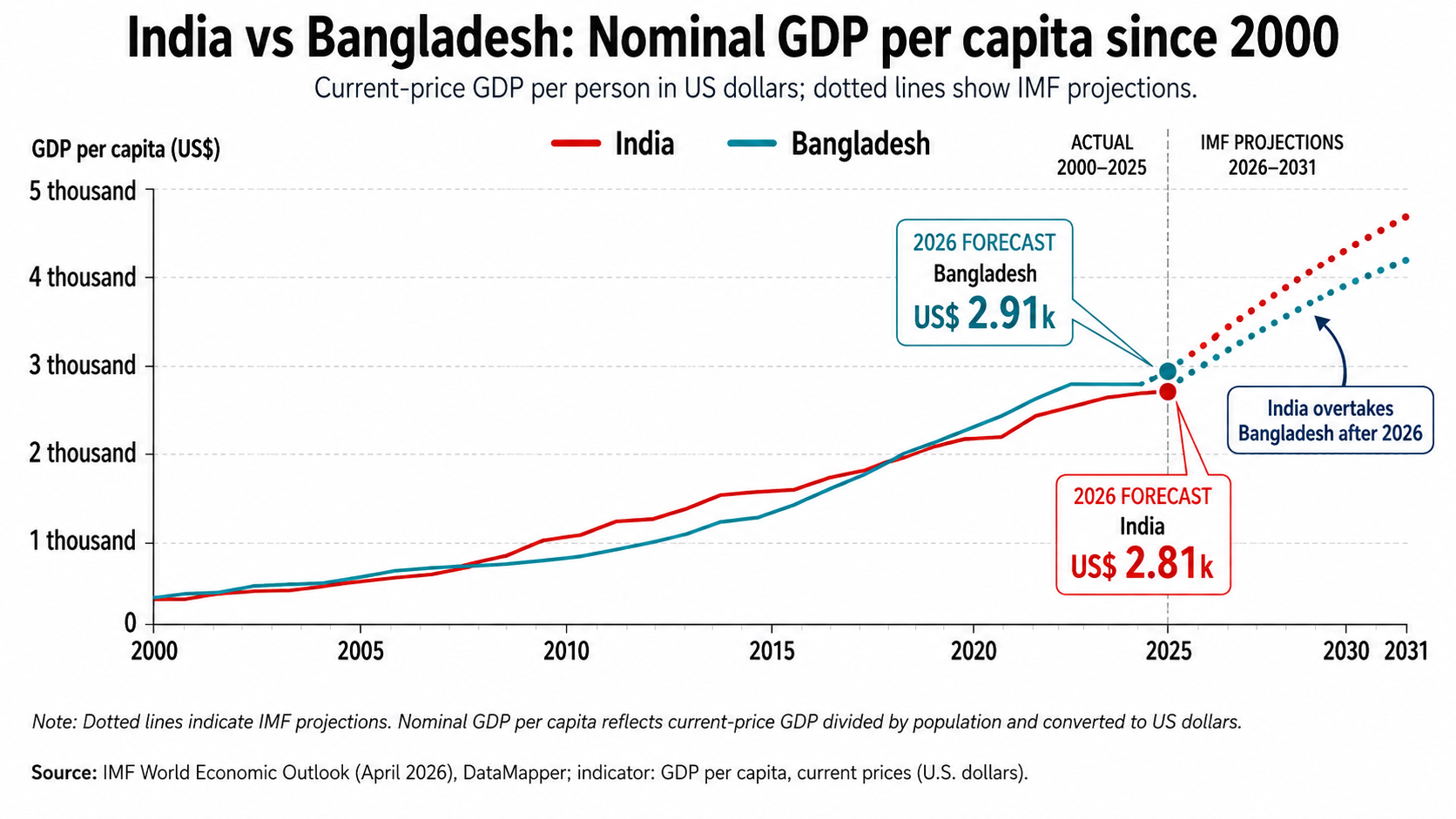
Before proceeding, it is also important to note that the IMF projects Bangladesh to move ahead of India in nominal dollar GDP per capita only in 2026. Its projections show India regaining the lead in 2027 and maintaining it over the following four years.
Which economy produces more per person?
As per economists interviewed by Financial Express, GDP per capita, when expressed in purchasing power parity (PPP) terms, offers a much better comparison point for the India and Bangladesh economy.
PPP adjusts for the fact that the same amount of money can buy different quantities of goods and services in different countries. Economists first compare local prices and then use those differences to convert each country’s economic output into a common unit of purchasing power.
The resulting PPP GDP-per-capita figure is not the price of a basket. It is an estimate of economic output per person after accounting for what money can buy locally.
On this measure, the picture changes sharply. IMF estimates place India’s GDP per capita in PPP terms at about $12,800, compared with around $10,950 for Bangladesh. India’s figure is therefore roughly 17% higher.
Does that mean the average Indian has 17% more purchasing power than the average Bangladeshi? Not exactly.
GDP per capita is a measure of average economic output, not household income or individual earnings. The figures mean that India’s estimated economic output per person is about 17% higher after the IMF adjusts for differences in price levels between the two countries.
The comparison suggests that India’s advantage becomes more visible once domestic purchasing power is taken into account. It also shows why Bangladesh’s narrow lead in nominal dollar GDP per capita cannot, by itself, establish that its citizens enjoy higher living standards.
It becomes important for us to note here that PPP-adjusted GDP per capita, by itself, is also not a perfect measure. It relies on estimated price baskets and cannot fully capture differences in housing quality, congestion, pollution, inequality or the availability and quality of public services.
It is therefore a better starting point than nominal dollar GDP per capita but not a complete measure of whether the average citizen is better off.
Inflation further weakens Bangladesh’s nominal lead
Apart from PPP adjusted figures, Bangladesh’s elevated inflation offers one of the strongest reasons not to interpret its projected lead in nominal GDP per capita as proof of superior living conditions.
The IMF projects Bangladesh’s average consumer-price inflation at 9.2% in 2026, nearly twice India’s projected rate of 4.7%.
The difference is not confined to a single forecast year. The IMF’s longer series shows inflation in Bangladesh moving sharply above India’s from around 2022 and remaining elevated through the projection period.
This matters because people earn an income to be able to purchase essential goods and services. If inflation increases without a substantial or larger increase in the income of the average household that means the citizens of that country are worse off than before in terms of purchasing power.
Put simply: If income for a household rises by 6% annually but inflation across the nation increases at 9% then the household is worse off than before in terms of their real purchasing power.
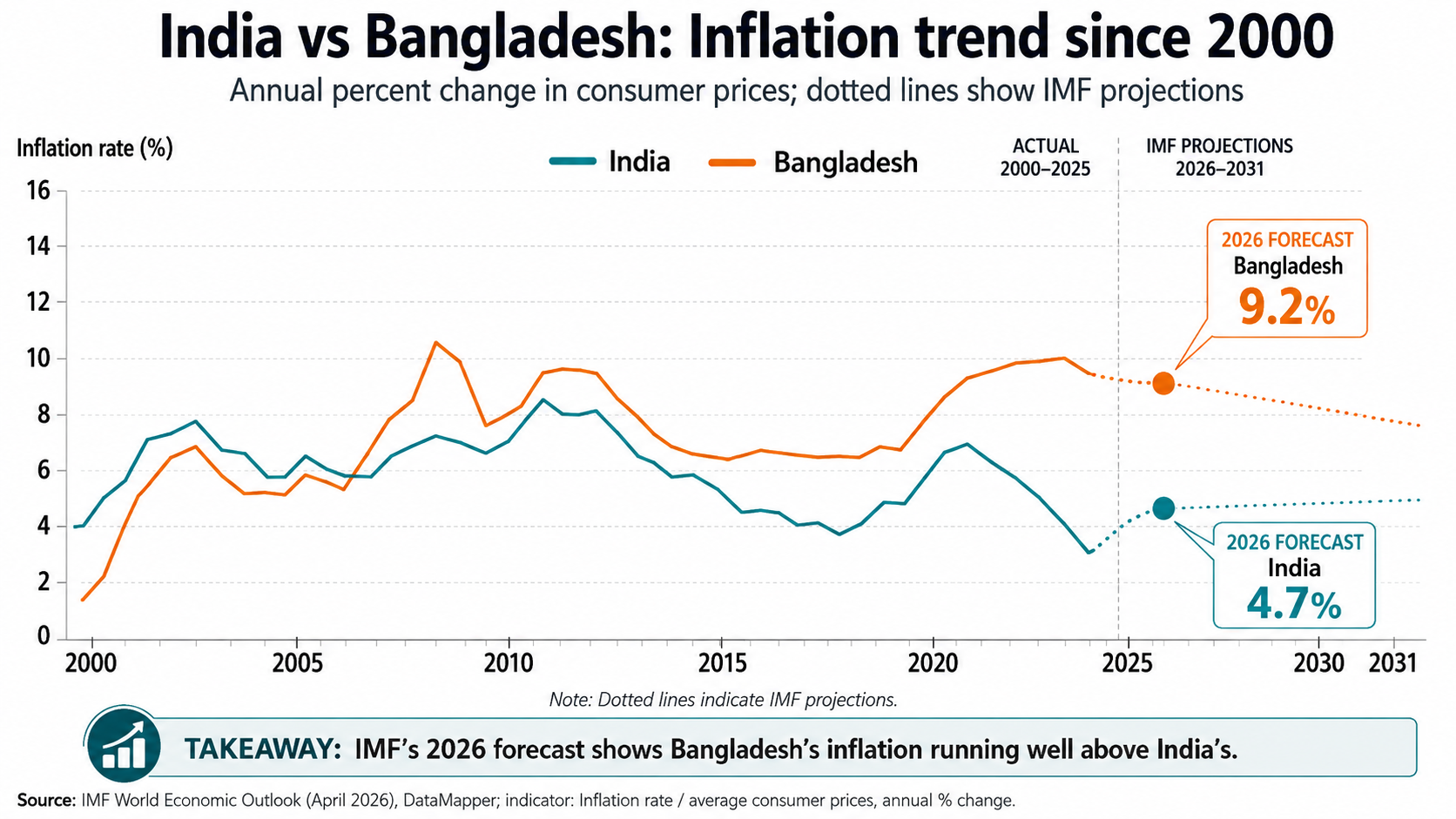
India has also experienced periods of elevated food inflation. But its overall inflation outlook is considerably more favourable than Bangladesh’s in the IMF comparison.
This is an example of how one indicator can contradict another:
Bangladesh may have higher nominal dollar output per person.
India may provide greater price stability and better PPP adjusted figures.
The welfare effect depends on wages, consumption patterns, access to public goods like healthcare, education and inflation faced by individual households.
Income inequality shed light on distribution based problems
Apart from inflation, income inequality presents itself as a key indicator to understand and compare the experience of economic development for citizens of different countries.
Economists often look at this indicator to understand how wealth and resources are distributed across the economy and to determine whether benefits of “rapid economic growth” are accessible to all sections of society.
The World Inequality Database shows that India’s top 10% received 58.9% of national income in 2024, compared with 42.4% in Bangladesh. The bottom 50% received 13.2% in India and 17.1% in Bangladesh.
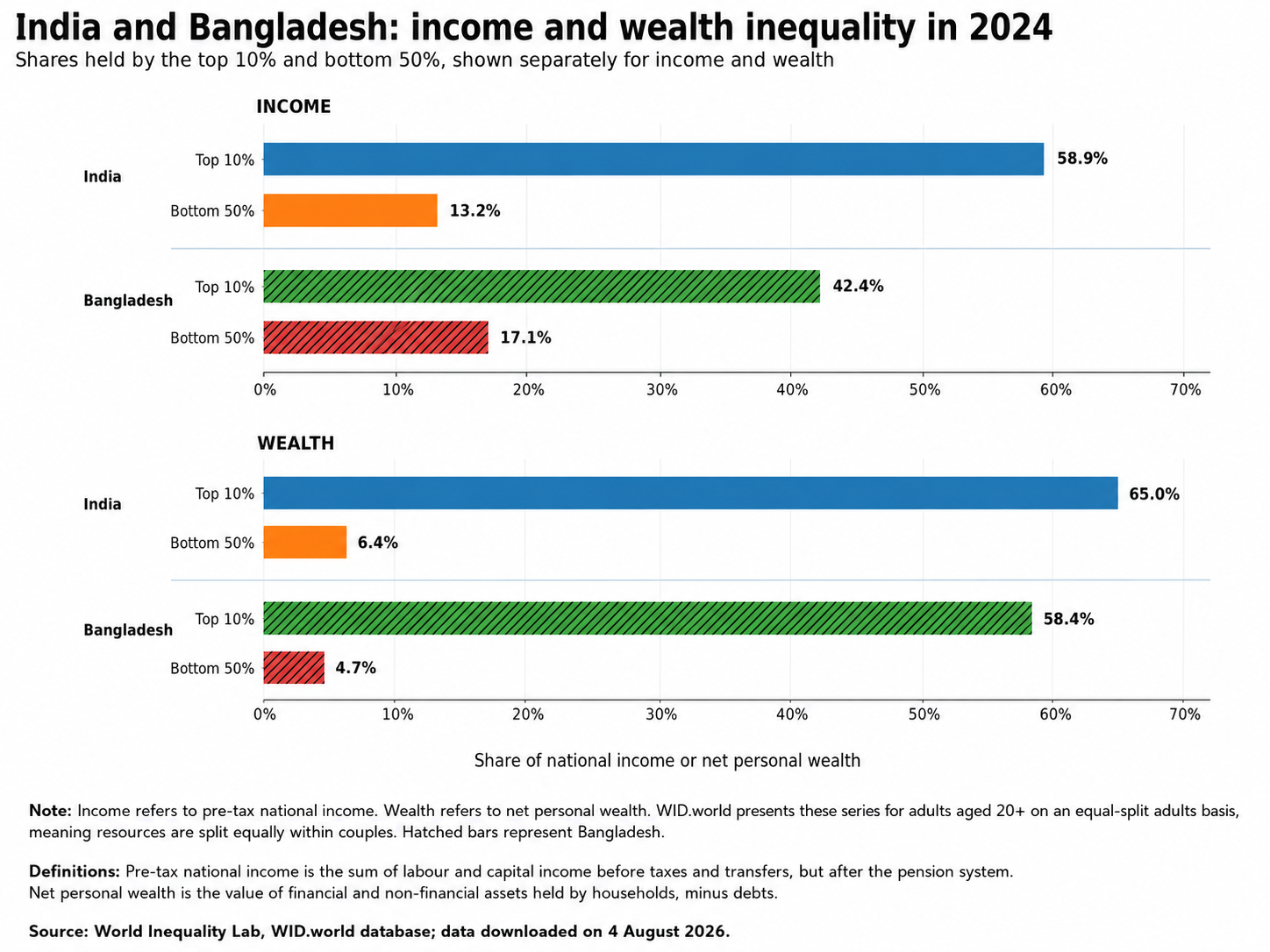
On wealth, the richest 10% held 65% of net personal wealth in India and 58.4% in Bangladesh. The bottom half owned 6.4% in India and 4.7% in Bangladesh.
These estimates suggest that inequality is a serious concern in both economies, although the relative picture changes depending on whether income, wealth, consumption or nationally reported survey data are used.
In his interview with Financial Express, Rahman noted that Bangladesh’s income Gini coefficient had risen to 0.49 in its latest household survey. The Gini coefficient measures income inequality on a scale of 0 to 1, where 0 represents perfect equality and 1 represents maximum inequality. The increase, therefore, indicates that rising per-capita income has been accompanied by widening inequality.
Rahman said that the present levels of income inequality have stoked a larger concern among economists that inequality, if left unaddressed, could itself hijack future development.
“A heavy concentration of income in the hands of few can reduce the purchasing power of lower-income households which can in turn constrain domestic demand and can discourage businesses from expanding investment,” Rahman explained.
“Growth, therefore, cannot be expected to correct inequality automatically. Distributive justice has to be an embedded part of the growth trajectory,” he concluded, adding that sustainable growth required the creation of quality jobs rather than reliance on social safety nets alone.
Beyond Income: What do HDI indicators reveal ?
The most revealing comparison regarding development of human capabilities in both countries may come from the Human Development Index (HDI).
“HDI offers a better starting point than GDP per capita because it allows us to look at whether economic growth is enabling people to live a life they find enriching rather than focus on income alone,” Economist and professor at LSE and JGU, Deepanshu Mohan told Financial Express.
The distinction matters because GDP per capita can rise without a corresponding improvement in health, education or people’s ability to lead the lives they value. HDI was developed precisely to shift the assessment of development away from economic growth alone and towards people and enhancing their capabilities.
India and Bangladesh recorded exactly the same HDI score of 0.685 in the UNDP’s 2025 report, which used data largely from 2023. They reached that score through different development paths.
The Human Development Index combines three dimensions: health, education and income.
Bangladesh performs better on life expectancy, while India is ahead on expected years of schooling, marginally ahead on mean years of schooling and has a higher PPP-adjusted GNI per capita.
While interpreting this data, it becomes important for us to note that progress of a country in HDI does not necessarily happen separately across indicators. Mohan has advised readers to not look at countries achievements in areas of health and education separately but together as progress in one HDI can often compound to deliver lasting gains to society.
Illustrating his point, Mohan referred to research conducted by Nobel laureate Amartya Sen whose work on the development story of India showed that if girls have access to good schooling then the benefits of a better education and general awareness naturally pass on to better healthcare performance and reduction in infant mortality rates.
To put it simply: Improvement in access to quality education often does more than improve a person’s employment prospects. It can strengthen health awareness, increase women’s agency, influence decisions on nutrition and childbirth, and expand the range of economic and social choices available to a household.
The comparison therefore cannot end with the identical HDI scores.
Bangladesh’s advantage in longevity and India’s advantage in expected schooling prompts further deeper questions about the quality of healthcare, nutrition, learning outcomes, gender gaps and access to public services in the two countries.
Interpreting performance on access to healthcare
Bangladesh’s higher life expectancy is one of its strongest achievements, demonstrating that its population survives longer on average despite a lower purchasing-power-adjusted income.
Yet, life expectancy reflects far more than medical care alone; it is shaped by childhood nutrition, maternal health, female education, disease patterns, pollution, road safety, and targeted public health programs. Crucially, it does not reveal whether families can access timely hospital care during a crisis or afford necessary treatments.
A country can achieve positive health outcomes while still leaving households exposed to severe financial risk during illness. Bangladesh offers a clear illustration of this dynamic:
Historical Strengths: Bangladesh achieved key public health milestones such as higher life expectancy and reduced infant mortality through targeted, government-led family-planning programs. This foundation was bolstered by active NGO involvement in social development and increased female workforce participation through the garment industry and community initiatives.
Second-Generation Challenges: Today, the country faces the harder task of delivering affordable, high-quality healthcare and education.
Out-of-Pocket Burden: WHO health-expenditure data shows that directly financed household spending accounted for 79.3% of Bangladesh’s total health expenditure in 2023, (highest in South Asia) compared to 43.9% in India.
As economist Mustafizur Rahman points out, such heavy reliance on out-of-pocket spending exposes the limits of the public health system. When publicly funded healthcare is inadequate, households are forced to shoulder the financial burden themselves.
India faces a similar structural issue, though the severity varies widely by state. While WHO notes that India’s reliance on out-of-pocket spending has decreased as public health coverage expands, household spending remains a major source of healthcare financing.
India’s scale further complicates the comparison. Delivering comparable standards of healthcare across more than 1.4 billion people, spread across states with very different fiscal capacities, health infrastructure and administrative performance, remains a considerably more complex policy challenge than a national average can capture.
What do education based metrics show
India is marginally ahead of Bangladesh on mean years of schooling and more clearly ahead on expected years of schooling. But the number of years spent in school does not demonstrate what children actually learn and whether they are able to secure meaningful opportunities for growth.
Literacy rates also provide only a basic threshold. A person may technically be literate yet struggle to understand a paragraph, complete a form or perform basic calculations.
To understand whether education improves economic opportunity, the comparison should include foundational learning, school completion, dropout rates, gender parity and the transition from education into employment. Financial Express could not find directly comparable data on these parameters.
It should also consider the burden placed on households. High enrolment may look impressive on paper, but if families must spend heavily on private schools or tutoring to obtain acceptable learning outcomes, the welfare picture changes.
Rahman made a similar point about Bangladesh. As per him the recent student-led protests in the country also offered a signal to work on the improvement of access to meaningful education in Bangladesh.
He said the country had achieved a broad “horizontal expansion” of health and education, but now faced a more difficult “vertical” challenge around quality, skills and employability.
Bangladesh Bureau of Statistics’ Labour Force Survey 2024 recorded around 885,000 unemployed university graduates, while graduate unemployment stood at about 13.5%; the highest unemployment rate among education groups.
Bangladesh had around 2.62 million unemployed people overall, meaning university graduates alone accounted for roughly one-third of the unemployed population.
Rahman also pointed to a difficult labour-market pattern: unemployment tends to be higher among people with more education because graduates seek formal and better-paid jobs that the economy is not creating in sufficient numbers.
India faces a comparable problem. Mohan said unemployment was particularly high among educated young people, with educated women facing limited access to suitable work.
That distinction is visible in the latest official labour-market data.
In India, the Periodic Labour Force Survey 2025 found that the unemployment rate among people aged 15 and above with at least a secondary education stood at 6.5%, more than twice the 3.1% overall unemployment rate.
The same survey also points to a skills bottleneck. Only 5% of Indians aged 15–29 had received or were receiving formal vocational or technical training in 2025, while 25% of people in this age group were neither in employment, education nor training (NEET).
Among young people aged 15–29, unemployment was still higher at 9.9%. The pressure was particularly pronounced among urban young women, for whom unemployment stood at 18.9%.
ALSO READIndia’s youth unemployment problem is real. But it’s bigger than India
While India and Bangladesh have both made great strides over the past few years to improve women’s participation in the workforce, a good share of women’s employment across both countries remains concentrated in the low-paid informal sector.
As per Rahman and Mohan, while both countries have marginally improved women’s access to entering the formal workforce, some work still needs to be done in creating pathways for informal workers to transition into more secure and well paid roles.
The education comparison therefore points to a common challenge in both countries: expanding access to schooling is only the first step. The larger development test is whether education produces useful skills and whether the economy creates enough productive jobs to use them.
ALSO READAI is rewriting the traditional first job. Here’s how jobseekers should prepare
A tale of two countries
The Bangladesh model: Jobs and exports, but concentrated risk
Bangladesh built its economic transformation around labour-intensive manufacturing, particularly ready-made garments.
The sector connected the country to global value chains, generated large-scale wage employment and helped draw women from rural households into factory work.
The result was a powerful but concentrated export engine. Ready-made garments currently account for approximately 82% of Bangladesh’s merchandise exports, according to the World Bank.
Preferential access to major markets also supported the model. As a least-developed country, Bangladesh benefited from duty-free or concessional access facilitation in several markets, particularly the European Union.
But dependence on one product group leaves the economy exposed to changes in global demand, trade preferences and production technology.
Bangladesh is scheduled to graduate from the UN’s least-developed-country category in November 2026 which will effectively reduce the duty-free or concessional access facilitation the country previously enjoyed.
As per the United Nations, Bangladesh is expected to face a major challenge post their graduation this year in November, given their ready made garment sector’s “extraordinary reliance on LDC-specific trade preferences and WTO policy flexibilities.”
As per a United Nations report published in 2025, approximately three-quarters of Bangladesh’s merchandise exports enjoy duty-free market access under various preferential schemes which they have used to build the world’s second-largest apparel export industry.
When asked how Bangladesh plans to face the upcoming challenge, Rahman responded by saying that the country would eventually have to shift from preference-driven competitiveness towards productivity, skills and innovation.
He also pointed to immediate financial pressures, including high inflation, weak private investment, expensive credit and a sharply elevated ratio of non-performing loans.
“Bangladesh has sought a three-year deferment of graduation to prepare for post graduation challenges and is also in talks with major European trade partners to continue with the preferential access schemes for 3 years after graduation.” Rahman told the Financial Express.
Regardless of the UN’s decision on the deferment of Bangladesh’s upcoming LDC graduation, the country’s fundamental challenge remains the same: it must diversify exports and raise productivity without undermining the employment base created by garments.
India’s model: Greater scale and resilience paired with job pressure
India followed a different path.
Its economy is much larger and more diversified. Domestic consumption, public investment, manufacturing and a globally competitive services sector provide multiple sources of growth.
India also has stronger macroeconomic buffers. A larger foreign-exchange reserve position, a broader tax base and more diversified sources of exports and growth can give the government greater room to manage external shocks.
However, India presently faces the challenge to create enough productive jobs for its extraordinarily large workforce.
While India’s services-led model has generated high-value employment in information technology, financial services and professional work, these sectors cannot always absorb workers with limited formal education at the scale required.
As per Mohan, while India’s industrial policies had secured good results by placing relatively greater emphasis on capital-intensive activity and multinational investment, labour-intensive sectors such as textiles, MSMEs and the informal economy had received slightly less attention.
ALSO READIndia Exported $948 Million of Human Hair Last Year. That Wasn’t Even Its Strangest Export
Micro, small and medium enterprises have historically absorbed large numbers of workers, including migrants moving out of agriculture. But the sector had suffered repeated disruptions, including demonetisation, the transition to GST and the pandemic, he said.
“There’s a huge enormous comparative advantage in certain specific crafts that India has. But it has its export capacity and domestic production capacity has been limited,” he added.
MSMEs account for about 31% of GDP, 35% of manufacturing and nearly half of exports. Their ability to expand therefore matters not merely for small-business policy but for whether India’s growth model can generate employment at scale.
As per Mohan, India can tread on the path of harnessing inclusive growth by adopting a hybrid strategy that focuses equally on large-scale domestic manufacturing and export-oriented services alongside facilitating stronger support for labour-absorbing activities and MSMEs.
Two development engines, two sets of challenges
The distinction is not that India chose services and Bangladesh chose manufacturing exclusively. Both countries have agriculture, industry and services. The difference lies in which sector became the dominant internationally competitive engine and how effectively that engine generated meaningful employment.
What can the two countries learn from each other?
Mohan said India could learn from Bangladesh’s experience in textiles, small-scale industry and female employment. India has considerable capabilities in crafts and labour-intensive production, but has not fully converted them into export capacity and organised employment.
Bangladesh, in turn, could draw lessons from India’s more diversified economic structure and stronger macroeconomic management.
Rahman pointed to India’s digital public infrastructure, its success with UPI (United Payments Interface) and greater domestic revenue mobilisation as potentially relevant for Bangladesh, whose government revenue via tax remains low relative to the size of its economy.
Both economists placed job creation, improving quality of education and upskilling at the centre of the next stage of development.
Economic growth can increase national income without meaningfully improving mass welfare when it fails to create jobs, raise real wages or finance better public services.
The central question is therefore not which country ranks ahead on one per-capita measure. It is how effectively each converts economic growth into longer lives, quality education, secure work, affordable healthcare and resilience against shocks. On the available national data, neither country emerges as unambiguously better for every citizen.
TOPICSAmartya SenBangladeshDigital EconomyECONOMYeconomy newseducationEmploymentexportsforexForex ReserveGDPGDP growthIMFIndian Economyunemploymentworld bankWorld Bank Group + 0 MoreThis article was first uploaded on August eleven, twenty twenty-six, at three minutes past nine in the morning. © IE Online Media Services (P) Ltd