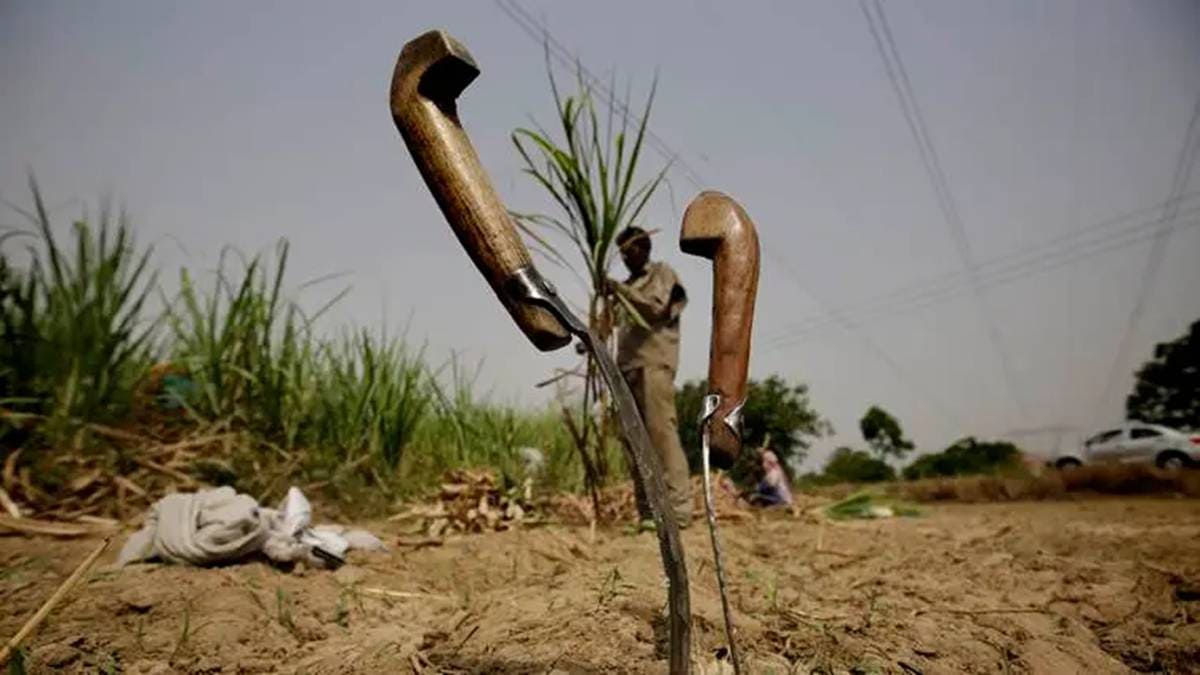
The forecasts are worrying, but walk through the crop-critical regions of India and you find something unexpected: farmers are not panicking. Two successive good monsoons have left water tables relatively healthy and reservoirs reasonably stocked. Kharif sowing is expected to proceed largely on schedule. The anxiety, when it surfaces, is more targeted—not about whether crops will go in the ground, but whether the rains will show up when the plants actually need them.
“Kharif acreage sentiment remains broadly resilient, supported by adequate water availability, irrigation infrastructure and favourable pre-sowing conditions,” says Pushan Sharma, director at Crisil Intelligence. “The larger concern is not about crop establishment, but about productivity during the critical July–September period.”
That window—July to September—is when everything could tilt.
The most worrying element of this year’s forecast is not the all-India average but where the deficit is expected to hit. The India Meteorological Department has flagged below-normal rains specifically in the monsoon core zone—a belt spanning parts of Madhya Pradesh, Chhattisgarh, Maharashtra, Odisha and surrounding areas. This is smallholder country, where paddy, maize and cotton dominate. Around 150 districts in this geography are considered critically vulnerable, and the crops grown here are among the least protected by irrigation. Only about 21% of the normal pulses area has any irrigation facility; roughly 40% of paddy cultivation is entirely rainfed.
ALSO READWeak monsoon forecast raises fresh concerns for India’s Rs 3 lakh crore microfinance sector
In Maharashtra’s Marathwada region, farmers are watching the skies closely. Ramesh Keshrao Survase from Sikanderpur village in Latur district is waiting to see if the monsoon arrives by June 20—the ideal window to start sowing tur, a kharif pulse that is among the more remunerative crops for farmers in the region. “Inadequate rainfall in July could reduce the area under pulses and cause significant yield loss,” he said.
Across in Odisha, paddy farmer Atanu Majhi from Keonjhar district is more cautiously optimistic—buoyed by strong government procurement and bonuses declared over the minimum support price. “We are monitoring monsoon rains quite closely while forecasts of lower rains have created apprehension about crop yields,” he said. In Haryana’s Panipat district, Pritam Singh is readying for paddy transplanting by month-end. If the monsoon is delayed, he says, groundwater and canal water will fill the gap.
India’s expanding irrigation network has taken some of the edge off monsoon dependence—irrigated fields now cover 56% of net sown area, up significantly from earlier decades. But the buffer is not complete. A rain deficit still bites, particularly for pulses, oilseeds, millets, cotton and vegetables. Livestock, too, feels the impact, though with a lag.
ALSO READWeakest monsoon in a decade signals red flags for rural consumption growth
The downstream effect on food prices is well established. “Rainfall of 90% of the long period average is almost a drought situation,” says agriculture economist Ashok Gulati. “Less irrigated crops like pulses, oilseeds, millet and cotton are likely to be affected more. Even vegetables will suffer. Let us be ready to face higher food inflation pulling up the overall CPI.” If reservoir levels drop sharply through the kharif season, he warns, rabi crops sown in winter could also be affected — and CPI inflation could climb beyond 4%, possibly touching 6%.
The agriculture ministry has already moved, quietly revising its foodgrain production target for 2026-27 downward to 373.93 million tonnes, from an estimated 376.56 million tonnes in 2025-26.
Crop output, though, is only part of the picture when it comes to farmer incomes. Support prices, government procurement, export policy and global market sentiment all play a role. On that front, the outlook is mixed. Kharif MSPs this year are relatively subdued—the annual hike for paddy is just 3%. For farmers already bracing for a difficult growing season, that is one more variable working against them.
How the next three months unfold in the fields will determine not just the harvest, but the mood—and the spending power—of rural India heading into the festive season.
TOPICSDeficient monsooneconomy newsIMDKharif cropsThis article was first uploaded on June five, twenty twenty-six, at eighteen minutes past seven in the morning. © The Indian Express (P) Ltd