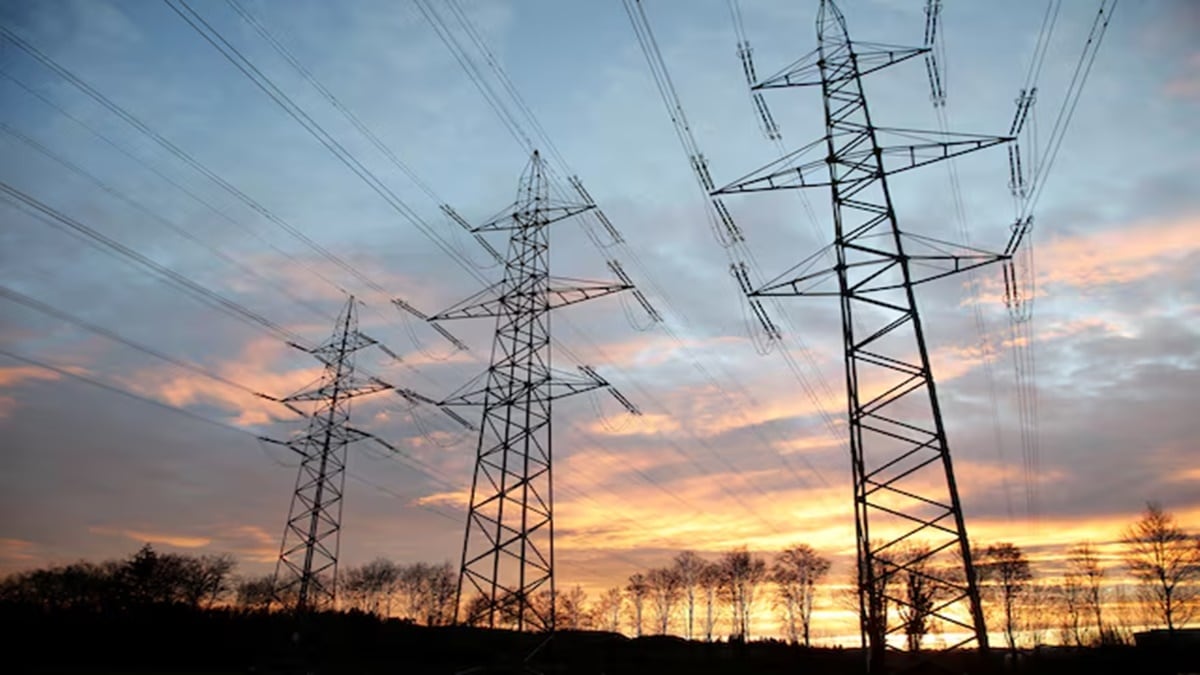
India’s rapidly rising electricity demand and renewable energy expansion are expected to drive a ₹9-trillion transmission and grid infrastructure investment cycle over the next few years, with transformers, substations, switchgear and high-voltage direct current (HVDC) systems emerging as major beneficiaries.
The transmission push comes as India’s peak power demand touched a record 270.82 GW this summer amid severe heatwave conditions, increasing stress on interstate transmission networks and renewable energy evacuation infrastructure.
According to a sector analysis by Kotak Neo, India plans to add nearly 470 GW of solar and wind capacity over the next decade, sharply increasing transmission requirements across the national grid.
The report estimated a ₹9-trillion opportunity across grid expansion and modernisation, with the broader transmission and distribution market projected to rise from around $27.8 billion in 2024 to $37.6 billion by 2030 at a compound annual growth rate (CAGR) of 5.2%.
ALSO READExplainer: The need for a fiscal buffer to handle external shocks
Long-Distance HVDC Infrastructure
India’s HVDC market alone is projected to expand from around $15 billion in 2025 to nearly $31 billion by 2035 as renewable energy generation increasingly shifts to distant regions requiring long-distance transmission with lower losses.
The report highlighted that India may require nearly 7.75 lakh circuit kilometres (ckm) of transmission lines and around 4,76,000 MVA of substation capacity additions over the coming years to support renewable integration and rising electricity demand.
The analysis identified rapid data centre expansion, railway electrification, metro rail growth, EV charging infrastructure, semiconductor manufacturing, renewable energy corridors and industrial electrification as major long-term demand drivers for transmission equipment and grid infrastructure.
India’s electricity demand is projected to grow at a CAGR of 6.4% till 2030, while rising cooling demand, industrial electrification and rapid renewable energy additions are expected to increase pressure on balancing infrastructure and interstate transmission systems.
Evening Peak Pressures
The report highlighted that solar generation during peak daytime hours has already reached nearly 80 GW on some summer days, accounting for around one-third of total power generation during those hours. However, the sharp decline in solar generation after sunset is increasing the requirement for stronger transmission systems, balancing infrastructure and storage-linked networks.
ALSO READFuel prices up Rs 7.5/litre in 12 days; OMC losses still near Rs 600 crore daily
Power Grid Corporation of India Ltd (PGCIL) was identified as a key beneficiary of the transmission capex cycle. According to the report, PGCIL’s capex in FY26 stood at ₹35,540 crore, exceeding its revised target. The company plans capex of ₹1.08 lakh crore between FY26 and FY28, while its project pipeline till FY32 is estimated at ₹3.06 lakh crore.
The report also identified transformers, conductors, cables, substations and switchgear as key segments likely to witness sustained demand growth amid renewable energy integration and rising electricity consumption.
Companies including Power Grid Corporation of India, Hitachi Energy India, ABB India, CG Power and Industrial Solutions and KEC International were highlighted as potential beneficiaries of the transmission and grid expansion cycle.
The transmission buildout assumes significance as India accelerates renewable energy additions while attempting to maintain grid stability during periods of record evening peak demand and rising cooling-related electricity consumption.
TOPICScapital expenditurePowerThis article was first uploaded on May twenty-five, twenty twenty-six, at forty-four minutes past nine in the night.