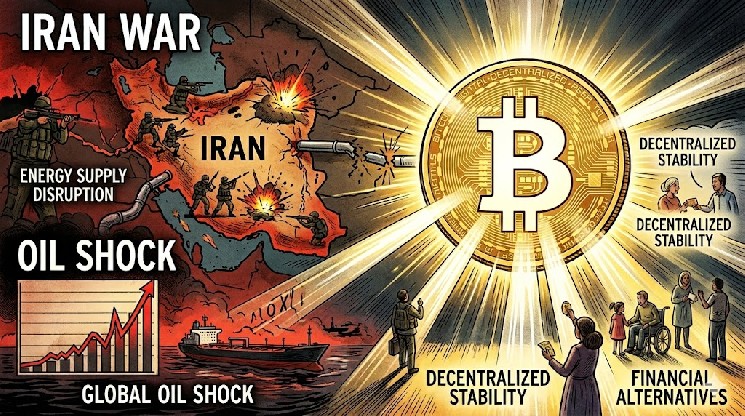
Since the commencement of military actions by the U.S. and Israel against Iran on February 28, 2026, financial markets have been grappling with significant economic repercussions. The International Energy Agency (IEA) has characterized the disruption in the Strait of Hormuz as unprecedented in terms of supply shocks within the global oil market. This strait typically facilitates approximately one-quarter of maritime oil trade and accounts for around one-fifth of worldwide petroleum liquid consumption.
The Iran Conflict Highlights Monetary Infrastructure
The Strait of Hormuz serves as a critical physical chokepoint for trade; however, there exists another vital monetary chokepoint that impacts commerce. Cross-border payments typically navigate through a network involving correspondent banks, intermediary institutions, screening processes, and channels dedicated to trade finance. Correspondent banking plays an integral role in facilitating international transactions reliant on interconnected banks. When this network faces strain, both settlement risks and freight costs escalate.
This ongoing conflict has compelled markets to confront these realities head-on. According to a report from Reuters dated April 9th, ship traffic through Hormuz had plummeted to less than 10% of typical levels; only seven vessels crossed within a span of twenty-four hours compared to an average flow of around 140 ships under normal circumstances. Iran’s stance regarding routing permissions and potential tolls underscored that access had become conditional.
When access becomes contingent upon specific conditions in such physical corridors, it prompts stakeholders to consider monetary alternatives as well.
The Office of Foreign Assets Control (OFAC) prohibits U.S.-based banks from maintaining correspondent accounts with Iranian financial institutions. In August 2025, sanctions were imposed by the U.S Treasury on developers behind Iran’s Cross-Border Interbank Messaging System due to its design aimed at circumventing restrictions placed on more commonly utilized payment systems while fostering connections with foreign banks like Bank Kunlun.
With disruptions caused by this conflict affecting crucial segments within global trade networks, it is almost inevitable that mechanisms tied to U.S dollars will be leveraged in pursuit of resolution strategies—if Iran seeks compensation for passage through the Strait then alternative methods for monetary settlements will be required.
Bitcoin Emerges as a Key Player
Bitcoin functions as an open settlement network devoid of reliance on correspondent banking entities or central authorities overseeing payment transfers—this attribute differentiates it significantly from traditional financial systems despite existing challenges posed by sanctions legislation or price fluctuations associated with custody issues.
In light if these factors Bitcoin presents an institutional dependency profile that could prove invaluable under current circumstances.
Consider these points:
- A kinetic conflict can disrupt cargo transport routes;
- A banking crisis can halt payments related to those goods;
- A regime imposing sanctions may funnel transactions into narrower pathways necessitating increased intermediaries along with additional approval steps;
Yet amidst all this turmoil remains Bitcoin—a transparent monetary rail available for use without constraints imposed by conventional systems.
On March third researchers observed millions worth cryptocurrencies departing Iranian exchanges following military strikes targeting their nation’s interests; crypto transaction volumes originating from Iran during twenty-twenty-five ranged between eight billion dollars up until eleven billion dollars showcasing heightened utilization amid pressures faced across domestic/cross-border financing avenues!
