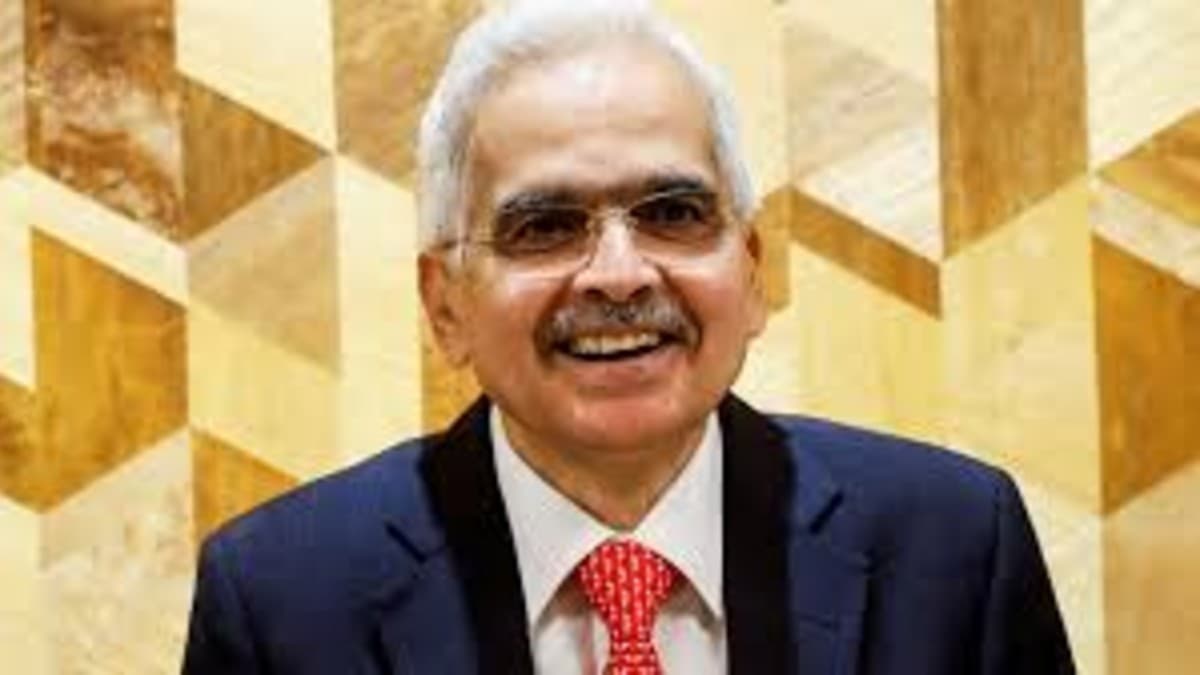
With global risks tilted to the downside due to frequent geopolitical shocks, India’s experience offers a model of navigating volatility through structural reforms, policy discipline, and innovation, Principal Secretary-2 to the Prime Minister of India Shaktikanta Das said on Thursday.
The global economy has been grappling with persistent shocks, including supply chain disruptions, shifting consumer demand, and strained public finances in the aftermath of the COVID pandemic, he said. Events such as the ongoing tensions in West Asia have further unsettled global production networks, logistics systems, and labour markets.
Despite these challenges, India has demonstrated notable economic strength, Das said.
“From 2021-22 to 2025-26, India has recorded an average annual GDP growth of 7.8%, reflecting economic resilience and resurgence,” he said speaking at an AIMA event here.
He outlined ten major factors underpinning India’s economic resilience. He said controlled inflation, strong growth, and robust foreign exchange reserves have positioned India to absorb global shocks effectively.
Stable governance and continued reforms have strengthened investor confidence. Investments in roads, railways, ports, and digital systems have improved supply chains and reduced bottlenecks.
With consumer spending contributing over 55% of GDP, India’s large and young population remains a key growth engine.
The Reserve Bank of India has maintained a flexible inflation-targeting framework, balancing growth and price stability. Platforms like UPI and Aadhaar have accelerated financial inclusion and economic formalization.
Despite pandemic-related pressures, the government has maintained a path of fiscal consolidation with increased capital expenditure.
Banks and non-banking financial institutions have emerged stronger post-pandemic.
A young, skilled workforce continues to drive productivity and innovation.
Diversified global partnerships have reduced overdependence on any single region.
Das said successive crises have acted as catalysts for structural transformation. India has undergone rapid digitalization, improved governance efficiency, and expanded infrastructure significantly over recent years.
Importantly, policymakers adopted a calibrated approach—introducing stimulus measures during crises and withdrawing them in a timely manner to avoid long-term economic distortions. During the pandemic, the central bank alone implemented over 100 targeted measures, most of which were temporary and carefully rolled back.
With repeated disruptions exposing vulnerabilities in single-source supply chains, resilience is increasingly taking precedence over cost efficiency.
“Resilience maximization is replacing cost minimization as the priority,” Das noted, emphasizing the need for diversification and flexibility in supply chains.
Das said India’s approach to “Atmanirbhar Bharat” was framed not as isolationism but as strategic autonomy. The focus is on building domestic capabilities in critical sectors while maintaining global engagement.
Significant progress has been made in sectors. India has become the world’s second-largest mobile phone producer. The India Semiconductor Mission is boosting domestic production capacity. India remains a global leader, supplying around 20% of generic medicines worldwide.
India Stack and other digital platforms continue to expand access and inclusion, he added.
TOPICSShaktikanta DasThis article was first uploaded on April nine, twenty twenty-six, at twenty-three minutes past five in the evening.