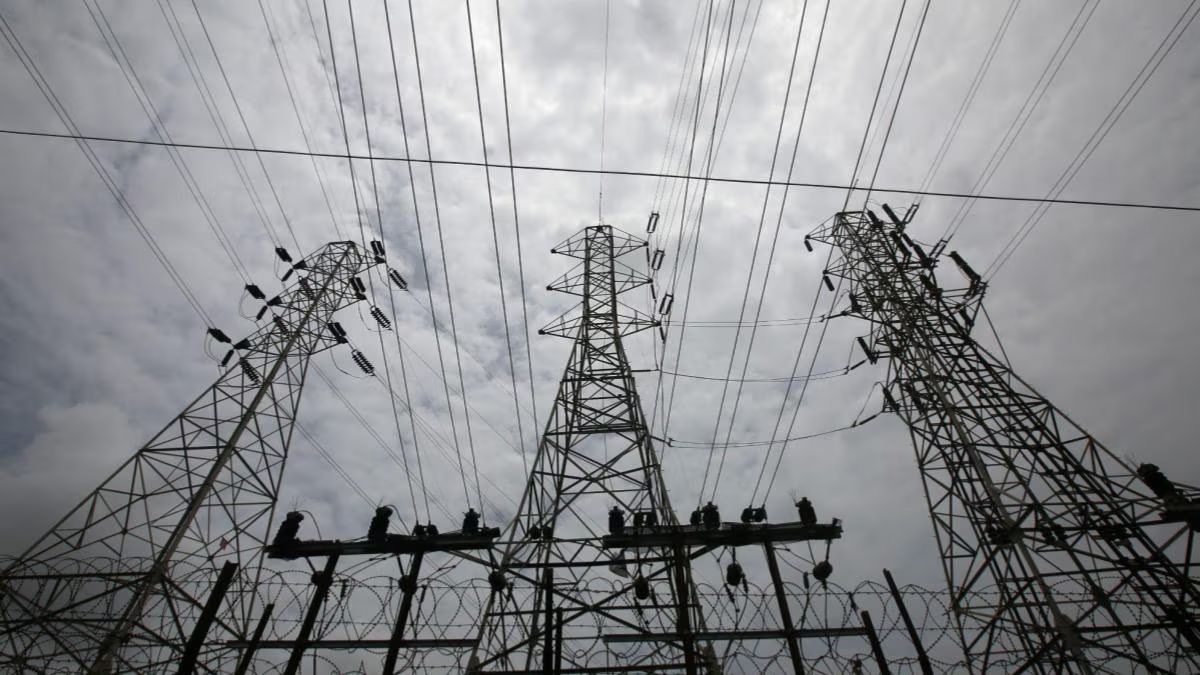
Right-of-way constraints, regulatory changes and supply chain disruptions have slowed India’s power transmission expansion, leaving a widening gap between targets and execution even as the sector opens up a ₹7.6 trillion investment opportunity over the next six years, according to a report by SBI Capital Markets (SBICAPS).
Persistent Execution Bottlenecks
The report flags persistent bottlenecks that have weighed on capacity addition between FY22 and FY26, including land acquisition challenges, complexities in valuation, the Great Indian Bustard (GIB) ruling, and equipment shortages due to limited imports from China, particularly affecting high-voltage transmission projects. “Transmission sector could see a turnaround in FY27 after 5 sombre fiscals,” the report said, indicating early signs of recovery.
ALSO READGoldilocks phase over? MPC warns of growth–inflation trade-off due to West Asia crisis
Despite a 37% year-on-year jump in line additions in FY26, execution continues to lag behind targets. Transmission line additions stood at 12,139 circuit kilometres (ckm) in FY26, well below the target of 15,382 ckm, while private sector performance remained weak, achieving only 64% of its target, the report noted.
The shortfall has resulted in a significant capex backlog. Of the ₹4.3 trillion investment required between FY23 and FY27, around ₹2.7 trillion remains to be spent, raising the likelihood that National Electricity Plan (NEP) targets for March 2027 will be missed. The spillover is expected to push an additional ₹4.9 trillion capex requirement into the FY27–FY32 period, taking the total opportunity to ₹7.6 trillion.
The report underscores that transmission will be a critical enabler of India’s energy transition, with generation capacity projected to more than double to 1.1 terawatts by FY36, driven by electrification and rising demand.
However, policy changes are expected to alter investment dynamics. The gradual withdrawal of inter-state transmission system (ISTS) fee waivers for renewable energy projects could reduce incentives for long-distance power transmission. “Regulatory changes may put a resistor in the circuit in the near-term, but are essential for long-term health,” the report said.
Strategic Shifts
The shift is likely to encourage states to develop local renewable capacity, particularly in resource-rich regions such as Gujarat, Tamil Nadu and Rajasthan, while reducing reliance on power flows across states that had earlier driven transmission expansion.
ALSO READGoyal pitches for a new free trade pact with South Korea
At the same time, emerging technologies such as energy storage could improve efficiency of the existing network. “Availability of storage… could reduce the transmission line congestion and even out the flow of power across the day,” the report noted, suggesting that storage could ease peak load pressures and optimise asset utilisation.
To bridge the funding gap, asset monetisation is emerging as a key lever. The National Monetisation Pipeline (NMP) 2.0 has set a ₹2.3 trillion target for transmission assets between FY26 and FY30, including ₹2 trillion through BOOT projects, along with securitisation of existing assets.
In addition, intra-state transmission assets present a major opportunity, with nearly 90% owned by state utilities and a potential monetisation value of ₹2.9 trillion, the report said.
With execution constraints persisting alongside rising demand, the report suggests that faster clearances, regulatory clarity and innovative financing models will be critical to unlocking the next phase of transmission growth in India’s power sector.
TOPICSPower Grid CorporationThis article was first uploaded on April twenty-three, twenty twenty-six, at fifty-seven minutes past six in the evening.