
The current price of Bitcoin remains significantly higher than the lows seen in previous bear markets, creating a sense of confusion in the market. However, beneath this apparent stability, a substantial portion of investors is already experiencing losses.
Recent on-chain analytics indicate that by early April, approximately 46% of Bitcoin’s total supply was being held at a loss. This means that nearly half of all coins within the network were acquired at prices exceeding today’s market value.
When many investors find themselves in losing positions, market sentiment often becomes volatile. The disparity between what price charts indicate and how actual holders perceive their investments can be quite pronounced.
This brings attention to the $60,000 mark. While it’s an easy-to-remember figure due to its roundness, its significance lies in its potential impact on investor behavior. A decline back to this level could push even more participants into negative territory and transform a gradual downturn into a steep plunge—testing whether holders will continue to hold or begin selling off their assets.
Those who invested during the recent price surge have shifted their focus from chasing new highs to grappling with tougher questions: Did they misinterpret market signals? Should they reduce their exposure? Is there further downside risk ahead? Such uncertainty often marks regions where market bottoms form; once panic takes root here, it tends to spread rapidly.
The underlying support remains intact
The current state of the market is challenging; however, key levels that characterized previous cycles are still holding firm.
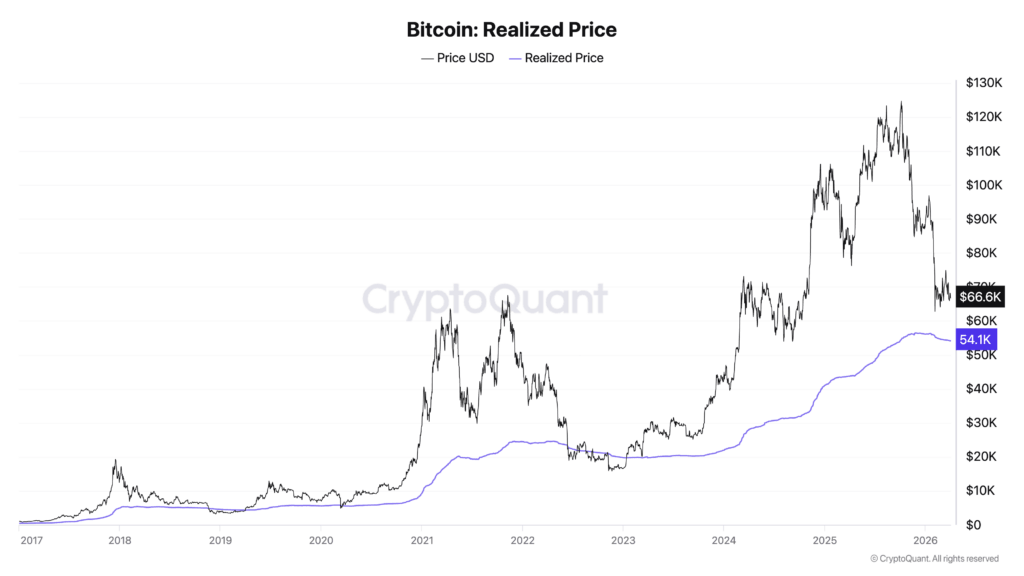
A prime example is Bitcoin’s realized price—a fundamental long-term benchmark representing the average cost at which coins last changed hands—which currently hovers around $54,100. Despite recent declines, Bitcoin continues trading above this threshold; thus far indicating that most holders across the network are not facing losses.
This trend is corroborated by weekly charts as well. Bitcoin maintains its position above its 200-week moving average situated around high $50k levels—placing it in an unusual scenario where it appears weak enough to unsettle investors and dampen sentiment while foundational support levels established during past bear markets remain unbroken.
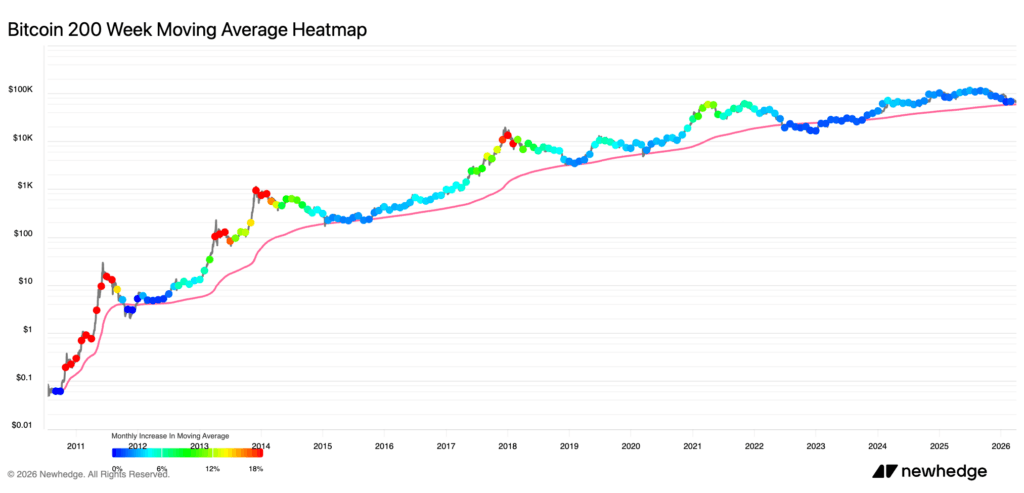
This situation may represent one significant difference between this cycle and those before it. Although volatility persists with drawdowns causing tangible harm—the altitude at which these setbacks occur has notably increased compared to prior cycles where fear could swiftly drive prices below historical support without much resistance.
This elevation likely stems from a more robust ownership base for Bitcoin over recent years as institutional investment has surged alongside long-term capital influxes providing greater structural resilience than seen previously when panic could easily breach established floors without hesitation.
The critical question now revolves around whether this marketplace can withstand additional discomfort before triggering forced sell-offs among investors unwilling or unable to absorb further losses?
If prices approach $60k yet manage stability there—it would signify something noteworthy about this cycle: almost half of all participants are already underwater while deeper foundational supports remain intact. Conversely should that level falter leading mass sell-offs—the familiar sequence characteristic of bear markets would likely re-emerge quickly thereafter!
The visible damage versus structural integrity operates on different planes presently—Bitcoin may appear relatively stable when viewed through long-term lenses even though many existing holders feel pressured currently—and for external observers understanding such tensions provides crucial insight into today’s dynamics within crypto markets!
A considerable amount pressure exists within these conditions right now—and how much longer such foundations can endure before shifting under strain will start becoming clearer over upcoming weeks ahead!