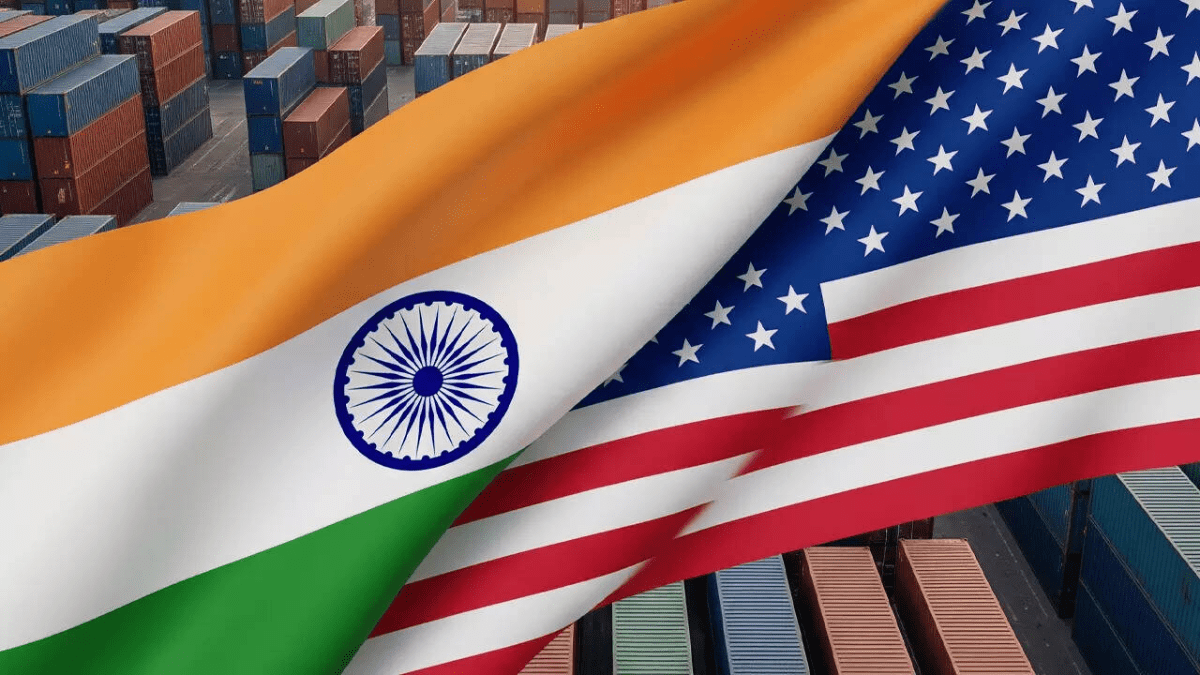
The US has proposed an additional 12.5% Trump Tariff on imports from India and 43 other countries, on the grounds their exports contain inputs produced by forced labour. The move is seen as an attempt by the US administration to retain leverage in ongoing trade negotiations.
The proposed duties, announced after an investigation into the policies of 60 countries that together account for more than 99% of US imports, will replace the existing 10% tariff imposed under Section 122 of the Trade Act. Those duties are due to expire on July 24. For 16 other countries covered by the investigation, the US has proposed an additional tariff of 10%.
The move comes even as India and the US are engaged in the second round of in-person negotiations for an interim trade deal, which officials say is nearing completion. The US delegation, led by Assistant US Trade Representative for South and Central Asia Brendan Lynch, is in New Delhi for three days of talks ending on Thursday.
ALSO READ‘Proposed tariffs not final yet’: Centre responds after US plans fresh 12.5% tax on India, 59 countries
“India remains engaged with the US on the matter as a part of Section 301 proceedings,” the Commerce and Industry Ministry said in a statement. It added that India is also simultaneously engaged with the US to finalise a framework agreement that was announced on February 2, 2026 in accordance with the joint statement released on February 7, 2026.
Ajay Srivastava, founder of the Global Trade Research Initiative (GTRI), said the proposed tariffs were part of a broader US pressure strategy. “India should treat Section 301 actions and the India–US Bilateral Trade Agreement (BTA) negotiations separately while reassessing the costs and benefits of the proposed agreement,” he added.
The Office of the US Trade Representative (USTR) has invited comments from stakeholders on the proposed action until July 6. Public hearings will begin on July 7, while requests to appear before the committee conducting the investigation must be submitted by June 22.
The USTR has also proposed a textile mechanism that would allow a specified volume of apparel and textile imports from certain economies to enter the US at a reduced Section 301 tariff rate without spelling out details.
The investigation was launched on March 12 under Section 301 of the Trade Act. During the process, the USTR held consultations before publishing its findings and proposed remedies. Sixteen countries, including the European Union, which have taken or committed to measures prohibiting imports made with forced labour, face a lower additional duty of 10%.
Apart from labour-related investigations, the USTR is investigating India, the European Union, Singapore, Switzerland, Norway, Indonesia, Malaysia, Cambodia, Thailand, South Korea, Vietnam, Taiwan, Bangladesh, Mexico and Japan over policies that allegedly contribute to excess manufacturing capacity and undermine the US industrial base. The probe could result in another round of tariff increases.
Section 301 investigations were initiated after the US Supreme Court struck down country-specific reciprocal tariffs imposed by President Donald Trump through executive action. Those tariffs had been used to push trading partners to lower barriers for American exports and grant wider market access.
Taken together, the two investigations could lead to tariff increases exceeding 20% on several major US trading partners and strengthen Washington’s hand in trade negotiations.
The current investigation exceeds the scope of Section 301 which deals with market-access barriers faced by the US firms in the country being investigated and not what it imports and from where.
“The investigation is not based on allegations that Indian exports are produced using forced labour. Rather, the USTR action focuses on whether countries prohibit imports made with forced labour in third countries,” Srivastava said.
TOPICSECONOMYIndia-US trade dealTrump TariffThis article was first uploaded on June three, twenty twenty-six, at fifty-six minutes past eleven in the night. © IE Online Media Services (P) Ltd