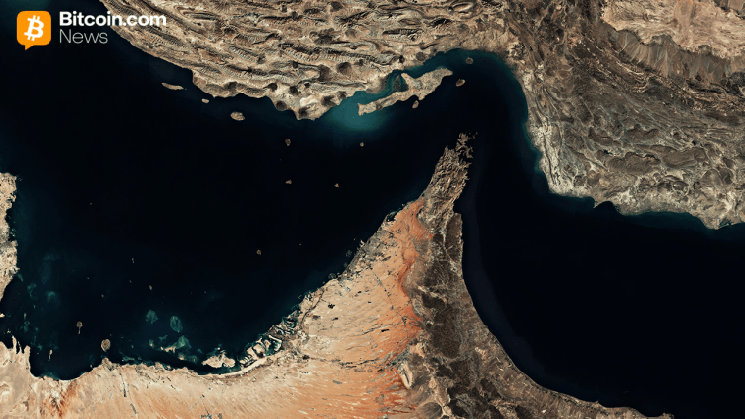
On Sunday, Bitcoin’s value plummeted to $71,067 following the breakdown of peace negotiations between the U.S. and Iran in Islamabad. This development coincided with the deployment of two U.S. Navy destroyers into the Strait of Hormuz to initiate mine-clearing operations.
Key Highlights:
The cryptocurrency dropped to $71,067 on April 12, 2026, after unsuccessful peace talks in Islamabad aimed at resolving tensions between the U.S. and Iran.
The USS Frank Peterson and USS Murphy were dispatched by the U.S. Navy into the Strait of Hormuz for mine clearance efforts.
Negotiations faltered due to Iran’s insistence on maintaining its nuclear program, leaving around 2,000 vessels stranded in Persian Gulf waters.
Bitcoin Value Declines Following Failed Peace Talks
This decline reversed earlier gains from that week when Bitcoin had approached $74,000 amid hopes that a two-week ceasefire could be sustained between Washington and Tehran. Vice President J.D. Vance confirmed that discussions concluded without a resolution regarding both Iran’s nuclear ambitions and access through critical waterways.
President Trump took to Truth Social to announce that naval forces had commenced operations to “clear out” the Strait of Hormuz as a service to nations globally. He claimed all 28 Iranian mine-laying vessels had been neutralized and now rest at sea’s bottom. The Central Command affirmed that both USS Frank Peterson and USS Michael Murphy navigated through this strategic waterway as part of their mission for mine clearance and ensuring freedom of navigation.
In response to these announcements, Bitcoin experienced an approximate drop of 2.5%, reflecting concerns over diplomatic failures rather than any operational progress made by naval forces in clearing mines from maritime routes.
The Strait of Hormuz is vital for global oil transport; it accounts for about 20% of crude oil supplies worldwide. In mid-March, Iran implemented selective restrictions which reduced daily shipping traffic dramatically from around 138 vessels down to just four or five at times. According to estimates by the International Maritime Organization (IMO), nearly 2,000 ships—including six cruise liners—remain stuck in Persian Gulf waters alongside approximately 20,000 seafarers waiting for passage.
The disruption has caused significant reactions within global oil markets; prices surged above $100 per barrel during previous escalations related to this conflict scenario while Bitcoin has mirrored these fluctuations closely—declining during periods marked by rising tensions but rebounding briefly upon news indicating potential ceasefires.
Trump further accused Iran of imposing tolls on passage through this crucial strait—reportedly charging $1 per barrel—with some payments being demanded in cryptocurrencies like Bitcoin itself.
Iran’s delegation during negotiations included notable figures such as Mohammad-Bagher Ghalibaf along with Abbas Araghchi and Ali Bagheri while Trump noted his representatives—including Special Envoy Steve Witkoff along with Jared Kushner—engaged intensely over nearly twenty hours before returning empty-handed from Islamabad discussions facilitated by Pakistani Field Marshal Asim Munir alongside Prime Minister Shehbaz Sharif.
Nuclear Dispute Overshadows Other Issues.NATO members including Germany Italy Japan United Kingdom declined military involvement. “Cowards” “paper tiger,” said Trump regarding those nations. A UN Security Council resolution proposed military action against Iranian obstruction was vetoed recently by Russia China on April seventh.
First reports emerged Sunday morning indicating supertankers successfully navigating out under escort provided by U.S.naval forces.Iranian officials alleged violations occurred concerning ceasefire agreements when American vessels entered uncoordinatedly.”No one who pays an illegal toll will have safe passage,” stated Trump over recent developments. Bitcoin continues trading as a risk asset within current conditions; selling off amid escalating conflicts yet recovering when pressures subside.Whether ongoing clearance operations lead towards fully opening maritime routes or provoke further obstructions remains pivotal not only affecting future movements across oil markets but also influencing crypto valuations—and impacting stock indices come Monday morning.