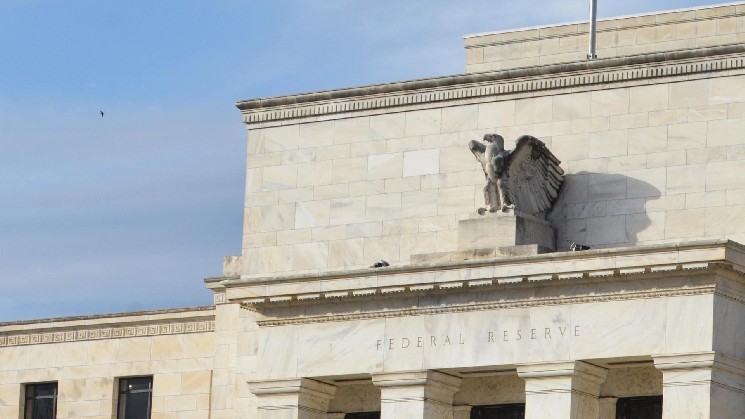
The U.S. Federal Reserve proposed two rules on Thursday that would accomplish its part of the multi-agency work needed to establish stablecoin issuer oversight under the Guiding and Establishing National Innovation for U.S. Stablecoins ($GENIUS) Act.
These proposals, which are now open for 60-day public comment periods, would establish the legal safety net behind the tokens being issued and would set up the procedures for Fed-regulated banks to issue stablecoins. Last year’s $GENIUS Act required the U.S. banking regulators and Treasury Department to put regulations in place by July of 2026, meaning the agencies are all well past the legal deadline, though they’ve made significant progress in recent months.
The Fed’s regulatory approach also echoes the Office of the Comptroller of the Currency’s own proposal where it addressed the law’s ban on issuers paying interest or yield for holding stablecoins.
“Under the proposal, certain types of arrangements involving third parties would be presumed to be prohibited payments of interest or yield,” the Fed wrote, noting that its approach is consistent with the OCC’s. Though the regulations aren’t final, the agencies seem to be allowing a very narrow approach by crypto platforms to offer stablecoin rewards akin to credit-card incentive programs.
The question of how much companies such as Coinbase could reward stablecoin users was one of the sticking points in the debate over the recently failed Digital Asset Market Clarity Act. As it stands, the $GENIUS Act is now the primary law governing stablecoin rewards, because the efforts to revise it in the Clarity Act didn’t succeed.
Proposed rules like those offered by the Fed on Thursday need to gather input from the public before the federal regulator can revise them and publish them in final form — a process that usually takes several months, sometimes much longer.
The central bank’s first proposal on Thursday governs capital and reserve requirements meant to ensure that the stablecoins are fully represented by the most liquid assets and the issuers have a solid foundation in times of stress. It also outlines accepted stablecoin activities at its supervised banks, and it’s the proposal that includes the stablecoin rewards component.