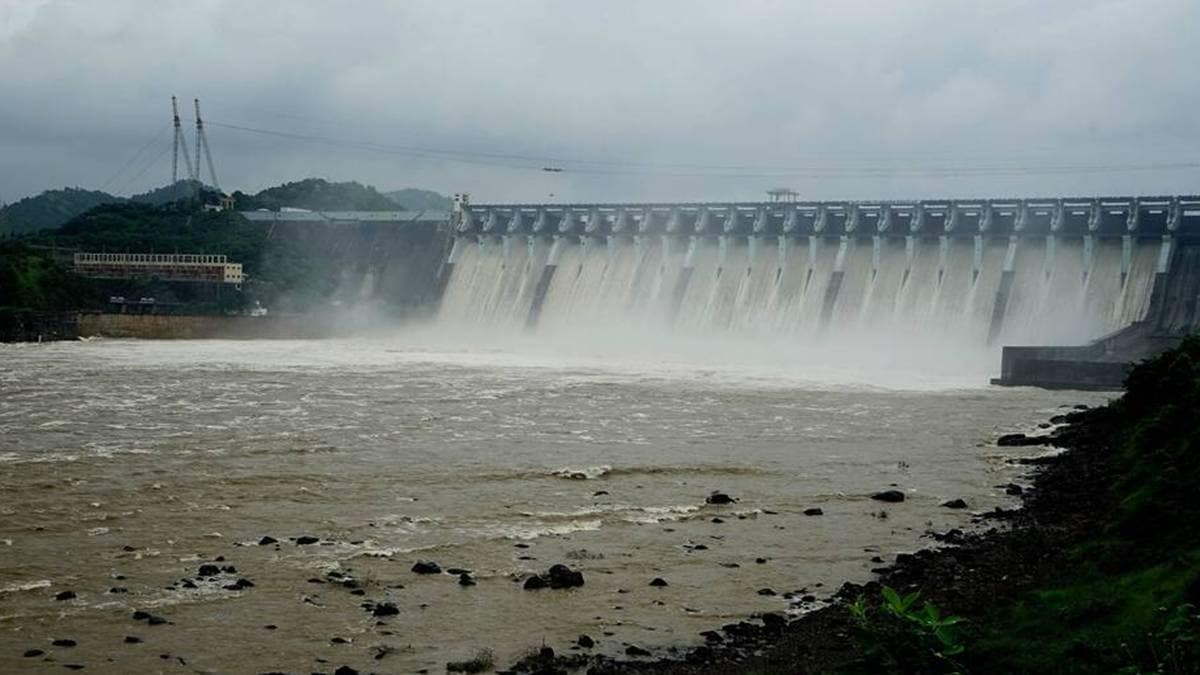
Amid an impending drought-like situation, farmers, agricultural traders, and consumers take comfort from current reservoir levels which are reasonably strong. This may help offset the negative impact of a below-normal monsoon on crop productivity and nourishment during the incipient kharif and the forthcoming rabi seasons.
The country’s 166 major dams are now filled up to 30% of their storage capacity, or 18% above the “normal” level. Two successive years of good monsoon have prevented dam waters from depleting to precarious levels, just ahead of a fresh rain season predicted to be below-par.
Reservoir levels offer cushion
This contrasts with many previous rain-deficit years or the years that followed drought. For instance, at the same time in 2016, which followed the 2015 drought, India’s main dams were at just 16% of their storage capacity. “The ample reservoir levels relative to historical trends provide some comfort…,” rating agency Icra says.
ALSO READMonsoons this year may be one of weakest in a decade; farmers prepare with cautious confidence
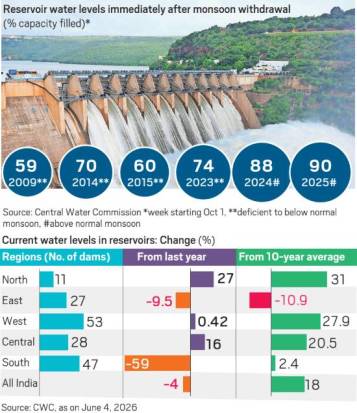
However, reservoir levels have already started dropping rather suddenly. According to the Central Water Commission (CWC), water levels at major reservoirs dropped 6% below the year-ago level on Thursday. Replenishment will depend on spread and distribution of monsoon rains. Icra cautions that a below-normal rainfall expectation for the year is likely to limit reservoir replenishment which remains crucial for rabi crops.
Adequate reservoir levels help farm irrigation and power generation as 20 reservoirs are also hydroelectric projects. Lower water levels could affect the sowing of rabi crops such as wheat and pulses.
ALSO READWeakest monsoon in a decade signals red flags for rural consumption growth
Previously, when the country received ‘deficient to below normal’ rainfall in 2009, 2015, 2016, and 2023, average water levels in reservoirs ranged 25-28% at the start of the monsoon season, that is, the first week of June, according to CWC. Water reservoir levels in the first week of October during below-par monsoon rains in years such as 2009, 2014, 2015 and 2023 were lower than in years of above-normal rains.
Water availability aids crop cycle
Due to adequate water availability in these reservoirs, officials expect timely land preparation and commencement of sowing activities for the kharif crops. Adequate water in dams in October helps the sowing of rabi crops such as wheat, mustard and chana. This is necessary for better plant growth and grain formation.
According to the Indian Meteorological Department forecast, major agricultural states such as Punjab, Haryana, Rajasthan, Uttar Pradesh, Gujarat, Madhya Pradesh, Maharashtra and Karnataka are expected to witness rainfall deficits. However, an official from the Water Resources Ministry said reservoir storage remained comfortably above normal storage across two regions: the west (28%) and the north (31%).
However, there are concerns about the central region and south, where only a fifth of dam capacities are currently filled. Worse, in the 27 dams of eastern India is the current water level of 10% is below the last 10-year average. “As a result, sowing and crop establishment activities are expected to progress on a stable footing, although the region remains relatively more dependent on the timely progression of monsoon and rainfall distribution compared with the other parts of the country,” according to a Crisil intelligence report. Icra states that reservoir levels typically exhibit a seasonal pre-monsoon (March-May) drawdown, followed by southwest monsoon-led replenishment during June-September. (Series concluded)
TOPICSDeficient monsooneconomy newsIMDrabi seasonsummer + 0 MoreThis article was first uploaded on June six, twenty twenty-six, at one minutes past three in the afternoon. © The Indian Express (P) Ltd