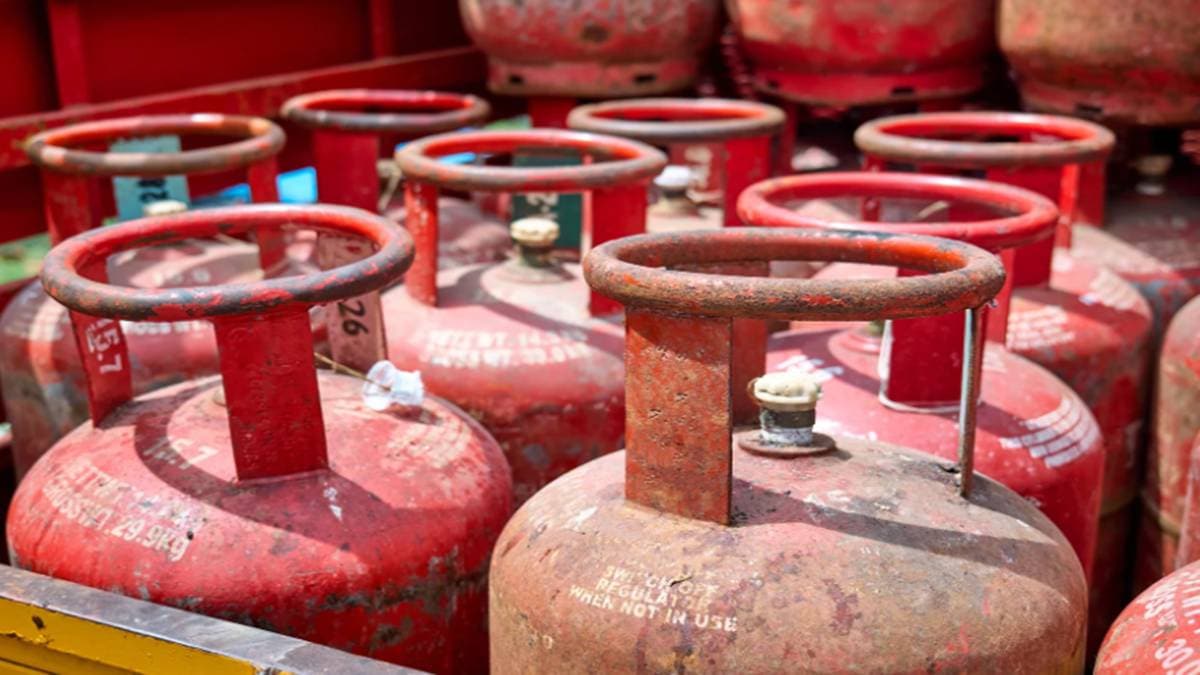
Two Indian-flagged LPG carriers carrying about 92,700 metric tonne of liquefied petroleum gas (LPG) have crossed the Strait of Hormuz and are now sailing towards Gujarat ports, offering relief to India’s cooking gas supply chain as tensions in West Asia disrupt shipping through the critical energy corridor.
Navigating Conflict
The vessels—Shivalik and Nanda Devi—crossed the narrow strait late Thursday night and early Friday morning and are expected to dock at Mundra and Kandla ports on March 16 and March 17, respectively.
Announcing the development, Rajesh Kumar Sinha, special secretary in the shipping ministry, said: “They safely transited the Strait of Hormuz and are now proceeding towards India. These vessels are carrying approximately 92,700 metric tonne of LPG; their ports of arrival will be Mundra and Kandla, with expected arrival dates of March 16 and March 17, respectively,” he said.
ALSO READGovt urges shift to PNG as LPG bookings surge amid West Asia disruption
Sinha said of the 24 Indian-flagged vessels earlier positioned west of the Strait of Hormuz, two have now crossed, leaving 22 vessels in the Persian Gulf carrying 611 seafarers. Officials said these include six LPG carriers, one LNG tanker, four crude oil tankers, one chemical products tanker, three container ships and two bulk carriers.
In all, 28 Indian-flagged vessels were affected, including four on the eastern side of the strait. One India-flagged tanker, Jag Prakash, had already crossed earlier. Jag Prakash was loaded with gasoline from Sohar port in Oman and headed to Tanga in Tanzania. It is due to reach Tanga on March 21.
The Strait of Hormuz carries more than 20 million barrels of crude oil a day, or roughly one-fifth of global oil consumption and nearly a quarter of seaborne oil trade, with a significant share of global LNG also passing through it.
For India, the disruption has hit LPG supplies the hardest. The country imports 60% of its LPG requirement, and 85-90% of that comes from Gulf suppliers that use Hormuz as the transit route.
The development comes amid an LPG shortage in the country wherein the government has prioritised household consumers and only about 20% of the average use by commercial consumers in the past six months has been allotted for restaurants and hotels.
Managing the Crunch
That pressure is now visible in domestic demand patterns. Sujata Sharma, joint secretary (marketing & oil refinery) in the petroleum ministry, said LPG refill bookings have jumped sharply due to panic buying. “Yesterday, the number of bookings was about 75 lakh, and it has now increased to around 88 lakh. This is nothing but panic booking,” she said.
Before the conflict, daily bookings were about 55 lakh, while oil marketing companies were delivering around 50 lakh cylinders a day. Sharma said domestic consumers are being prioritised.
“The situation is a matter of concern for all of us, but we are ensuring that household consumers do not face inconvenience. Domestic consumers have been prioritised, and LPG cylinder supply is being ensured for them,” she said. She also clarified the booking rules after complaints that cylinders could not be booked.
“In urban areas, there is a mandatory minimum gap of 25 days between the last delivery and the next booking and in rural areas this gap is 45 days. If you attempt to book a cylinder before this period has elapsed, the booking will not go through… There is absolutely no need to panic,” she said.
To ease the pressure, the government has stepped up domestic output. “The first day we informed you about a 10% increase in domestic production, then 25%, then 28%, and today the increase has reached 31%,” Sharma said.
The government has also moved on the commercial side, where supply stress has affected hotels, restaurants and other establishments. “A decision was taken to allocate a certain quantity of LPG to commercial cylinders as well… these commercial cylinders have been placed at the disposal of the state governments to prioritise consumers. In this regard, the distribution of commercial cylinders has already commenced in approximately 29 states and Union territories, and they have reached the consumers,” she said.
Ports have also been told to prioritise LPG cargoes. Sinha said six LPG carriers arriving from different parts of the world, not just the Gulf, were accorded priority berthing by major ports. The government also said 30 seafarers were repatriated in the last 24 hours, taking the total number of repatriations to 253.
ALSO READUS tariff probe to now cover “forced labour”
Meanwhile, the government has also moved to secure additional gas supplies to support fertiliser production. Ministry of External Affairs spokesperson Randhir Jaiswal said the department of fertilisers has already floated global tenders in anticipation of supply disruptions and will procure spot gas on a competitive basis, with the first phase of purchases expected shortly. He said India currently has “more than adequate stocks of fertilisers,” with urea stocks higher than last year, DAP inventories nearly double and NPK stocks also significantly higher, adding that domestic production has been maximised after advancing plant maintenance schedules.
Iran too signalled passage for Indian vessels. Abdul Majid Hakeem Ilahi, representative of Iran’s Supreme Leader in India, said, “Of course, of course. Yes,” when asked if Indian ships would be allowed through the strait. Meanwhile, Iranian Foreign Minister Abbas Araghchi said the US, despite “bullying India” to end Russian oil imports, is now begging them to buy crude from Moscow, two weeks after its war with Iran. “The US spent months on bullying India into ending oil imports from Russia,” said Araghchi on Friday in a post on social media platform X. “After two weeks of war with Iran, White House is now begging the world – including India – to buy Russian crude,” he added.
TOPICSLPG cylindersThis article was first uploaded on March fourteen, twenty twenty-six, at eleven minutes past eleven in the night.