
According to Michael Saylor, co-founder of the Bitcoin treasury firm Strategy, the primary danger facing the Bitcoin network comes from “ambitious opportunists” seeking to implement protocol modifications.
Saylor’s remarks ignited a lively discussion online. Bitcoin maximalist Justin Bechler interpreted these comments as targeting software developers advocating for non-monetary applications on Bitcoin, including non-fungible tokens (NFTs) and on-chain images stored in blocks.
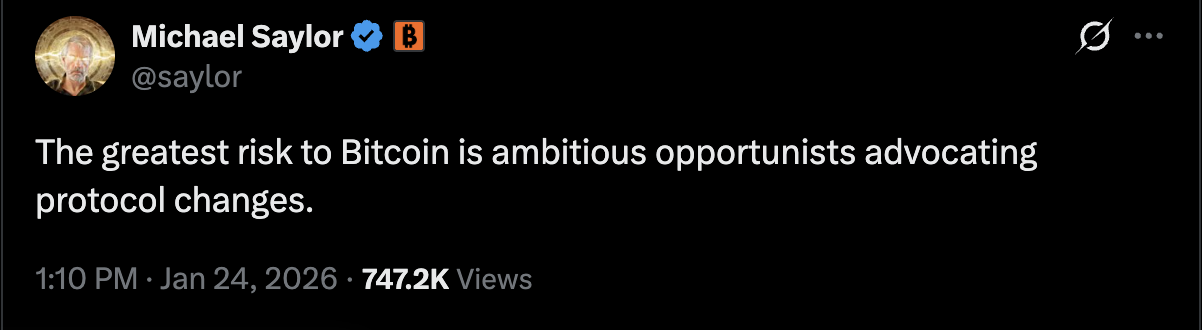
Source: Michael Saylor
Investor Fred Krueger expressed that “the greatest risk to Bitcoin is quantum,” while others like Mert Mumtaz, CEO of RPC node provider Helius, countered Saylor’s viewpoint. Mumtaz stated:
“This mindset is absolutely detrimental. The idea that ‘ambitious individuals aiming to advance this technology pose our biggest threat’ is flawed. Nothing is perfect; certainly not Bitcoin which has experienced numerous bugs just like any other software — perhaps we should allow those bugs instead of trying to fix them.”
A number of users within the community highlighted ongoing spam issues and referenced Bitcoin Improvement Proposal 110 (BIP-110), a temporary soft fork designed to eliminate non-monetary data from the blockchain ledger.
Saylor’s statement intensified discussions among those in favor of solidifying the protocol versus software developers who are pushing for enhanced features on Bitcoin such as quantum-resistant wallet addresses and on-chain file storage capabilities.
Related: Michael Saylor responds to criticism regarding bitcoin treasury firms
The ongoing discourse about quantum threats in the Bitcoin community
The topic of quantum computing remains highly contentious within the realm of cryptocurrency enthusiasts. Nic Carter, founding partner at venture capital firm Castle Island, has consistently warned that it’s crucial for protocols to transition towards post-quantum standards without delay.
Conversely, Adam Back—CEO at digital asset infrastructure company Blockstream—dismissed Carter’s assertions as “uninformed.”
“Bitcoiners and developers are not ignoring their responsibility; they are actively conducting research and development efforts aimed at preparing for future advancements in quantum computing,” Back asserted. “However, they prefer a quieter approach while you continue making uninformed claims.”

Source: Adam Back
An analyst focused on bitcoin markets named James Check noted that concerns surrounding quantum computing have had no significant impact on bitcoin’s market price; he attributed recent declines primarily to long-term holders selling off their assets into circulation.
Magazine: A Quantum attack against bitcoin would be futile: Kevin O’Leary