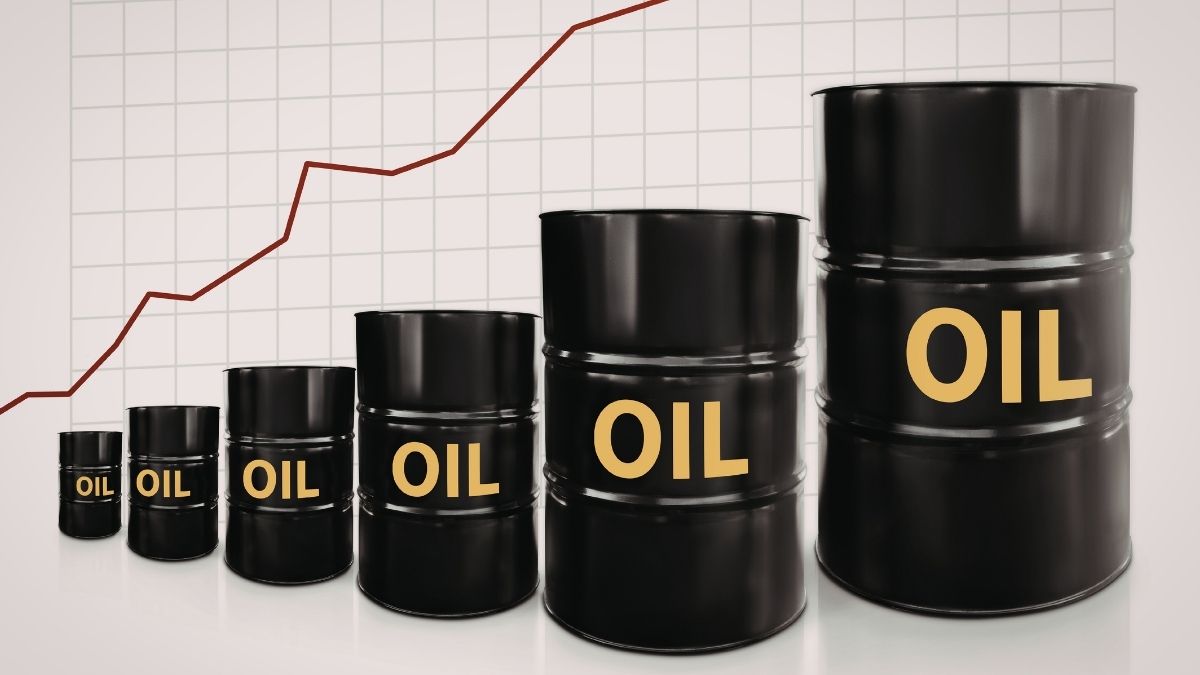
Brent crude prices have seen sharp price swings overnight. However, they are significantly off their highs near $100 seen in the past few months since the Middle East crisis started. Fitch Ratings believes that global oil prices could fall further and average $87 per barrel for the rest of 2026 once the Strait of Hormuz reopens. According to Fitch expectations, they assume the Strait to open in July
Fitch Ratings noted that the current surge in oil prices is being driven by a temporary supply disruption rather than any lasting damage to oil production capacity.
Under its base-case scenario, Fitch expects Brent crude to a fall to $80 per barrel by August, and decline further to around $70 per barrel from September.
ALSO READFitch cuts India’s growth projection to 6.4%, expects inflation to rise steadily
Here is why the global ratings agency is optimistic about a sharp decline in oil prices.
Market likely to return to oversupply
Fitch said oil markets could move back into oversupply as early as September as there has been no material damage to oil infrastructure in the region so far, which should allow production to recover quickly once shipping resumes.
“We project the market to return to oversupply from September due to a lack of material damage to the regional oil infrastructure, rapid recovery in Middle East production, and strong non-OPEC supply growth and potential OPEC output increases,” Fitch said in the report.
ALSO READRBI, govt moves may lower need for more OMO purchases in FY27: Experts
Fitch estimates oversupply to reach around 4 million barrels per day in the fourth quarter of 2026, depending on OPEC’s production policy.
“Oil price dynamics hinge on the timing of Hormuz reopening. Our assumed end of July reopening would push the market back into oversupply in 4Q26 and drive oil prices lower. The risk remains binary,” said Angelina Valavina, Managing Director at Fitch Ratings.
Alternative routes and reserves offer relief
The agency also pointed to alternative export routes, including pipelines in Saudi Arabia and the UAE, that can bypass Hormuz and help ease supply disruptions.
In addition, the International Energy Agency (IEA) has already released 400 million barrels from emergency oil reserves to support the market.
Higher prices spur fresh oil production
Fitch also highlighted that higher oil prices in recent months have also encourage other countries such as Kazakhstan, Venezuela, the US and Russia for oil production.
The agency said non-OPEC supply growth could exceed earlier estimates as producers respond to stronger prices.
“We expect a further supply response to higher oil prices from Kazakhstan, Venezuela, the US and Russia, in addition to the 1.2 mmbpd of non-OPEC supply growth we previously expected,” the report said.
Role of Strait of Hormuz is global oil supply
The Strait of Hormuz is crucial as it remains one of the world’s most important oil transit routes. The closure blocked around 20 million barrels of oil equivalent per day, including 15 million barrels per day of crude oil and 5 million barrels per day of oil products.
Saudi Arabia and the UAE together accounted for about half of the oil exports moving through the strait before the conflict. However, both countries have alternative export routes. China and India, which were the destination for nearly half of these exports, have borne the brunt of the disruption, with China accounting for 32% of these imports and India accounting for 15%.
Conclusion
Fitch Ratings noted that oil prices will remain volatile as the timing of the reopening of the Strait of Hormuz remains unclear. The ratings agency believes oil supplies will recover quickly once the Strait opens, as there are no significant damage to oil infrastructure in the Middle East.
TOPICSBrent crudeCrude oilFitch RatingsStrait of HormuzThis article was first uploaded on June ten, twenty twenty-six, at twelve minutes past twelve in the night. © IE Online Media Services (P) Ltd