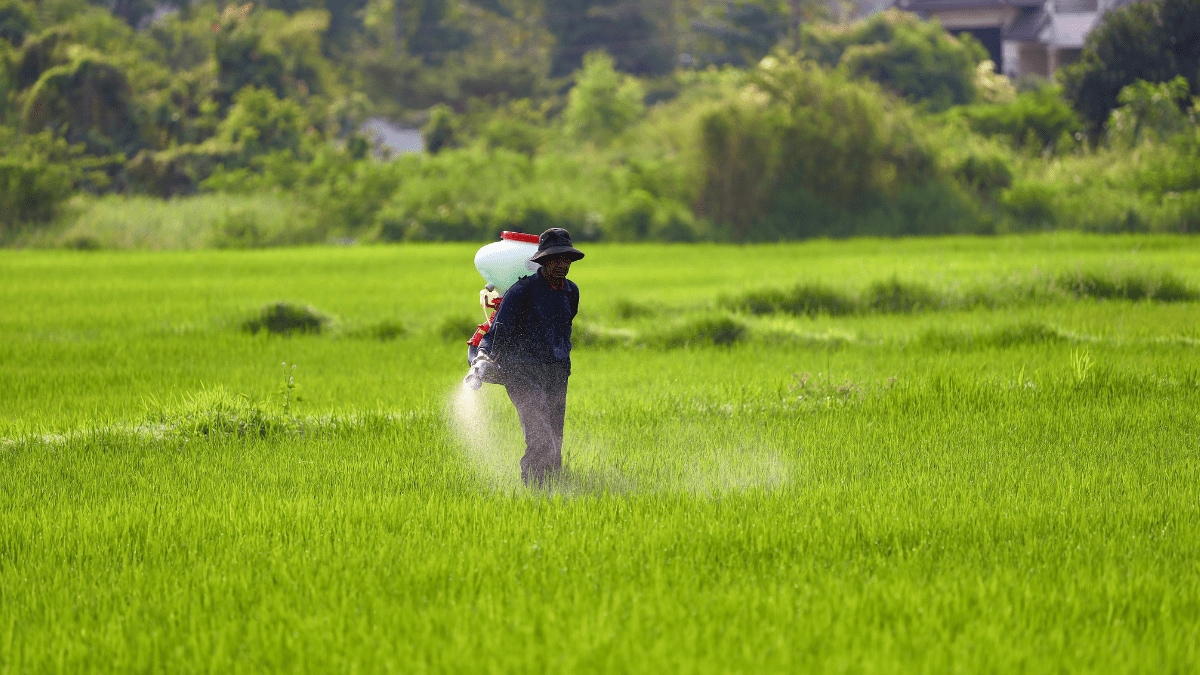
Despite the naval blockade caused by the war in West Aia, India’s farmers haven’t complained about any shortage of fertilisers so far. This is, however, a short-term facade of normalcy, thanks to the currrent lean season for farming. The war has already had a telling impact on the country’s soil nutrient manufacturers, with reduced avaiability of gas/LNG forcing them to cut output. In some cases, the production squeeze is already 50-60%; many units have also advanced their annual maintenance closure dates.
As kharif fertiliser demand becomes visible from mid-May, policymakers may need to brace themsleves, and resort to multiple options, including higher imports from Russia to keep supplies intact in case the war doesn’t end.
ALSO READUnincorporated-sector GVA up 10.9% in nominal terms in 2025, jobs rise 6.18%
If supply disruptions persist, the plausible scenarios include higher landed costs of inputs and finished fertilisers, weaker import economics and pressure on government finances on account of higher subsidy bill, notes DAM Capital Reserach.
Companies will have to be more cautious about inventory decisions. In the short term, they could reap windfall gain from liquidation of existing inventory, but this won’t be feasible beyond Q1FY27. In the medium term, inventory gains and subsidy support may be offset by higher replenishment cost. How the government chooses to keep nutrient based subsidy (NBS) rates in the next revsion will be a cruciual detreminant.
Diammonium phosphate (DAP) remains the most exposed due to import dependence and import-chain vulnerability. Single superphosphate (SSP) and NPK players look relatively better placed for now, with stronger finished-goods and raw-material cover.
In recent years, the government has been liberal in offering subsidies on P&K fertilisers, even though, for the record, a “fixed-subsidy” was introduced for these products way back in 2010. Urea, which has a share of over 55% in the total consumption fertiliers, is provided to the farmers through 0.3 milion retail outlets at a notified maximum retail price of Rs 242 a 45 kg bag. Since March 2018, the final price of this fertiliser to the farmer remained unchanged, even as the subsiy is 85-90% of the retail rate.
Bridging the Gap for Kharif 2026
According to Ramesh Chand, acting director and principal economist at the National Centre for Agricultural Economics and Policy Research, the country would require ~18mn tonnes of urea till August 2026. Assuming a 20% reduction in monthly urea production, the domestic production would be close to 10mn tonnes in the next 5 months. Given the current stock of ~6.2 million tonne, the gap is of ~2 million tonne, which needs to be imported and is prone to supply shocks.
Urea can be imported from Russia through the Suez route. One option is to ramp up these imports. Currently, Russia supplies over a third of MOP and 10-15% of urea and DAP. “Global freight stress, conflict, and supply risk can raise the cost of urea, ammonia, and other key inputs,” according to an official note on India’s $46-billion fertiliser industry. “Urea will be applied to paddy fields starting second half of June. The nuttrient is applied in two three times in a gap of ten days each” Gurbakhshish Singh, a farmer from Punjab’s Sangrur district says.
ALSO READ$9.2 billion oil import bill at $69; $156 spike may cost $60 billion
While around 3 bags of urea (45 kg each) is required for an acre for paddy, Punjab farmers often apply at least 6 bags of the fertiliser. As the Economic Survey 2025-26 pointed out, those who over-apply urea need a clear incentive to shift towards balanced fertilisation. A modest hike in retail urea prices may be needed.
While that being one of the long-term fixes, urea production needs to be ramped up immediately to addres the instant crisis. Around 31 MT of urea is expected to manufactured domestically during FY26 while consumption is projected to be 40 MT. The current urea stock is 6.11 MT against 5.52 MT reported a year ago, while around 17 MT of urea is required for next kharif season, 2026.
India has 33 gas-based urea plants with a total annual capacity of around 27 MT, producing beyond the rated capacity. Fifty seven fertiliser units manufactured 52 MT of several variants of soil nutrients including urea in 2024-25.
Production Squeeze
A senior industry official said that LNG supplies remain volatile. As shipmemts from Qutar and the UAE are hit, supplies are reduced by a third. In normal times, 50% of LNG used for domestic urea manufacturing is imported from Qatar, under a long-term agreement. These supplies have been disrupted.
For the first time for ensuring supply of natural gas, to the fertiliser plants, the government evoked Essential Commodities Act for LNG use. Supply of natural gas to the fertiliser plants is ensured up to 70% of their past six-month average gas consumption.
About 80% of India’s urea production relies on imported LNG while the rest uses domestic gas. Petronet LNG has of late declared force majeure after upstream suppliers expressed their inability to deliver contracted volumes. So the government has recemtly started to buy LNG fron spot markets in Australia, Russia and the United States. Currently, around 10-15% of LNG is purchased from the spot market.
“Domestic urea production is projected to climb by close to 23% from 54,500 tonne a day from to 67,000 tonne a day,” according to an official note issued on March 17. Reportedly, China is tightening fertiliser export restrictions amid disruptions from the war. A Morgan Stanley report indicated that West Asia crisis-related supply disruptions are impacting ~10 million tonnes of fertiliser capacity, especially affecting India and Bangladesh. The crisis has tightened nitrogen fertiliser supply, affecting about 4% of global urea output. Increased feedstock costs and shortages, particularly in petrochemical inputs, are driving up fertiliser manufacturing costs.
TOPICSFertilisersKharif cropsThis article was first uploaded on March twenty-five, twenty twenty-six, at one minutes past seven in the evening.