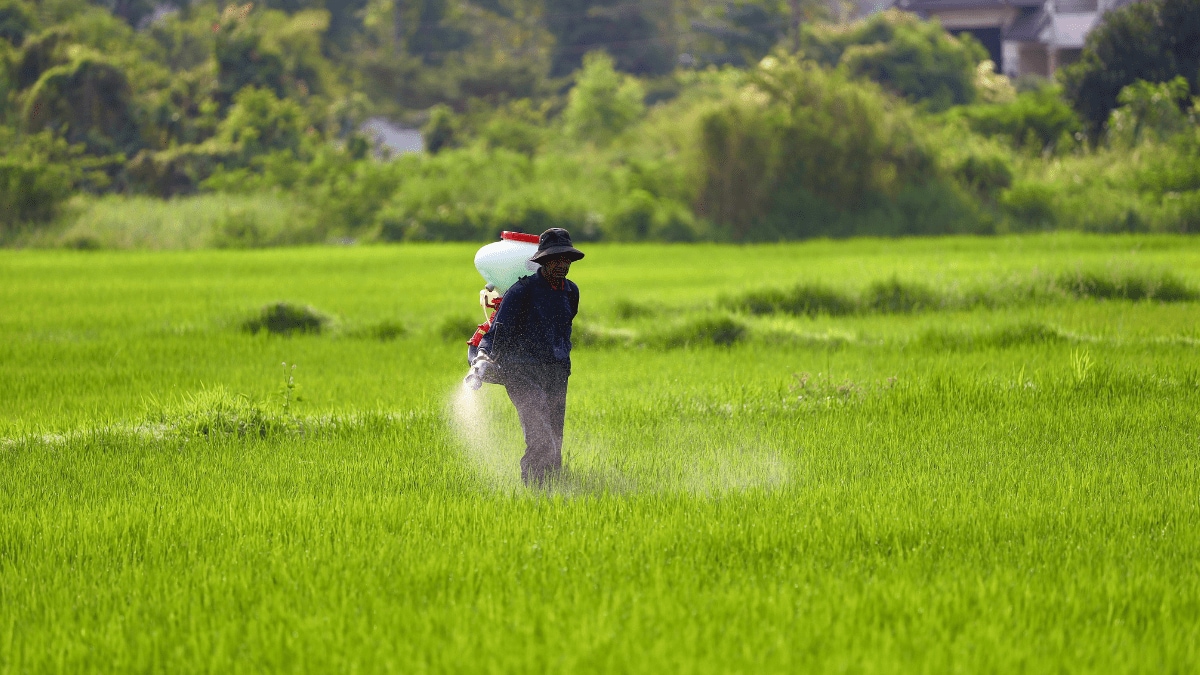
To insulate farmers from the volatility in global prices of soil nutrients, the Cabinet on Wednesday approved a subsidy of Rs 41,533 crore for phosphatic and potassic (P&K) fertilisers for the kharif 2026-27 season (April-September) under the nutrient-based subsidy (NBS) mechanism.
The allocation for NBS for the next kharif season is higher by 11% or Rs 4,317 crore than the previous kharif season (2025-26).
This means prices of non-urea soil nutrients, largely used for paddy, pulses and oilseeds, will remain unchanged for the next kharif season. Farmers continue to get diammonium phosphate (DAP) at Rs 1,350/50 kg bag despite global volatility in its price.
ALSO READMoSPI proposes mixed approach to estimate district domestic product
“Since the Covid period, global price fluctuations have not impacted the prices of fertiliser provided to farmers, although the subsidy burden has increased,” said Ashwini Vaishnaw, information and broadcasting minister. He added that the West Asia war has impacted fertilizer supplies and prices.
With the increase in NBS, the fertiliser subsidy might cross the budget estimate (BE) of Rs 1.7 lakh crore for 2026-27. Of the fertilizer subsidy budgeted for the current fiscal, Rs 1.16 lakh crore is for urea and Rs 54,139 crore under NBS.
NBS is announced for both kharif and rabi seasons. Even though a policy of “fixed subsidy” is in place for P&K fertilisers since 2010, in practice, the government has been adjusting the subsidies based on global prices in recent years to help the farmers.
Subsidies are paid directly to fertilizer companies, enabling them to sell fertilisers to farmers at affordable prices using point-of-sale machines
Uusually, the BE is kept at a conservative level and subsequently hiked over the year based on demand and global prices. Sources said the government will have to relook at the fertiliser subsidy after the first quarter of FY27 as the current focus is on ensuring that the war does not disrupt supplies.
ALSO READHormuz reopens, oil drops; India supply normalisation to take months
Navigating Global Volatility
Given fluctuations in international prices of key fertiliser inputs like urea, DAP, Muriate of Potash (MOP), and sulphur due to the West Asia war, the government has factored in recent trends to ensure price rationalization, according to a note. For kharif (2026-27), the subsidy rate for nitrogen (N) has been hiked to Rs 47.32/kg, an increase of 10% from the previous kharif season while the subsidy for phosphorus (P) has been hiked to Rs 52.76/kg, an increase of 21% from the last year.
The subsidy on potash (K) has been kept unchanged at Rs 2.38/kg while subsidy on sulphur has been increased by 21% to Rs 3.16/kg.
Supply Chain Security
Vaishnaw also ruled out any possibility of a fertiliser shortage in the country as the current stock of 18 MT of all soil variants is 17% more than the previous year. India imports about 20 MT to 22 MT of fertilizers annually against consumption of over 65 MT. The country had to depend on imports for about 60% of its annual 10 – 11 MT of DAP consumption. In addition, domestic manufacturing of DAP also depends on the key raw material ‘rock phosphate,’ mostly imported from Senegal, Jordan, South Africa and Morocco. While for potash, the country is entirely dependent on imports of about 2 MT annually from Russia, Israel, Belarus and Jordan.
Retail prices of phosphatic and potassic (P&K) fertilisers, including DAP were ‘decontrolled’ in 2010 with the introduction of a ‘fixed-subsidy’ regime as part of the NBS mechanism.
Since March, 2018, the retail urea price has remained unchanged. The scheme allows the retail price of the key soil nutrient to farmers to be kept at Rs 242 per bag of 45 kg, even as the current cost of production is over Rs 2,600/bag.
TOPICSFertilisersThis article was first uploaded on April eight, twenty twenty-six, at fifty-nine minutes past nine in the night.