Recent military actions by the U.S. and Israel targeting Iran have highlighted a financial network that Tehran has developed alongside its struggling banking system: bitcoin mining and an expanding stablecoin market.
In 2019, Iran officially permitted cryptocurrency mining, enabling licensed miners to utilize subsidized electricity in exchange for selling their mined $BTC to the central bank. Bitcoin has become a means for financing imports and conducting trade outside of the dollar-dominated system, albeit indirectly.
In recent years, estimates suggest that Iran contributes between 2% and 5% of global bitcoin mining power; however, much of this activity remains hidden from public scrutiny.
A report from blockchain analytics firm Chainalysis indicated that by 2025, Iran’s cryptocurrency ecosystem had reached a value of $7.78 billion—an increase compared to previous years. This amount is comparable to the GDPs of smaller nations like the Maldives or Liechtenstein.
The data also revealed spikes in crypto activity during times of military conflict and civil unrest, including last year’s intense skirmish with Israel as noted by Chainalysis.
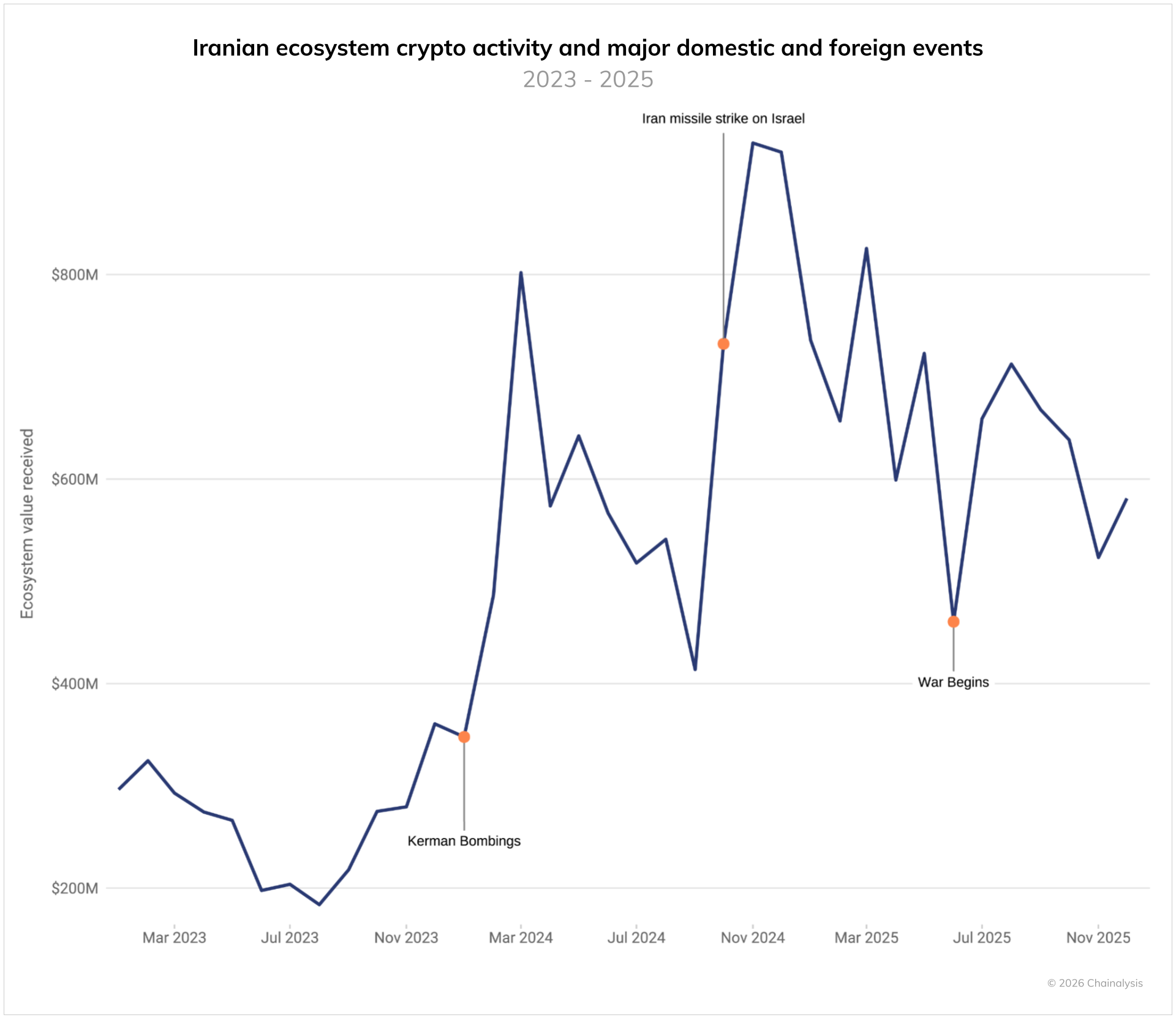 Iran’s crypto ecosystem (Chainalysis)
The Islamic Revolutionary Guard Corps (IRGC), which serves as the primary military force in Iran, has increased its involvement in this sector. According to Chainalysis estimates, addresses associated with the IRGC accounted for over half—more than $3 billion—of all Iranian crypto inflows during Q4 2025 alone.
This figure only reflects wallets publicly linked to sanctions lists; thus it is likely that their actual influence is even greater.
Mechanics of Adoption
Stablecoins are also crucial within this framework.
An independent analysis conducted by Elliptic found that Iran’s central bank amassed at least $507 million worth of $USDT in 2025—a move aimed at stabilizing its currency while facilitating trade. However, these efforts have largely fallen short as evidence shows that the rial has depreciated more than 96% against USD over time.
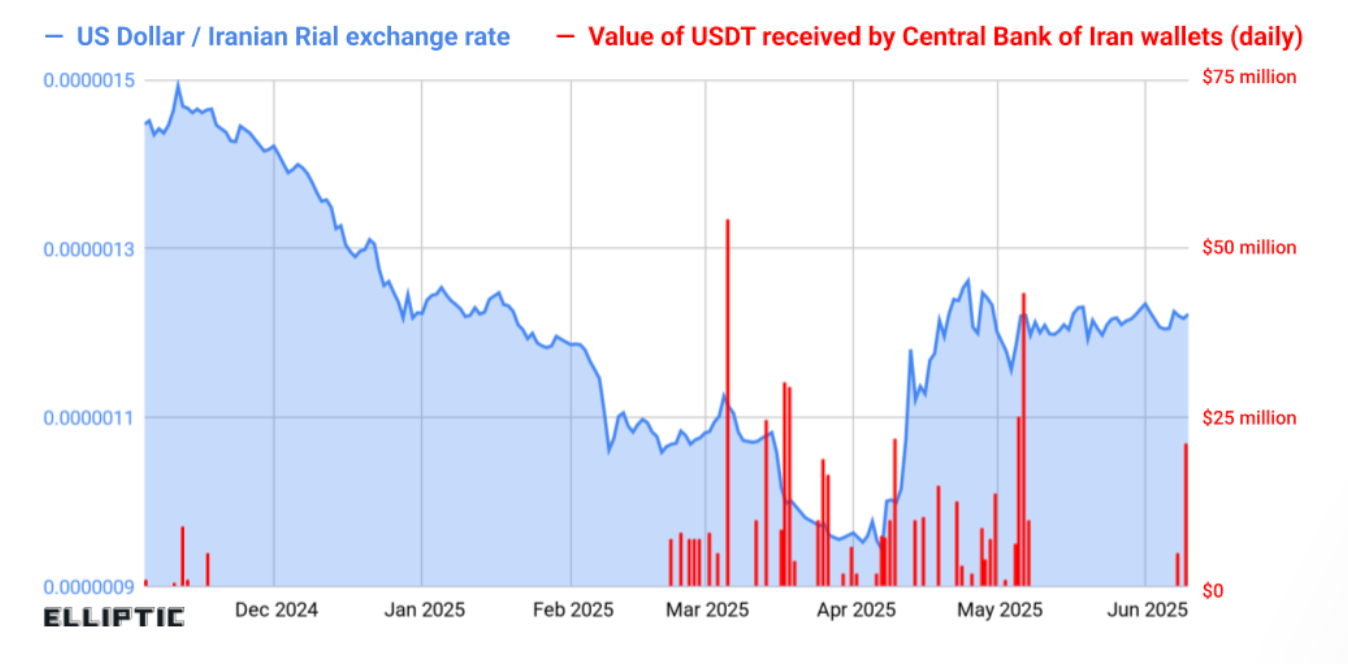 Iran’s $USDT value (Elliptic)
Meanwhile, many Iranians have increasingly turned towards bitcoin amid recent protests coupled with internet blackouts; there was a notable surge in withdrawals from local exchanges into personal wallets during these events.
Read more: The collapse of Iran’s rial resembles Lebanon’s crisis driving citizens toward bitcoin adoption
If conflicts disrupt energy supplies significantly enough to affect power grids temporarily, it could lead to reduced mining output. It is believed that Iranian authorities mine $BTC, incurring costs around $1,300 per coin before selling them at prevailing market rates. However,it remains uncertain whether any substantial reserves are held since there is no treasury dashboard or official disclosure regarding holdings available publicly。
In essence,mining transforms inexpensive domestic energy into an asset capable of crossing borders。Licensed miners generate new bitcoins which they then transfer directly into Central Bank accounts。The bank can subsequently send funds abroad without having transactions routed through banks controlled by U.S.interests,allowing payments for machinery,fuel,and consumer goods。
While transactions occur on a transparent blockchain platform,the identities involved may remain obscured 。
A similar trend exists concerning stablecoins . The dollar-pegged $ USDT ,has emerged as an essential settlement mechanism within sanctioned economies due its price stability alongside quicker transfers compared with traditional cryptocurrencies like Bitcoin .
Nonetheless , concealing such transactions isn’t always straightforward.Binance recently faced allegations claiming they dismissed investigators who raised concerns about fund movements linked back towards sanctioned entities connected specifically within Iranian networks.This prompted nine Senate Democrats across America urging Treasury Department & DOJ officials investigate Binance’s illicit finance controls .
Political Risks on Geopolitical Landscape
Data collected via Chainalysis illustrates how patterns surrounding Iranian cryptocurrency activities align closely alongside political flashpoints,such missile exchanges & internal protests.During tumultuous periods,user outflows spike dramatically as individuals withdraw assets into private wallets .
The IRGC benefits greatly from cryptocurrencies providing another avenue through which they can transmit resources among affiliates along various commercial fronts.Accordingly,data indicates inflows directed towards IRGC-associated addresses reached approximately$ two billion throughout year four & exceeded three billion dollars just one year later!
This renewed wave involving military campaigns featuring retaliation efforts against American bases scattered throughout Middle Eastern countries introduces additional risks tied directly back onto existing systems.Large-scale operations require consistent access reliable power sources.Iran previously implemented seasonal bans intended alleviate pressure exerted upon national grid infrastructure.
A prolonged conflict damaging critical infrastructures might lower hash rates/mining capabilities associated specifically tied down inside country borders but globally speaking adjustments would likely happen gradually elsewhere allowing other miners pick up slack created!