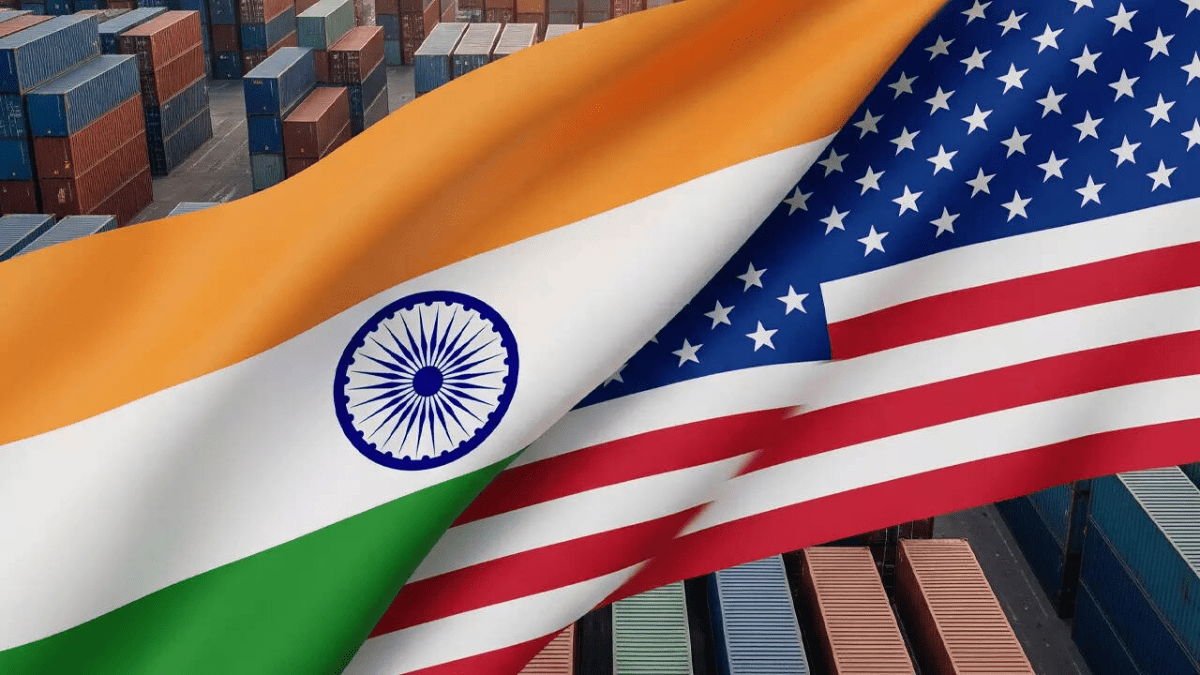
Even as the US continues with its efforts to bring back the tariffs struck down by its Supreme Court through other means, India remains engaged with it to get the agreement reached in February ready for signing and maintaining its advantage against the competitors .
“The chief negotiators must have spoken at least 4-5 times since this crisis (after US Supreme Court decision), since the war also happened. And virtually also, some of the remaining issues of the agreement are being discussed,” sources said.
Through the agreement, India is focussed on retaining the comparative advantage that it had got vis-a-vis its competitors in the US market, they added. If the US Supreme Court verdict would not have intervened the text of the deal would have been ready by now – as per the deadline set in February.
ALSO READHormuz disruption removes 17 million barrels a day from global oil market
150-Day Tariff Window
Immediately after the court’s ruling, the US imposed 10% additional duties on all imports under Section 122 of the Trade Act. These surcharges to address large and serious balance of payment deficits can be imposed only for 150 days and their upper limit is 15%. Before the expiry of the 150-day window, the US has initiated a probe into the policies of its major trade partners including India, European Union and 14 other countries that enable excess capacities in some manufacturing sectors and hurt the US.
On Thursday, under the Section 301 (b) of the Trade Act, it has also opened another set of investigations to determine whether acts, policies, and practices of its trade partners related to the failure to impose and effectively enforce a ban on the importation of goods produced with forced labour are unreasonable or discriminatory and burden or restrict US commerce.
This second investigation under the Trade Act will cover 60 economies, including India, Canada, China, Japan, Australia, Bangladesh and Pakistan.
New Scrutiny on Forced Labor
Sources said the US government has also informed India individually of the investigations that it intends to pursue under Section 301. There is a 30-day time period for sending comments. Even the exporters and importers in the US can send their comments.
The government is studying the note from the US from all perspectives – legal as well as economic – and then decide on responding to it, sources said.
“The government will see what is the path that needs to be taken, whether submissions will be required, not required,” they added.
ALSO READIndia-bound crude crosses Hormuz on the sly
The first investigation under Section 301 on over capacities through government policy action seems to be targeted primarily at China, according to experts.
Post receiving those comments, the US will give an opportunity for oral submissions. On the basis of submissions, a hearing by the office of the US Trade Representative will happen. Based on hearing, then USTR will open up consultation with the government and after that determine the scope of any tariff action.
TOPICSTradeThis article was first uploaded on March thirteen, twenty twenty-six, at nine minutes past seven in the evening.