India’s peak electricity demand is projected to rise to 459 GW by 2035-36, up from around 250 GW in 2024-25, triggering a near doubling of installed capacity to 1,121 GW and setting the stage for one of the largest infrastructure buildouts in the country’s power sector, according to the government’s national generation adequacy plan.
The projections, released by the power ministry, indicate a sustained surge in electricity consumption, with demand expected to grow at a 5.58% compound annual rate, while total energy requirement is set to reach 3,365 billion units (BU) by 2035-36, driven by industrial growth, urbanisation, electrification, data centres and green hydrogen demand.
At the Bharat Electricity Summit 2026 held in New Delhi on Thursday, Prime Minister Narendra Modi invited the global community to invest in India. “I invite the global community to make in India, innovate in India, invest in India, and scale with India. I’m confident this summit will catalyse meaningful dialogue and enduring partnerships to power India’s growth,” the prime minister said in his message, adding that the country needs significant investment to modernise its power sector.
Flagging the scale of the transformation, Union Power Minister Manohar Lal said the sector is entering a decisive phase. “Energy is at the heart of development… as India moves towards becoming a developed nation by 2047, our focus is on innovation, affordability, and global collaboration.”
The capacity expansion will be led by a sharp pivot towards clean energy, with non-fossil fuel-based capacity projected at 786 GW, or nearly 70% of the total mix, up from about 52% currently. Solar alone is expected to account for 509 GW, emerging as the backbone of the system, followed by wind at 155 GW and hydro at 77 GW.
However, despite the rapid expansion of renewables, coal will continue to dominate electricity generation during the transition. The study projects coal-based output at 1,819 BU, or about 51% of total generation by 2035-36, reflecting its role in providing baseload stability.
Power Secretary Pankaj Agarwal underlined the scale of capital required to support this transition. “The country will require investment of about $2.2 trillion in the power sector over the next two decades,” he said, adding that India is building “one of the world’s largest synchronised grids… driven by policy clarity, scale and innovation.”
A key feature of the future power system will be large-scale deployment of storage to manage renewable intermittency. The plan estimates a requirement of 174 GW / 888 GWh of energy storage capacity, including 80 GW battery storage and 94 GW pumped storage, to enable energy shifting and grid balancing.
The report also flags structural risks, particularly India’s dependence on imports for critical energy technologies. Currently, 75-80% of lithium-ion cells are imported, exposing the sector to geopolitical and supply chain disruptions at a time of rising global competition for critical minerals.
Union minister for new & renewable energy Pralhad Joshi stressed the need for a calibrated transition. “While thermal power will continue to serve as the backbone of the energy system, renewable energy represents the only sustainable long-term pathway,” he said, underscoring the need for scale, speed and skill in execution.
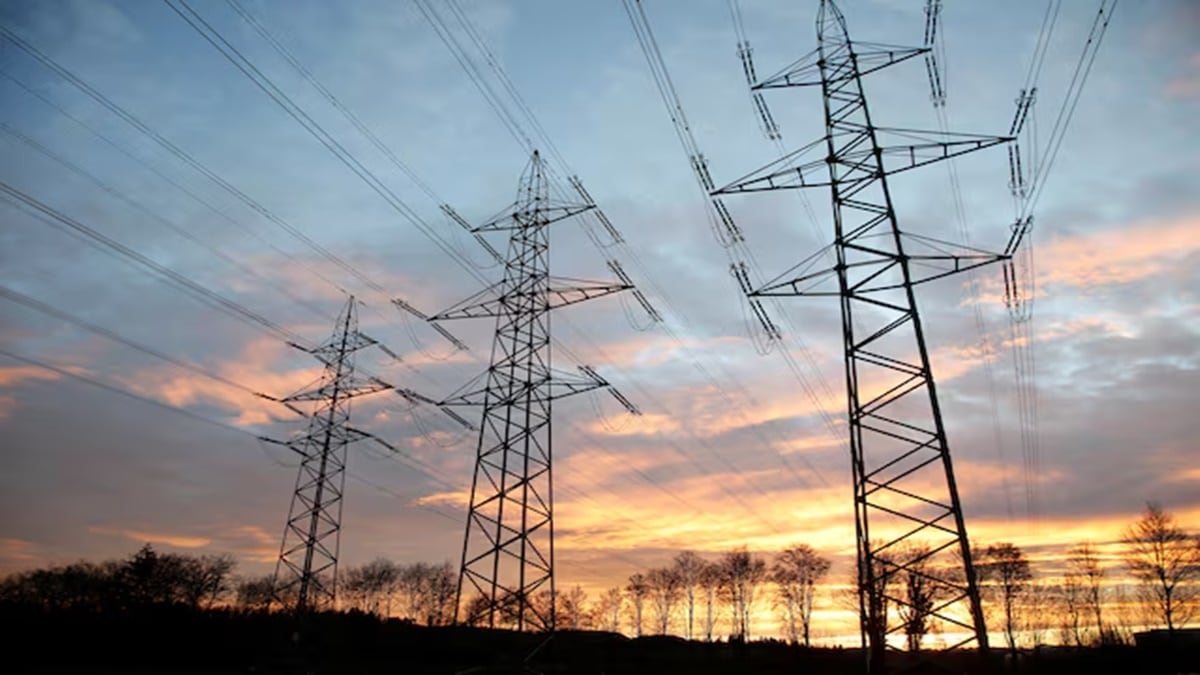
To support the surge in generation capacity, the government has also outlined an aggressive transmission expansion plan, involving investments of ?7.93 lakh crore to integrate over 900 GW of non-fossil capacity, including the development of 1,37,500 circuit kilometres of transmission lines and substantial substation capacity.
Highlighting India’s emerging role in regional energy markets, Manohar Lal said cross-border connectivity is being scaled up.
“We are already providing power to Nepal, Bangladesh and Bhutan, and soon we will also supply electricity to Sri Lanka,” he said, adding that regional interconnections will support the vision of a unified global grid.
The road map signals a structural shift in India’s power sector — from a coal-heavy system to a renewable-led grid — while balancing reliability, affordability and energy security, as the country prepares to meet rapidly rising demand amid global energy volatility.
TOPICSpower discomsState Electricity BoardThis article was first uploaded on March twenty, twenty twenty-six, at thirty-five minutes past twelve in the am.