
According to Bitwise, an asset management firm, Bitcoin might have already factored in the implications of stricter monetary policies, which could leave stocks more vulnerable to recent macroeconomic disturbances.
The remarks from the company come as Bitcoin continues its decline below $70,000, marking a drop of over 23.7% since the beginning of this year.
Recent geopolitical tensions and disruptions in energy supplies—especially due to the U.S.-Iran conflict affecting the Strait of Hormuz—have caused oil and gas prices to rise sharply in recent weeks. This increase has heightened inflation expectations and led markets to reconsider earlier predictions regarding potential interest rate cuts by the Federal Reserve.
On prediction platforms like Polymarket and Kalshi, traders’ views on a Fed interest rate cut this year shifted from almost certain to doubtful. The likelihood that rates will remain unchanged has surged close to 40%, up from less than 3% previously.
“Energy costs are closely tied to inflation expectations,” stated Luke Deans, a senior research associate at Bitwise. “The recent spike has resulted in a significant change in how monetary policy is priced; anticipated Federal Reserve rate cuts for this year have largely reversed towards expectations for renewed tightening.”
While stock markets have begun their downward trend—with the S&P 500 index losing nearly 8% over just one month—Bitwise contends that Bitcoin has already made necessary adjustments. The cryptocurrency’s value has been gradually declining since October 2025 due to its sensitivity toward liquidity conditions and investor risk tolerance.
“Bitcoin is an asset highly responsive and sensitive to liquidity changes; it usually reacts sooner than traditional assets when risk appetite shifts,” Deans noted. This indicates that digital currencies began reflecting tighter financial circumstances ahead of many conventional risk assets—a trend further supported by relative valuation metrics.
One such metric is the Mayer Multiple, which assesses Bitcoin’s current price against its average over 200 days; according to Deans, it has remained within lower percentiles historically since January. This suggests that $BTC may have already experienced a substantial reset in market expectations.
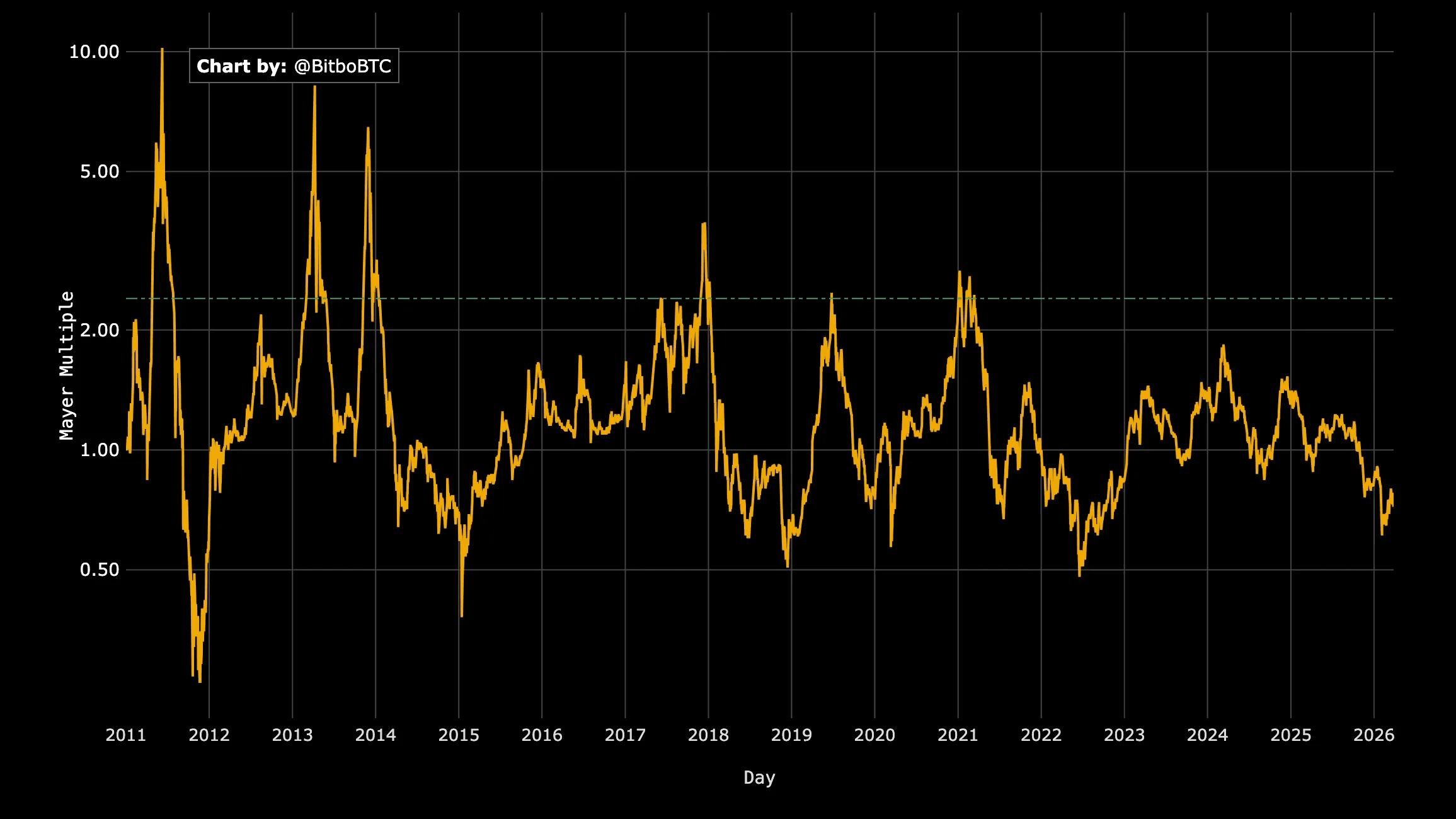
In contrast, equities started off this year “at high valuation levels” but only recently began adjusting as macroeconomic conditions worsened,” he added.
“Historically speaking, assets that undergo significant valuation compression tend not only show reduced sensitivity during downturns but also see speculative positions unwound progressively,” Deans explained during his conversation with CoinDesk. “Conversely, markets trading near cyclical peaks often exhibit greater susceptibility towards adverse macroeconomic factors.”
Within the cryptocurrency space itself, Bitcoin’s dominance appears increasingly solidified within market structures. Bitwise observed rising correlations among altcoins indicating an environment primarily influenced by $BTC‘s performance alone.