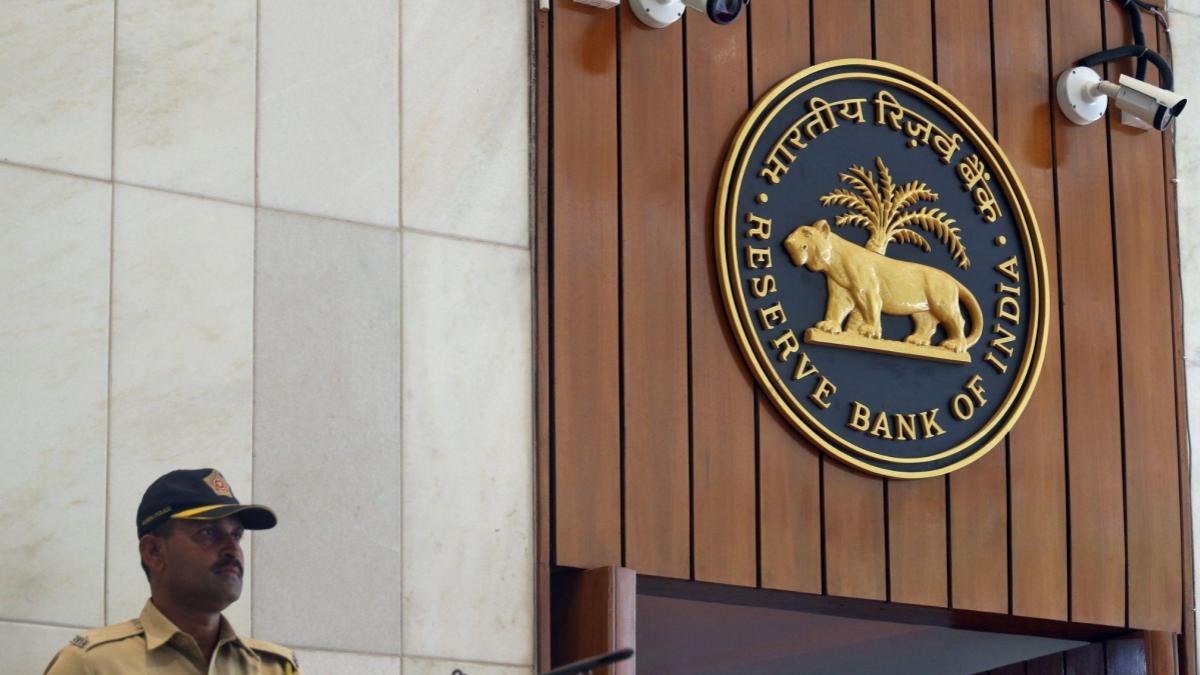
In order to attract foreign capital, the Reserve Bank of India has allowed banks to mobilise Foreign Currency Non-Resident (Bank) deposits with maturities of 3-5 years until September 2026. To sweeten the deal, the central bank will cover the entire hedging costs and leverage will be permitted. Saikat Neogi explains
l What are FCNR(B) deposits?
FOREIGN CURRENCY NON-RESIDENT (Bank) or FCNR(B) deposits are fixed deposits in foreign currencies opened in India by non-resident Indians (NRIs). The interest earned on FCNR(B) deposits is exempt from income tax in India if the depositor qualifies as a non-resident under Indian tax laws. Banks offer rates linked to internationally accepted benchmark rates.
In 2013, the Reserve Bank of India introduced a special FCNR(B) swap window for a three-month period (September to November) allowing banks to aggressively raise foreign currency because of a sharp deprecia-tion of the rupee and external funding stress. HDFC Bank had collected $3.4 billion in FCNR(B) deposits, while SBI collected $3.1 billion, and ICICI Bank $2 billion. Banks in total mobilised $26 billion through FCNR(B) alone and around $34 billion from a combination of other measures that year.
ALSO READGovt may reassess fertiliser subsidy spike as urea prices soften
In fact, FCNR(B) inflows fell by 86% to $946 million in FY26 as compared with $7.1 billion in FY25 because of lower returns compared to overseas deposit options. As of March this year, the outstanding FCNR(B) deposit is $33.8 billion, almost stagnant as compared with $32.8 billion during March last year.
l RBI bearing the full hedging cost makes it easier for banks
THE CENTRAL BANK will bear the full hedging cost for fresh 3-5 year FCNR(B) deposits mobilised by banks until September 30, 2026. This will reduce the forward cover hedging costs for banks and make foreign currency deposit mobilisation more viable for a defined period. Banks can pass on the savings to depositors and offer higher FCNR(B) rates, particularly for longer tenures.
At present, the cost of hedging forward premium is around 3.5% and with the RBI absorbing the cost, banks can offer rates at least 200 bps higher than the prevailing levels to attract substantial inflows. In fact, FCNR(B) deposits are relationship-driven where large banks such as SBI, HDFC Bank, ICICI Bank that have deeper engagement with NRIs are better placed to mobilise inflows. SBI alone expects to see $40-45 billion coming in via this route.
l Banks hike rates to attract NRIs
THE COUNTRY’S LARGEST lender, State Bank of India, has launched a special scheme SBI Advantage FCNR (B) deposit, offering a peak rate of 6% for deposits of over $1 million for a five-year tenure. For deposits in the three- to four-year maturity bucket, SBI has increased rates by 190 bps to 5.25% for deposits up to $1 million.
The bank has increased the rate by 215 bps to 5.50% for deposits exceeding $1 million. In the four- to five-year bucket, SBI has increased rates by 255 bps to 5.50% for deposits of up to $1 million and rates for deposits above $1 million are up 280 bps to 5.75%.
Similarly, HDFC Bank has raised the deposit rates by up to 260 bps as it is now offering up to 6% on deposits in the three- to five-year maturity bucket. Karur Vysya Bank has raised the peak rate by over 300 bps to 7% for three- to five-year deposits and AU Small Finance Bank has raised its peak deposit rate by 195 bps to 7.1%.
ALSO READWheat procurement reaches 4-year high
l Leverage adds sheen to scheme
IN 2013, FCNR(B) mobilisation was also done using the leverage route, which was the biggest draw. A SBI Ecowrap report notes overseas branches of Indian banks provided an overdraft against dollar deposits to be parked at an Indian branch in FCNR(B). Then, the gap between Indian government bond (G-Secs) yield and US treasury bonds was high. While the G-Secs’ yield for a 3-year tenure was 8.9%, the US 3-year treasury yield was 0.9%. So, the interest differential was 8%.
The leverage option is available now as the RBI has scrapped a rule barring banks from issuing letters of credit or guarantees against these deposits. So, an NRI depositing $1 million as collateral can use the bank’s letter of credit to borrow an additional $10 million and channel the entire leveraged amount into India. A report by Jefferies estimates that with 7-10 times leverage and spread of 1.5 to 2%, NRI depositors can generate 17-27% annually over three to five years.
l Is this scheme better than that of 2013?
NOW THE DEPOSITS will have a lock-in of one year and premature withdrawal will be allowed after that. This time banks can raise 3-5 year deposits as compared with only three-year deposits in 2013 and this time, fresh as well as renewal of FCNR(B) deposits are included. The 2013 scheme was limited to fresh deposits.
The most important difference is the hedging cost which is nil now, unlike 2013 when RBI allowed banks to swap FCNR(B) dollars into Indian rupee at fixed cost of 3.5%, materially below the prevailing market hedge cost of around 7%. The concessional swap effectively reduced banks’ offshore funding cost by around 350 bps relative to the market pricing, according to a note by Goldman Sachs.
The latest FCNR(B) swap facility guidelines by RBI says banks can avail of the swap facility only once in a week and the maximum US dollars that a bank would be eligible to swap with RBI would be equal to all eligible FCNR(B) deposits mobilised in equivalent US dollar terms during the preceding week(s) for which the facility has not been availed earlier.
TOPICSRBIThis article was first uploaded on June eleven, twenty twenty-six, at twenty-four minutes past seven in the evening. © The Indian Express (P) Ltd