
Follow Us
The upcoming National Electricity Policy (NEP) is likely to introduce a range of flexibilities for large electricity consumers such as data centres and green hydrogen projects, while also requiring them to manage their fluctuating demand in ways that do not put additional stress on the grid, Power Secretary Pankaj Agarwal said on Thursday.
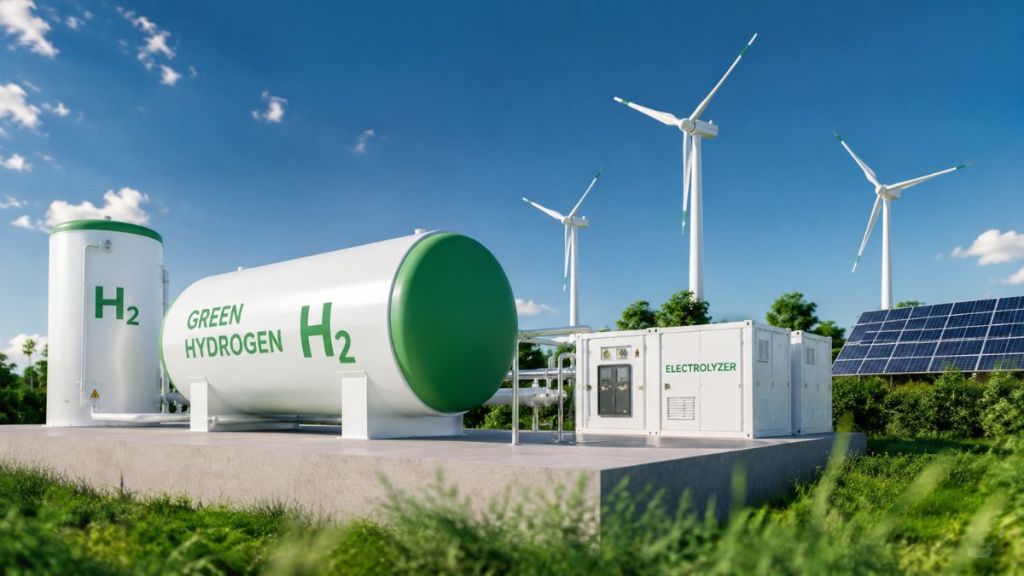
In practice, this could mean large consumers adjusting their electricity use to match grid conditions—drawing more power when supply is abundant and reducing reliance on the grid when the system is under stress. Green hydrogen plants, for instance, could increase electricity use when renewable power is plentiful. Data centres could shift to using stored electricity during hours when power needs are relatively low. Time-of-day tariffs could also make such flexible consumption more commercially viable.
ALSO READIndia must foresake isolated protectionism, build physical buffers: CEA
The proposal comes as India’s power system prepares to integrate large amounts of weather-dependent solar and wind generation alongside rapidly growing new loads. The draft NEP says variable renewable energy already accounts for around 37% of installed generation capacity. By 2047, more than 80% of installed capacity and nearly two-thirds of electricity generation are expected to come from non-fossil sources, increasing the need for a more flexible grid.
The challenge is already emerging in some parts of the system. The Central Electricity Authority’s roadmap for pumped storage says wind and solar curtailment is being witnessed in some areas, even though the two sources currently account for around 25% of total energy requirements. Without adequate storage, the CEA has warned that curtailment could become more pronounced as renewable generation expands.
“The proposed flexibility reflects a shift from simply adding generation capacity to managing how large new loads such as data centres and green hydrogen interact with the grid,” said Alekhya Datta, Director, Electricity and Renewables Division, TERI.
However, “the near-term concern for data centres and green hydrogen is potentially higher upfront cost and operational complexity if storage or demand flexibility becomes mandatory.
ALSO READExplainer: The worrying trend of youth chasing neither jobs nor skills
Vibhuti Garg, Director, South Asia, IEEFA, said flexibility requirements could encourage large consumers to install on-site batteries, adopt smart energy-management systems and shift loads through time-of-day tariffs.
“This can help distribution companies integrate more variable solar and wind generation, reduce peak-hour grid stress, improve frequency stability, and minimise renewable energy curtailment,” Garg said. However, she added that managing flexibility at the individual-consumer level “could also mean significant upfront investment in battery storage and smart power-management systems for large consumers”.
The draft NEP also proposes expanding ancillary services—services that help maintain grid balance and stability—through market-based competitive procurement. Consumers could participate through demand response, either directly or through aggregators. The policy also proposes introducing time-of-use tariffs, beginning with industrial and commercial consumers.
“Grid flexibility is critical for India to integrate larger volumes of renewable energy while maintaining the reliability and stability of the power system,” said Anujesh Dwivedi, Partner, Deloitte India. Consumers, he said, could respond by adjusting their consumption, using stored electricity instead of drawing from the grid, or feeding surplus power back into the system.
Storage is expected to play a major role in this transition. Agarwal said battery-storage costs have fallen to around Rs 4 per unit from Rs 10 in 2023, while about 16 GW of pumped-storage capacity is under implementation.
The CEA estimates that India will require 174 GW/888 GWh of energy storage by 2035-36, comprising 80 GW/321 GWh of battery energy storage systems and 94 GW/567 GWh of pumped storage. Peak electricity demand is projected to reach 459 GW by then.
Separately, the CEA estimates that around Rs 5.8 lakh crore will be required for pumped-storage projects through 2035-36, based on an average investment of Rs 6 crore per MW.
The policy has moved closer to finalisation, with the power ministry sending the Cabinet note for inter-ministerial consultation after incorporating stakeholder comments. Agarwal said India has already reached around 300 GW of non-fossil capacity, shifting the sector’s challenge from addressing electricity access and shortages to managing transmission, the grid and system stability.
TOPICSData Centregreen hydrogenThis article was first uploaded on September twenty-five, twenty twenty-six, at nine minutes past twelve in the am. © IE Online Media Services (P) Ltd