For many individuals, engaging in cryptocurrency trading, particularly with Bitcoin, often boils down to a fundamental question: Will the prices rise or fall?
However, there exists another crucial aspect of trading—volatility. This refers to the degree of price fluctuations that can occur regardless of their direction. While volatility has already gained immense popularity in stock markets, CME is now poised to introduce it into the realm of Bitcoin.
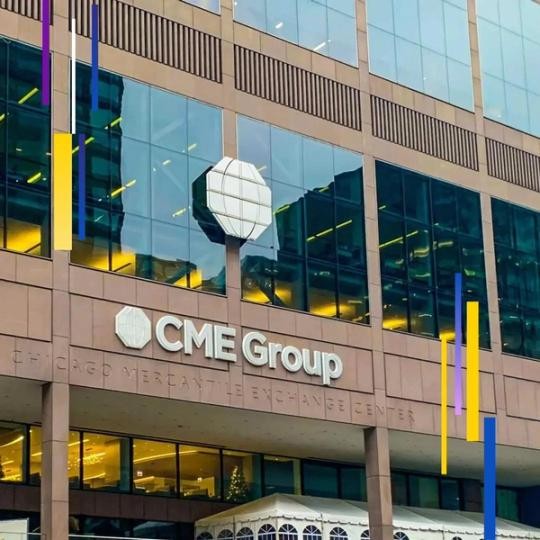
This week, the leading derivatives marketplace announced its intention to launch Bitcoin volatility futures on June 1st, pending regulatory approval.
Unlike conventional Bitcoin futures that directly track the cryptocurrency’s price movements, these new contracts will be linked to the CME CF Bitcoin Volatility Index (BVX). This index reflects market expectations regarding Bitcoin’s volatility over a four-week period.
In essence, traders will have the opportunity to speculate on whether Bitcoin markets are about to experience increased turbulence or stability without necessarily forming an opinion on whether prices are set to rise or fall.
“Participants in the crypto market are increasingly looking for regulated products that allow them exposure to digital assets during market fluctuations,” stated Giovanni Vicioso, global head of cryptocurrency products at CME Group. “With our innovative Bitcoin volatility futures offering, traders can invest or hedge against future fluctuations in bitcoin’s value—providing access to an essential layer of risk management.”
It is important to note that offshore exchanges like Deribit currently offer futures tied specifically to their own indices for bitcoin volatility; however, these markets remain relatively small and inaccessible for most U.S.-based institutions. Furthermore, there is still a lack of mature products akin to CME’s proposed bitcoin volatility futures within domestic crypto markets; thus exposure and hedging strategies primarily rely on options and other synthetic structures.
CME’s forthcoming product aims at enhancing its existing offerings which include both bitcoin futures and options. The introduction of these futures occurred back in December 2017 and they have since emerged as preferred instruments among institutions seeking directional exposure as well as arbitrage opportunities. These instruments have generated billions in trading volume and open interest levels—at one point even outstripping offshore giant Binance last year.
The trend towards institutional adoption accelerated following January 2024’s launch of eleven spot-listed bitcoin ETFs alongside rapid growth observed with options linked directly with BlackRock’s IBIT product line.
CME’s entry into this space through its proposed volatility futures appears as a logical progression aimed at assisting institutions manage risks not just related solely towards price direction but also concerning inherent market instability itself—as noted by Sam Gaer from Monarq Asset Management’s Directional Fund.
“The surpassing open interest seen within IBIT options compared with Deribit signals robust institutional demand; thus volatilities’ future prospects appear promising,” Gaer remarked via Telegram message shared with CoinDesk.
Gaer highlighted how traditional markets experienced similar evolution regarding volatile trading practices noting how CBOE Volatility Index (VIX)—often referred too colloquially as ‘the fear gauge’—did not become widely liquid until various exchange-traded funds were developed around VIX Futures creating self-reinforcing ecosystems boosting liquidity significantly over time
This suggests growth patterns witnessed surrounding volatile trades stemmed largely from derivative offerings associated closely aligned alongside spot VIX indexes thereby generating substantial volumes attracting further participation ultimately establishing distinct marketplaces focused entirely upon such measures
“VIX Futures did not achieve significant traction until ETF frameworks began emerging around them—notably excluding direct connections made toward spot indexes—and we see parallels here where volume drives additional volumes if constructed clearly defined facilitating dissemination effectively.” Gaer concluded suggesting potential watershed moments lie ahead shaping landscape surrounding asset classes focused specifically upon measuring BTC volatilities moving forward
FAQ
- What are Bitcoin Volatility Futures?
Bitcoin Volatility Futures allow traders speculating on expected price fluctuations without needing opinions about actual price movements themselves. - How does CME CF BVX work?
The CME CF BVX serves as an index reflecting anticipated levels pertaining towards BTC volatilities across specified periods. - Aren’t there existing platforms offering similar services?
Yes! Offshore exchanges like Deribit provide such offerings but often remain limited primarily accessible only outside US jurisdictional boundaries. - Please explain why this matters for institutional investors?
This innovation provides more sophisticated tools enabling better risk management strategies tailored explicitly addressing unique challenges faced when dealing cryptocurrencies!