The price of Bitcoin has dropped below $63,000, marking its lowest point since October 2024 and wiping out all the gains achieved during the surge that followed Donald Trump’s election as US President.
On a particularly volatile day, Bitcoin experienced a significant decline of up to 14%, reaching $62,267—the lowest it has been in four months. This drastic drop in value for the leading cryptocurrency has had ripple effects across other digital currencies, cryptocurrency exchange-traded funds (ETFs), and companies heavily invested in Bitcoin.
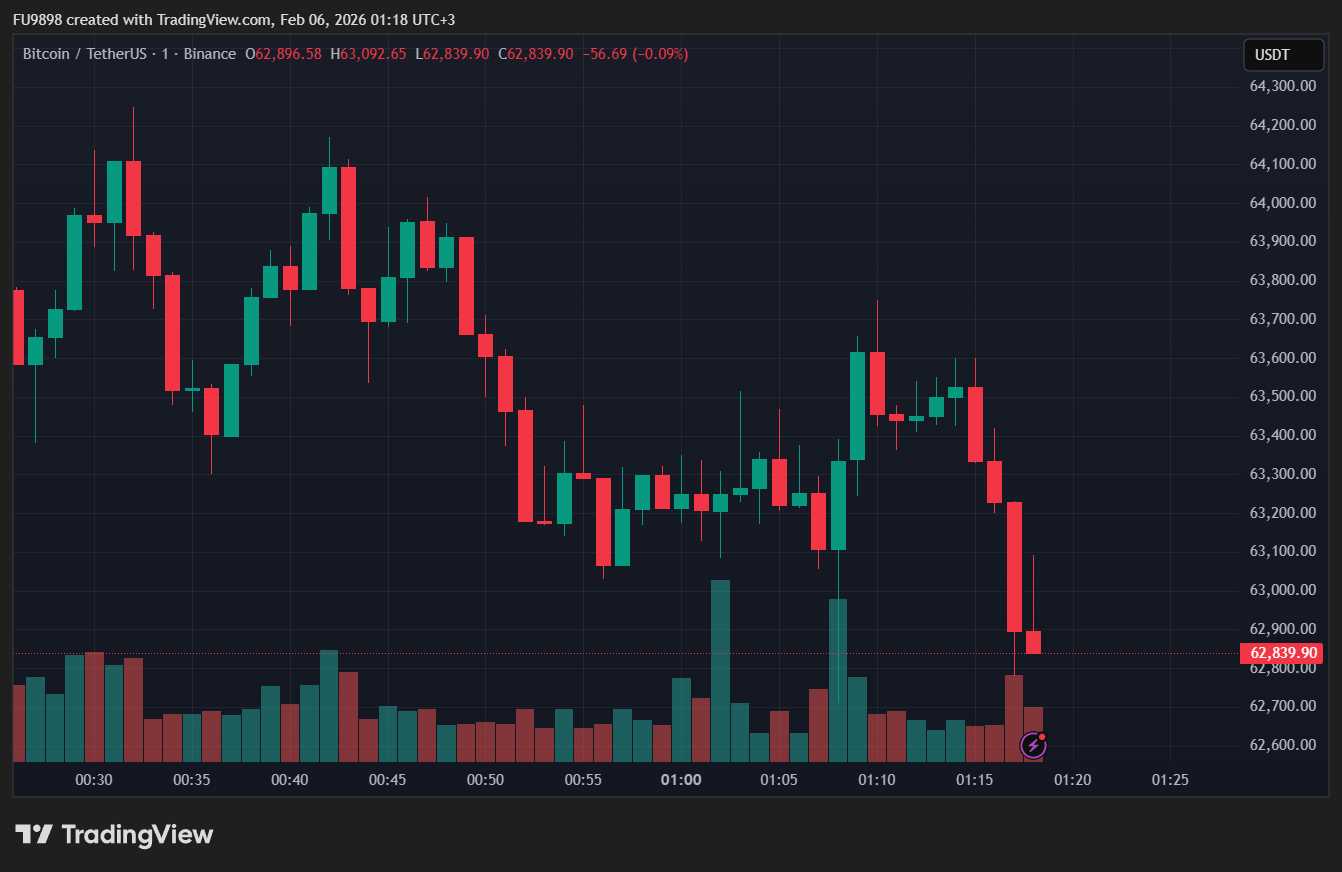 A chart depicting minute candles that illustrate BTC’s price decrease.
Throughout much of last year, many investors were optimistic that Trump’s potential return to power would foster more favorable policies for cryptocurrencies. This optimism propelled Bitcoin to its highest recorded value. However, recent geopolitical tensions and a waning appetite for risk among global investors have led to intensified selling pressure this month. The downturn accelerated from mid-January as leveraged positions were liquidated and funds sold off assets to fulfill buyback obligations.
Chris Newhouse, who leads Business Development at Ergonia, remarked on the prevailing fear and uncertainty within the market. He noted that an absence of robust buyers is exacerbating declines with each exit from ETFs and wave of liquidations. According to Newhouse’s analysis, this results in escalating losses at every stage of selling activity while prompting investors to adopt more defensive strategies.
The current climate mirrors the steep decline witnessed in 2022 when the US Federal Reserve began tightening monetary policy. During that period, significant losses afflicted the cryptocurrency market as it transitioned away from an era characterized by “easy money” following the pandemic.
This time around, however, alternative speculative opportunities such as prediction markets are vying for attention within crypto trading circles. Additionally, individual investors are increasingly gravitating towards zero-day options on stocks along with high-yield crypto offerings available on decentralized exchanges—this shift is further dampening interest in digital assets.
Although Bitcoin has historically been promoted as a safeguard against inflation or an alternative store of value akin to gold or USD currency reserves; recently it appears more aligned with high-risk asset behavior patterns instead. Particularly during times marked by heightened volatility among tech stocks or precious metals—its inclusion within institutional portfolios renders it susceptible to broader waves driven by “risk aversion.”
Ryan Rasmussen—the research director at Bitwise Asset Management—observed that bear markets within cryptocurrencies typically conclude not through despair but rather complacency; he indicated we may currently be entrenched within what he describes as a “desperation phase,” where momentum leans toward further selling actions.
The influxes amounting into US spot Bitcoin ETFs throughout 2025 had provided substantial support for prices; however reports indicate nearly $2 billion worth have exited over just one month alongside over $5 billion departing across three months’ time span—a reversal affecting ETF dynamics contributing significantly towards increased sell-off pressures now observed.
Marex’s senior global markets strategist Ilan Solot explained how this sell-off was instigated by various factors including weakness seen amongst technology shares combined with strong performances registered by gold alongside general trends reflecting risk aversion—all while questions loom regarding valuation frameworks applicable towards crypto assets themselves.Solot concluded his insights asserting although short-term outlook remains bearish historically such pronounced declines often represent attractive buying opportunities especially appealing long-term investor profiles alike!
*This content does not constitute investment advice.