
The corporate Bitcoin treasury landscape is currently grappling with significant ideological and financial hurdles, as highlighted by Charles Edwards, the founder of Caprivoli Investments. While he has previously raised concerns about Bitcoin’s susceptibility to quantum technology threats—though that isn’t the primary focus here—Edwards has released a series of critical observations indicating that the approach of transforming companies into Bitcoin funds is failing in real-time.
Locked leverage on $BTC is eroding shareholder value, according to Edwards
Edwards contends that the financial strategies employed by key players like Strategy and Metaplanet have backfired. His analysis reveals that Strategy (MSTR) has experienced a 13% decline in its $BTC holdings. He points out that utilizing intricate debt arrangements and trendy tickers has proven less advantageous than simply investing capital into conventional U.S. Treasury bonds.
In his assessment, MetaPlanet—a Japanese firm—is even worse off. With an average acquisition price of $105,000 at current market valuations, Edwards asserts it faces a substantial deficit on its balance sheet.
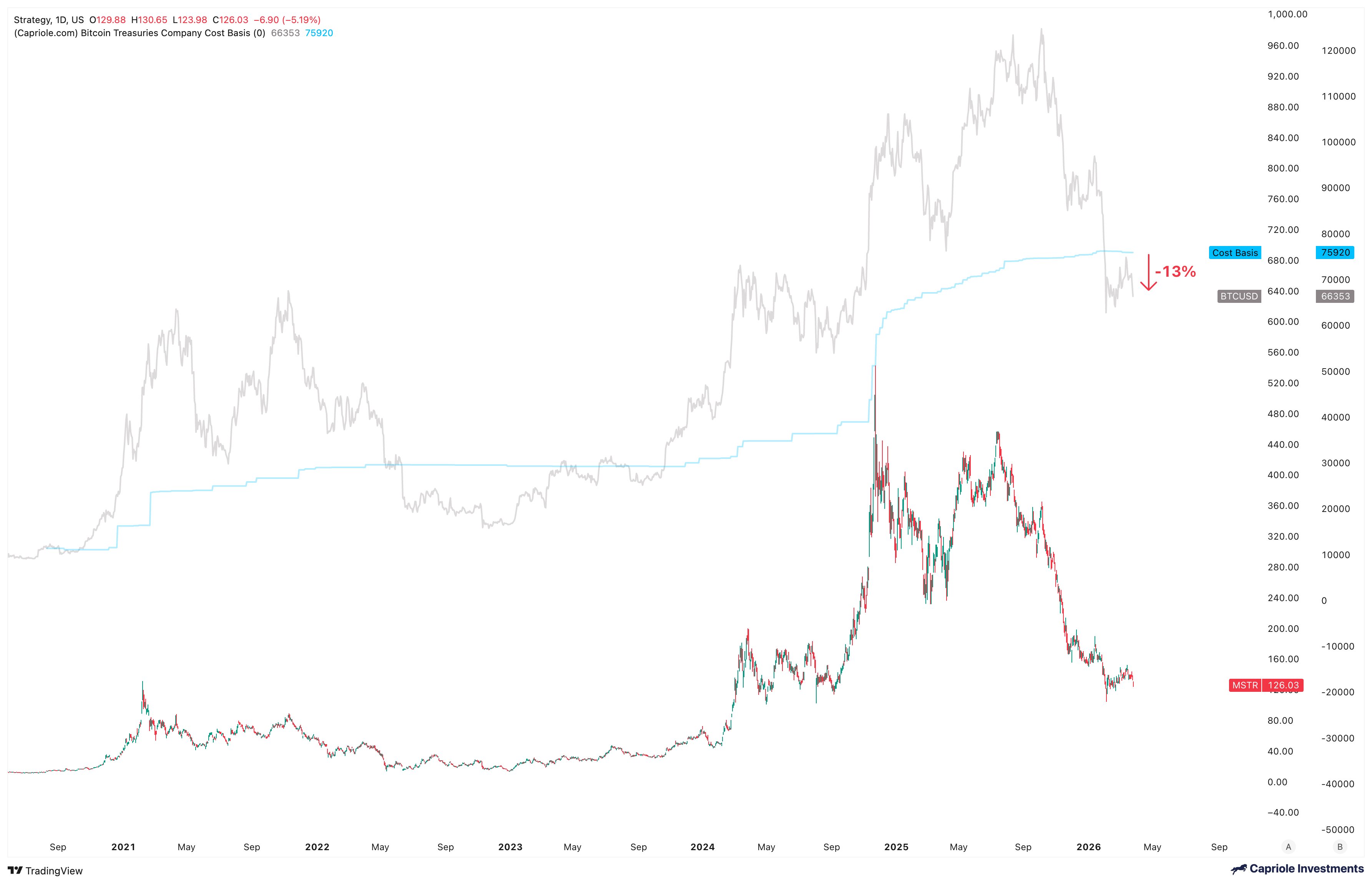
The main critique from skeptics revolves around employing locked-in leverage to purchase such a volatile asset as Bitcoin. According to him, this strategy fails over time for assets characterized by high volatility. He directly questions the rationale behind it: if a company holds $49 billion in $BTC, what benefit does it provide if acquiring this amount results in destroying $6.4 billion worth of shareholder equity?
Additonally, Edwards persists in promoting concerns regarding quantum risks; he argues that without upgrading protocols to be resistant against quantum threats, storing billions worth of $BTC poses an inherent risk.
Currently, market participants may view Edwards’ stance as a cautionary signal. Although often perceived as alarmist, should these strategies continue failing to show resilience at present price levels, it could incite widespread sell-offs among other publicly traded companies adopting similar models.