
On April 1, 2013, Bitcoin first surpassed the $100 mark, marking a significant milestone in its market journey. Initially regarded as a niche experiment, the cryptocurrency began to gain traction as trading volumes increased and public interest grew.
Fast forward thirteen years, and Bitcoin now trades well above that initial threshold. However, the current growth trajectory appears markedly different from previous cycles. Recent fluctuations around $70,000 indicate a market that has expanded in size but slowed down considerably while becoming more influenced by institutional investments.
What Fueled Bitcoin’s Rise from $100 to a Global Asset?
The ascent of Bitcoin past the $100 mark in 2013 coincided with financial turmoil that led many individuals to explore alternatives to conventional banking systems. The Cyprus banking crisis heightened awareness of decentralized currencies and spurred increased trading activity around Bitcoin. Although this development did not instantly transform Bitcoin into a mainstream financial asset, it established an important benchmark for future growth.
In subsequent years, Bitcoin experienced several boom-and-bust cycles that solidified its reputation for volatility. The peak reached in 2013 was significantly higher than prior levels; later surges in 2017, 2021, and projected peaks for 2025 set new records for the cryptocurrency. Nevertheless, each successive cycle produced smaller percentage increases compared to its predecessors.
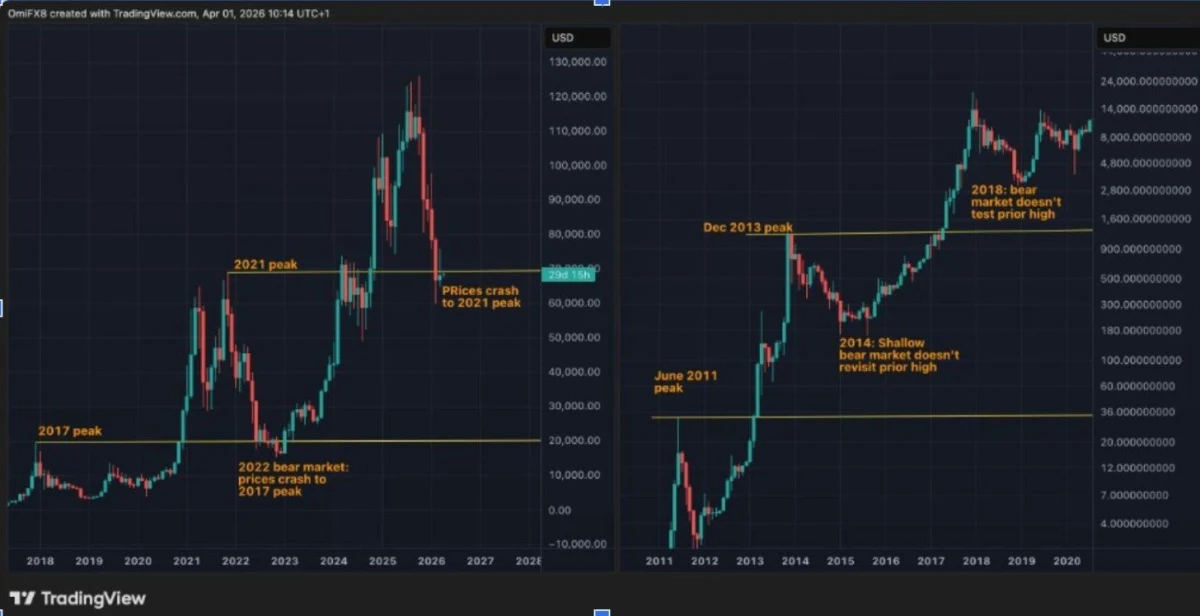
BTCUSD Chart | Source: TradingView
This trend has garnered attention in 2026 as traders draw comparisons between today’s market dynamics and earlier periods characterized by sharper price rallies.
Why is There So Much Focus on the $70K Mark?
The current trading level of approximately $70K holds significant importance because it aligns with the all-time high achieved during the cycle spanning from late-2019 through early-2022. Historically speaking, bear markets have seldom revisited previous cycle peaks; thus old highs often seemed remote once new bull runs commenced. This time around is different—after reaching over $126K during the bullish phase from 2023-2025,Bitcoin fell, gravitating back toward this former peak instead of maintaining distance above it.
This retracement has prompted many investors to view $70K as an essential reference point moving forward. Analysts monitoring market trends observe that prior highs typically attract renewed buying interest when prices return near those levels; traders who missed earlier opportunities may enter at these points while others consider them critical support zones within broader cycle evaluations.
The persistent defense of values around $65K keeps speculation alive regarding whether or not Bitcoin’s price has already found stability, or if another downturn looms ahead.
Could $BTC‘s Market Indicate Stability?
According to CryptoQuant data analysis conducted recently indicated that Bitcoin’s realized price hovers close to about $54k while spot prices are currently near approximately$68k—leaving BTC roughly twenty-one percent above average cost basis across holders on its network . In previous downturns , spot prices tended either drop below realized ones indicating losses among average holders which occurred during both pandemic sell-off events seen throughout early months last year alongside similar occurrences noted throughout much longer lasting bear markets observed previously .
This latest setup does not yet reflect typical bottom signals observed historically however analysts note premiums have sharply decreased narrowing down significantly since peaking at nearly one hundred twenty percent late last year suggesting some degree softness present amongst U.S institutional demand even amidst strong inflows recorded exceeding one billion dollars into various spot based bitcoin ETFs within March alone .
Evolving Dynamics Aspects With Maturation Of Bitcoins Ecosystem ?
Past rallies associated with bitcoins primarily relied heavily upon retail purchases made predominantly by individual long-term believers creating faster movements since relatively small amounts could shift $ BTC ‘ s value quite drastically whereas today’s landscape appears far more intricate encompassing greater participation via institutions along investment products listed alongside larger derivative marketplaces expanding strategies available towards traders alike.
This transition ultimately resulted diminished scale witnessed regarding percentage gains accrued between each respective cyclical phase ; For instance ,the pinnacle achieved back then stood roughly thirty-eight times higher compared against what had been seen two years prior (i.e.,from just under three bucks) followed thereafter only sixteen times beyond initial milestones set forth leading up until four years ago whereby advancement reached nearly thrice existing benchmarks preceding such developments culminating lastly less than double past record highs witnessed earlier this year.
Around world remains focused upon tracking bitcoins performance closely yet recent patterns suggest underlying shifts indicating matured environment characterized less explosive upside potential defining initial stages experienced initially post inception decade ago.