The price of Bitcoin ($BTC) is at risk of a short-term correction as demand in the spot market diminishes, influenced by bearish activities from whale traders in derivatives.
Recently, Bitcoin experienced an impressive surge from $66,000 to reach $79,500 for the first time since late January. This increase was primarily driven by a resurgence in demand within the perpetual futures market, as indicated by data from CryptoQuant. Interestingly, despite this rally and renewed interest from exchange-traded funds (ETFs) like BlackRock’s iShares Bitcoin Trust (IBIT), there has been a net selling trend for $BTC in the spot market over the past month.
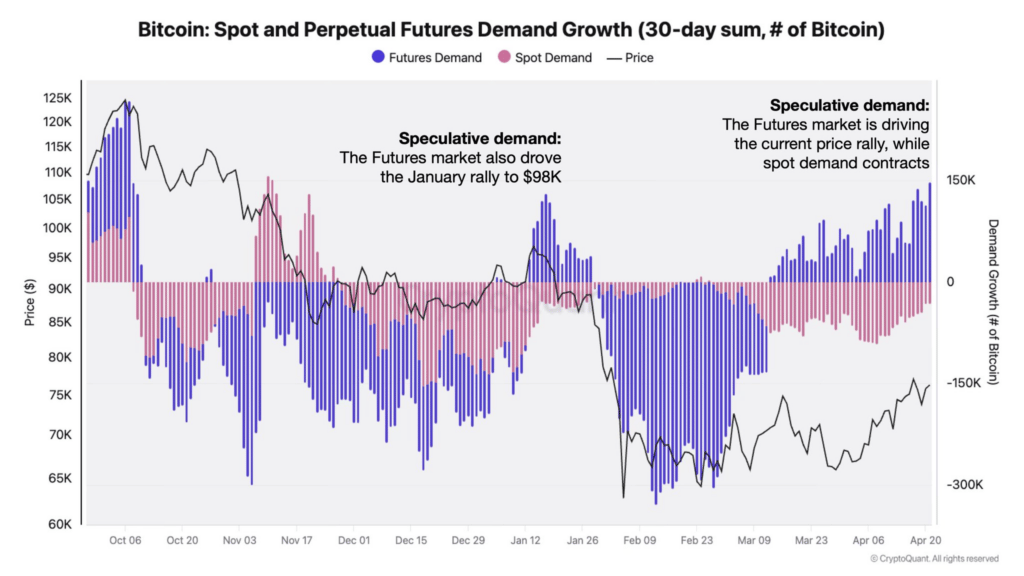
A similar pattern emerged back in early January 2026 when Bitcoin’s price climbed towards $98,000 due to increased demand for derivatives amidst net selling pressures on spot markets. As such, if derivative traders start taking profits while facing net selling pressure on spots again soon, it could lead to a potential drop in $BTC‘s value.
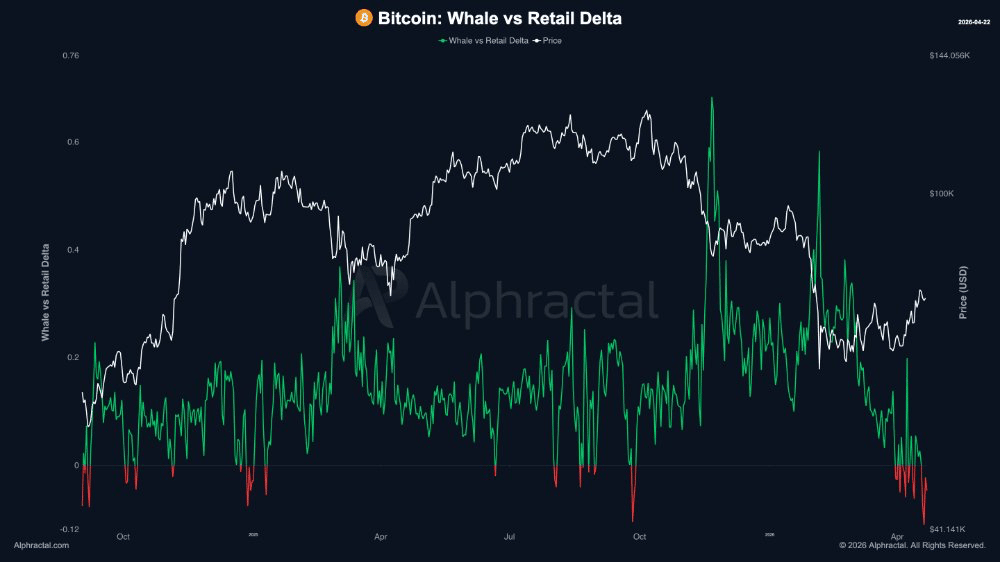
The likelihood of a decline in $BTC‘s price has escalated recently as more retail investors have taken long leverage positions while whales are preparing for corrections. Data from Alphractal reveals that historically during such divergences between retail and whale activities—whales have triumphed four out of five times.
What Lies Ahead for Bitcoin Prices?
Aksel Kibar, a former fund manager notes that although there has been recent upward movement in Bitcoin prices—it does not negate its overarching bear market status. Since early February until now, the leading cryptocurrency has been confined within what appears to be a bearish flag formation characterized by consolidating rising channels.
Despite surpassing recent buyers’ average cost basis—as explained by Finbold—Bitcoin’s price faced rejection twice at the upper limit of its rising channel. Therefore,$ BTC may revisit below $70K once more to test the lower boundary of this macro bearish flag.
If spot demand increases alongside bullish movements within derivatives markets—there remains potential for further rallies or even initiation into an entirely new bull phase ahead.