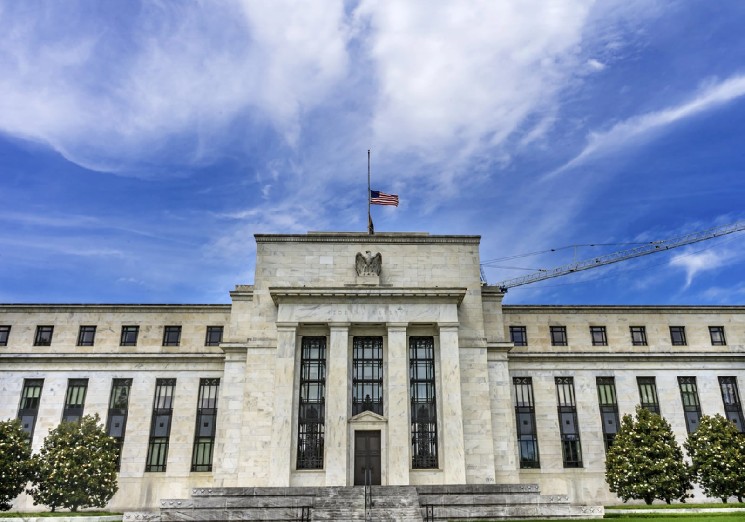
The Federal Reserve is in the process of evaluating suggestions to amend its capital regulations and Basel risk weighting criteria for the largest banking institutions in the country.
This presents a significant opportunity for the cryptocurrency sector to gain increased recognition and legitimacy.
Under existing regulations, Bitcoin is essentially categorized as a “toxic asset,” burdened with severe capital requirements that render it nearly impossible for conventional banks to include it on their balance sheets.
In response, advocacy organizations such as the Bitcoin Policy Institute (BPI) are striving to shift this perception.
The 1250% Risk Weight
The Basel III framework serves as an international regulatory guideline aimed at ensuring that banks possess sufficient capital reserves to withstand financial disturbances.
This framework achieves its goal by assigning a “risk weight” to various asset categories.
Currently, unbacked cryptocurrencies face an astonishing risk weight of 1,250% under Basel standards. In contrast, gold and AAA-rated sovereign bonds carry a risk weight of 0%. Meanwhile, speculative stocks without listings have a risk weight set at 400%.
To put it simply, a risk weight of 1250% acts like an effective prohibition. It compels banks to maintain capital reserves equivalent to their total exposure value in Bitcoin. For instance, if a bank intends to hold $100 million worth of Bitcoin, it must reserve an exorbitant amount of fiat currency against that exposure.
Creating Fair Competition
Members from the Bitcoin Policy Institute are participating in discussions advocating for more equitable regulations within this framework.
Conner Brown from BPI has remarked that altering these guidelines would represent significant progress for American holders of Bitcoin. When queried by community members about what these new standards should ideally resemble, Brown highlighted fundamental characteristics of cryptocurrencies as reasons for significantly lowering their associated risk weights.
“We believe that at a fundamental level, the Fed should align Bitcoin’s treatment with other comparable assets,” Brown stated.
This asset provides transparency along with deep liquidity and operates continuously without counterparty risks involved.