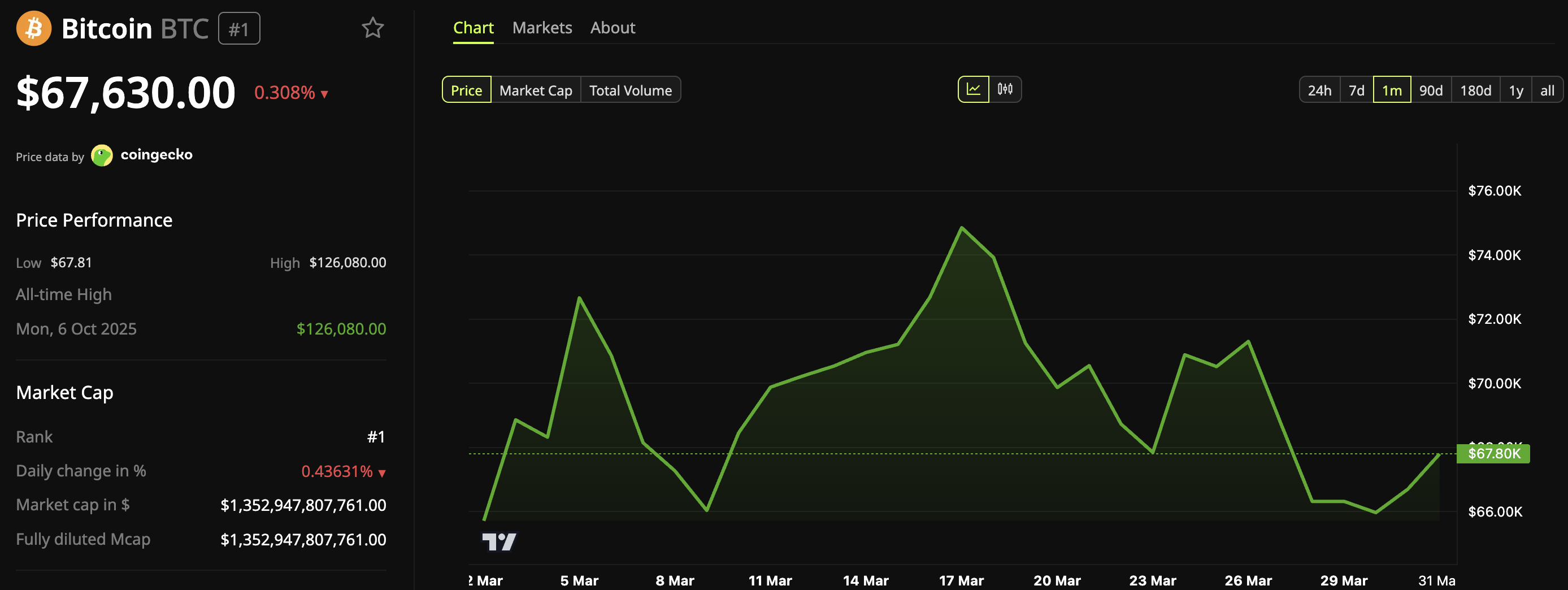
Bitcoin ($BTC) concluded March with a 1.8% increase, marking its first positive month since September 2025 and breaking a streak of five consecutive months of losses.
The beginning of April has been marked by volatility, as the leading cryptocurrency has faced slight declines.
Seasonal Trends vs. Current Reality
According to BeInCrypto Markets data, Bitcoin was trading at $67,630 during early Asian trading hours.
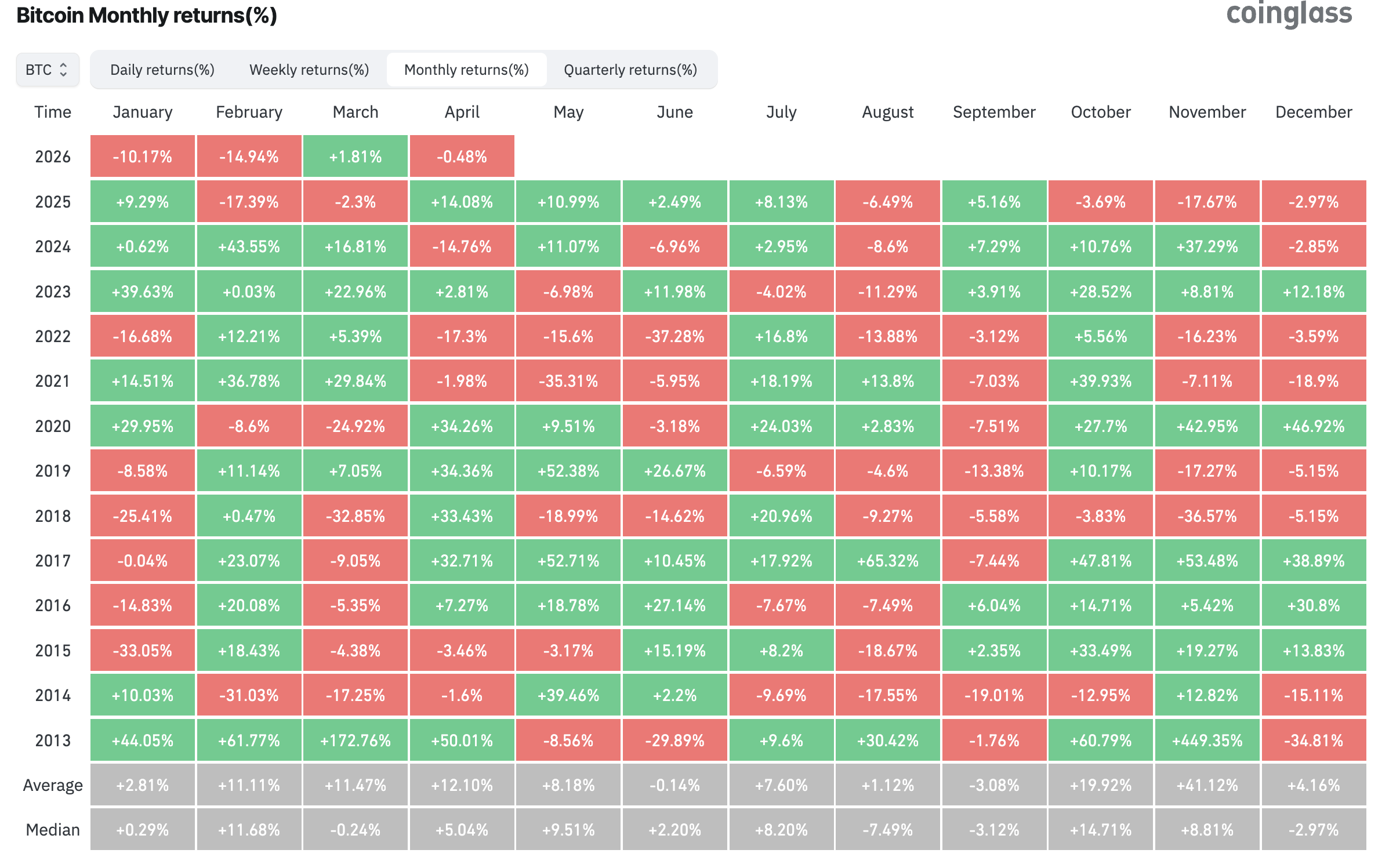
Historically, April has been favorable for $BTC, boasting an average return of 12.1% and a median return of 5.04%. However, since late 2025, the asset’s performance has consistently deviated from these trends.
The months of January and February saw losses amounting to 10.1% and 14.9%, respectively—both significantly lower than their historical averages. The modest gain in March did little to mitigate these setbacks.
Stay updated with us on X for real-time news updates!
The Recovery in March Faces Uncertainty in April for Bitcoin
The outlook remains clouded by geopolitical tensions and macroeconomic uncertainties; thus, seasonal patterns provide limited insights into future movements. With many now considering the largest cryptocurrency as being in a bear market phase, what does April hold for Bitcoin?
A report from Binance Research indicated that tangible signals regarding a ceasefire between the US and Iran could bolster crypto recovery efforts; higher-risk assets like Ethereum (ETH) might outperform $BTC.
“Caution is still necessary: Iran states there are merely ‘message exchanges’ rather than formal negotiations; Israel’s goals appear more aggressive compared to those of Washington; additionally, threats from the IRGC against major U.S tech companies remain significant risks,” noted Binance Research.
On another front concerning technical analysis, CryptosRus pointed out that previous surges in $BTC, seen in both 2016 and 2020 were preceded by copper hitting cycle lows while gold’s rate changed peaked.
“Current macro conditions closely resemble those setups despite market sentiment lagging behind expectations—the convergence hasn’t yet been factored into pricing,” stated their analysis.
Conversely, some experts maintain a more cautious perspective on future price movements. Joao Wedson CEO at Alphractal highlighted that BTC’s cycle peak occurred just 534 days post-April’s halving event—the shortest recorded cycle peak so far.
“This declining pattern across cycles suggests we may see historical bottoms occurring between approximately912-922 days following Halving events—indicating potential lows around late September or early October in2026,” he explained.
CryptoQuant’s models align with this timeline as well—they project potential market bottoms occurring anywhere between June through December2026—with September through November appearing most likely.
With predictions suggesting possible bottom prices around or below $40k indicate further declines could be anticipated over upcoming months.