
The current landscape of the cryptocurrency market is characterized by a sense of cautious optimism.
From a technical perspective, Bitcoin’s [$BTC] impressive 11.7% surge following a significant 22% decline in Q1 indicates an improvement in market sentiment, as evidenced by the Crypto Fear & Greed Index hovering in the “neutral” territory. Nevertheless, for Bitcoin to decisively break above $80k, it will likely need a stronger influx of FOMO-driven buying momentum.
Despite this positive outlook, ongoing macroeconomic volatility, increasing short selling pressure, negative cumulative volume delta (CVD), and rising realized profits contribute to the market’s cautious atmosphere. These factors suggest that investors are either locking in profits or hesitating to capitalize on dips, resulting in $BTC remaining within a range—a consolidation phase that Glassnode anticipates may continue for some time.
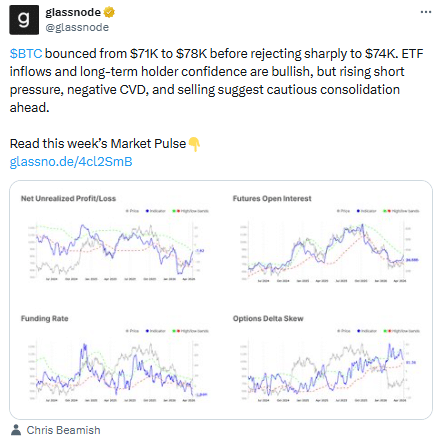
This consolidation signifies a temporary balance between supply and demand dynamics.
However, such equilibrium seldom persists indefinitely. A shift in liquidity or momentum favoring either buyers or sellers typically culminates in substantial price movements. Thus, if demand continues to rise significantly, it could turn the current trading range into a launching pad for upward movement; conversely, increased selling pressure might trigger downward corrections as positions unwind.
This situation naturally leads us to ponder: What direction is Bitcoin likely to take next?
The Intersection of Macro Liquidity and ETF Flows Amidst Bitcoin Consolidation
Sustained institutional inflows are doing more than just stabilizing prices—they’re also playing an essential role.
According to insights from Glassnode, consistent inflows into Bitcoin ETFs are effectively absorbing sell-side pressures which prevents deeper declines while maintaining Bitcoin’s position around $75k. From a technical viewpoint, this absorption suggests underlying accumulation trends that bolster an overall bullish framework.
The broader macroeconomic conditions serve as crucial context here. Jerome Powell from the Federal Reserve recently highlighted that job creation within the private sector is approaching net zero due to inflationary strains on corporate finances. As labor market conditions weaken further expectations regarding liquidity support tend to rise—this dynamic has historically favored risk assets like Bitcoin.
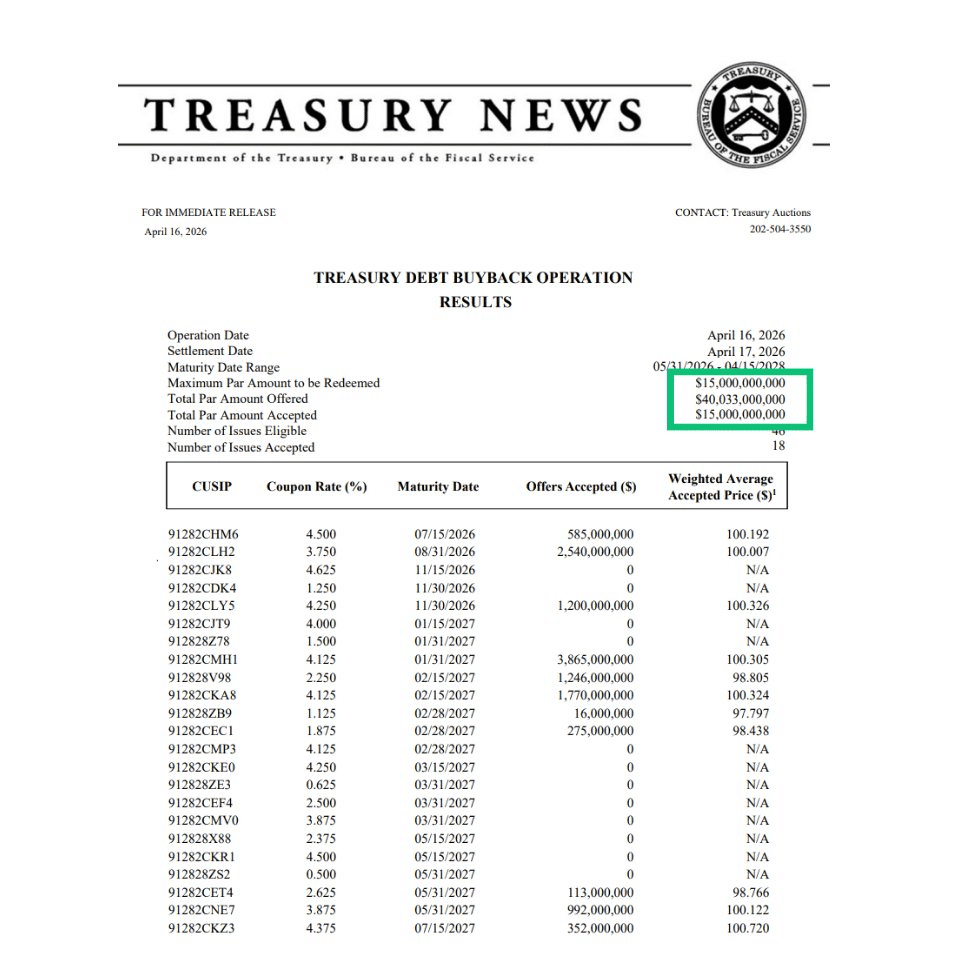
This shift towards increased liquidity may already be taking shape.
The accompanying chart illustrates how capital appears to be flowing back into markets via changes reflected on the Fed’s balance sheet—with an initial injection amounting to $5.06 billion coupled with a $90 billion release from Treasury General Account (TGA). Additionally contributing is Treasury’s unprecedented $15 billion debt buyback initiative aimed at collectively enhancing macro liquidity levels.
Additionally noteworthy is how U.S government efforts refunding previously collected tariffs totaling $166 billion introduces another dimension into this equation—most importantly aligning with consistent inflows into Bitcoin ETFs which amplifies available liquidity even further now supporting favorable conditions for buyers amidst tightening supply levels during this consolidation phase potentially setting up for future breakout scenarios involving Bitcoin prices moving higher again soon enough!
A Brief Conclusion
The steady influxes from ETFs help absorb selling pressures while keeping BTC close around its recent price point near$75k level .
An increase seen both regarding overall liquidity alongside heightened ETF demands seem poised towards constraining supplies thereby paving way potentially leading up toward forthcoming breakout opportunities ahead!