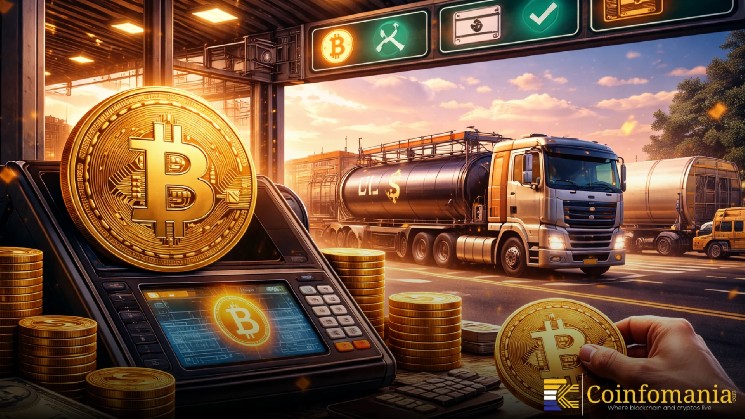
A significant transformation in the global oil market may be on the horizon. While initial conversations revolved around stablecoins, there is now a growing trend towards utilizing Bitcoin for oil transactions. This evolution indicates a more profound change in how countries manage restricted financial operations, particularly those under sanctions that are actively seeking alternatives to conventional banking systems.
Utilizing Bitcoin for oil payments presents distinct advantages in volatile situations. Unlike stablecoins, which depend on centralized entities, Bitcoin operates independently of such control mechanisms. This autonomy renders it immune to freezes and external interference—a crucial benefit for nations like Iran as geopolitical tensions escalate.
Recent reports indicate that payments for oil tolls could soon be conducted via Bitcoin. Vessels might simply scan QR codes to finalize transactions almost instantaneously. This method underscores the increasing significance of Lightning Network payments within international trade dynamics, showcasing both technological advancements and strategic imperatives.
🚨 BITCOIN IS EMERGING AS THE PREFERRED METHOD FOR OIL TOLL PAYMENTS
Initial reports leaned towards stablecoins; however, attention has shifted towards Bitcoin as the likely candidate.
Unlike stablecoins such as USDT and USDC—which can be frozen by their issuers—Bitcoin remains uncensorable.
Iran would… pic.twitter.com/epbD0pQznK
— Coin Bureau (@coinbureau) April 11, 2026
The Transition from Stablecoins to Bitcoin in Oil Transactions
Stablecoins were initially viewed as an ideal solution for cryptocurrency-based oil trading due to their price stability and seamless integration into existing financial frameworks. However, concerns regarding the risks associated with stablecoins have become increasingly apparent; issuers possess the ability to freeze assets or block wallets under regulatory pressure.
The use of Bitcoin eliminates these vulnerabilities entirely since no central authority governs its transactions. The decentralized nature of this cryptocurrency guarantees uninterrupted transfers even amidst sanctions—a highly attractive feature for nations pursuing financial independence.
The risks tied to stablecoins extend beyond mere censorship issues; they also face heightened regulatory scrutiny across major economies where governments demand greater transparency and oversight over issuers. Such pressures significantly limit their applicability in politically sensitive contexts like oil trading.
Conversely, Bitcoin functions outside these constraints by facilitating direct peer-to-peer exchanges without intermediaries involved—an advantage that explains why discussions surrounding bitcoin-based oil payments are overtaking those about systems reliant on stablecoin technology.
The Role of Lightning Network in Facilitating Rapid Oil Toll Payments
The need for speed is paramount within logistics related to petroleum products; vessels cannot afford lengthy waits while awaiting transaction confirmations. Consequently, Lightning Network payments emerge as essential components driving increased adoption of Bitcoin within this sector due primarily because they enable near-instantaneous transactions at minimal costs associated with fees incurred during processing times when ships enter designated toll zones where they receive QR codes enabling quick payment completions—all occurring within seconds! This efficiency reduces delays experienced along busy shipping routes significantly!
Additionally enhancing scalability through off-chain processing capabilities allows Lightning Network solutions effectively mitigate congestion-related slowdowns typical seen among traditional bitcoin networks during peak usage periods thus making them well-suited real-time commercial applications! As utilization expands further still lightning network implementations may very well become standard practice across crypto-oil trades aligning perfectly alongside requisite speeds & reliability demanded throughout global shipping operations!
The Implications Of This Shift For Future Global Trade Dynamics
The emergence o f B itcoin -based o il p ayments signifies broader changes taking place w ithin g lobal t rade structures . Conventional finance models no longer maintain exclusive dominance over international commerce , while decentralized options continue gaining traction especially i n high-risk scenarios . By redefining how industries conduct large-scale dealings , lightning network functionalities promise quicker settlements leading t o improved operational efficiencies benefiting both buyers & sellers alike i n energy markets !
Furthermore , crypto-oil trade could expand beyond merely sanctioned nations ; other countries m ay adopt similar frameworks aiming at enhanced efficiency & cost reductions . Gradually reshaping overall payment infrastructures worldwide seems plausible given ongoing trends ! Although risks surrounding s table coins will likely persist moving forward , despite serving numerous purposes effectively they struggle greatly when confronted w ith politically charged situations . In contrast , B itcoin ’s resistance against censorship provides clear advantages specifically tailored toward environments fraught with political sensitivities !
Ultimately representing much more than just technical upgrades alone —B itcoin -based o il transactions embody strategic shifts aimed at achieving greater levels f financial autonomy ultimately influencing future dynamics governing global trade practices long after current developments fade away into history books !